What Is a Fireplace Damper? Types, Function & Maintenance Guide
A fireplace damper is a movable metal plate or valve located in your chimney system that controls airflow between your home and the outside. You open it before lighting a fire so smoke can draft up the flue, and close it after the fireplace is completely cold to reduce drafts and prevent heated or cooled air from escaping your home.
According to the Chimney Safety Institute of America (CSIA), a damper is "a hinged metal plate or valve used to seal the fireplace when it's not in use." They emphasize that it should always be fully open before lighting any fire.
For Florida homeowners who use their fireplaces occasionally during cooler months, understanding your damper is essential for both safety and energy efficiency. A malfunctioning damper can fill your home with smoke, waste energy, or allow pests and moisture into your chimney system.
Need damper inspection or repair in Florida? Call Pro Air Chimney at 813-513-7861 or schedule an estimate at https://proairchimney.com/contact.
Table of Contents
- How a fireplace damper works
- Two main types: throat damper vs top-mount damper
- When to open and close your damper
- Damper maintenance requirements
- Signs your damper needs repair or replacement
- Fireplace damper replacement costs
- Common damper problems and solutions
- Damper safety considerations
- FAQ
- Sources
How a fireplace damper works
A fireplace damper operates on a simple principle: controlling airflow through the chimney.
When the damper is open
- Combustion exhaust (smoke, gases, and particles) rises through the flue
- Fresh air enters the firebox to feed the fire
- A proper draft is established, pulling smoke up and out of the chimney
- The fireplace can operate safely without smoke entering the room
When the damper is closed
- Airflow up the chimney is blocked or significantly reduced
- Heated or air-conditioned air stays inside your home
- Outside air, moisture, and pests are prevented from entering
- Energy loss through the chimney is minimized
The damper acts as a gatekeeper between your living space and the outside environment. Without it, your chimney would function as an open hole in your roof, constantly exchanging conditioned indoor air with unconditioned outdoor air.
However, it's important to understand that most traditional dampers are not airtight. Metal-to-metal seals can allow some air leakage, which is one reason why top-sealing dampers have become popular.
Two main types: throat damper vs top-mount damper
There are two primary damper designs, each with distinct advantages and installation locations.
Throat damper (traditional design)
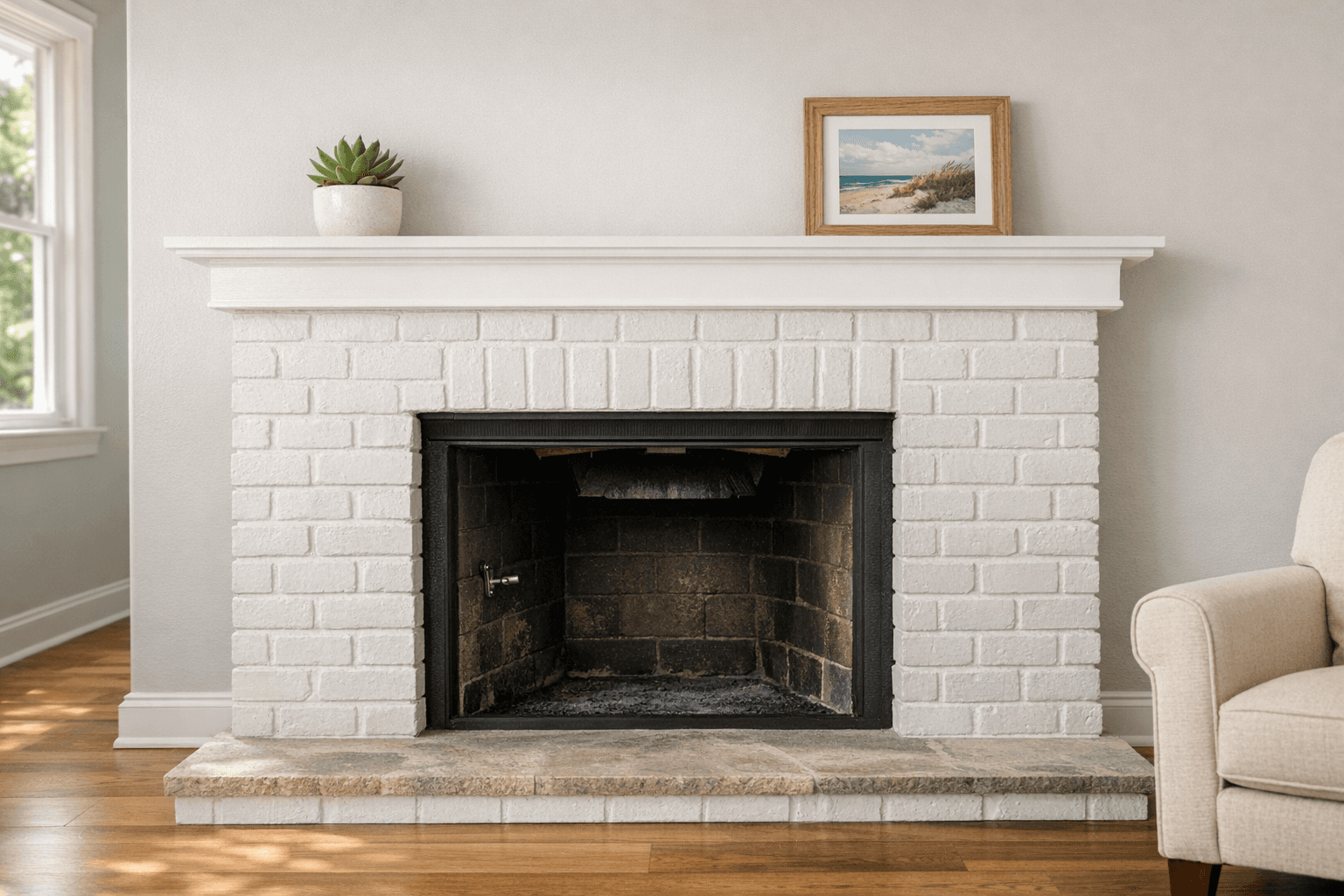
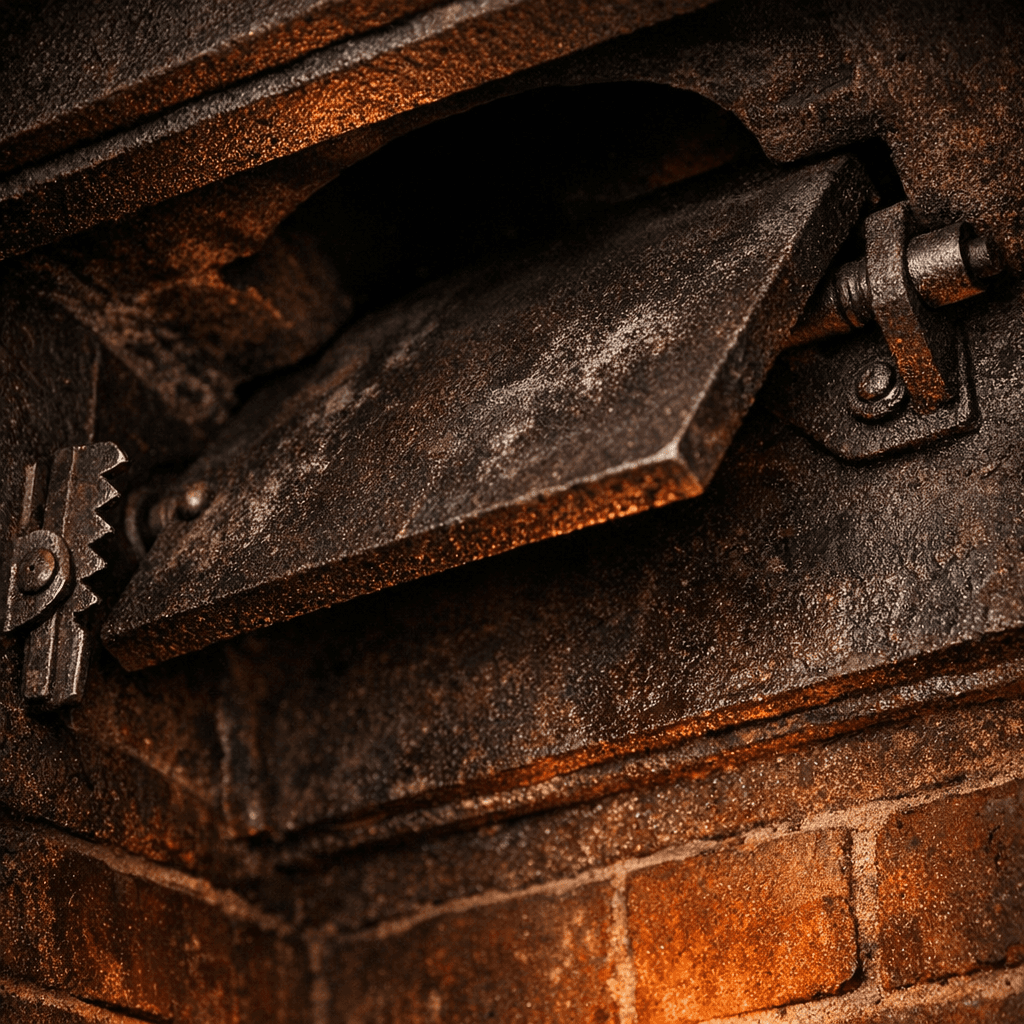
A throat damper is installed just above the firebox in the narrow "throat" area where the fireplace opening transitions to the flue.
Location: Inside the fireplace, typically 6-12 inches above the firebox opening
Operation mechanisms:
- Poker/Vestal style: A handle or lever inside the fireplace that rotates or lifts the damper plate
- Pivot style: A plate that pivots on a central axis
- Rotary style: A circular mechanism that turns to open or close
Advantages:
- Lower initial cost
- Easier to access for inspection
- Common in older masonry fireplaces
- Replacement parts are widely available
- Familiar to most homeowners
Disadvantages:
- Metal-to-metal seal tends to leak air even when closed
- Exposed to direct heat, which can cause warping over time
- Susceptible to rust and corrosion from moisture exposure
- Can become stuck from creosote buildup or corrosion
- Less energy-efficient than top-sealing options
Top-mount (top-sealing) damper
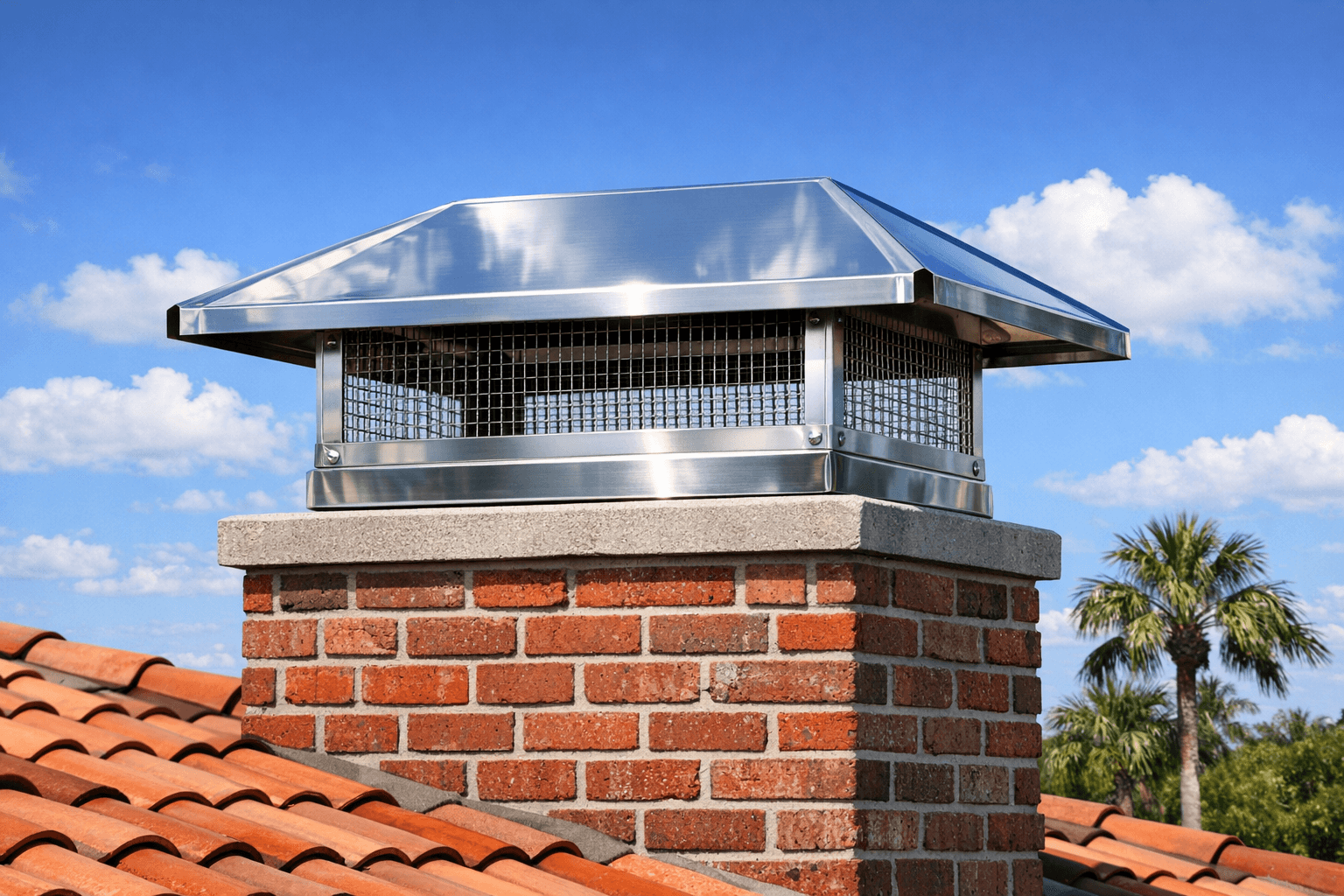
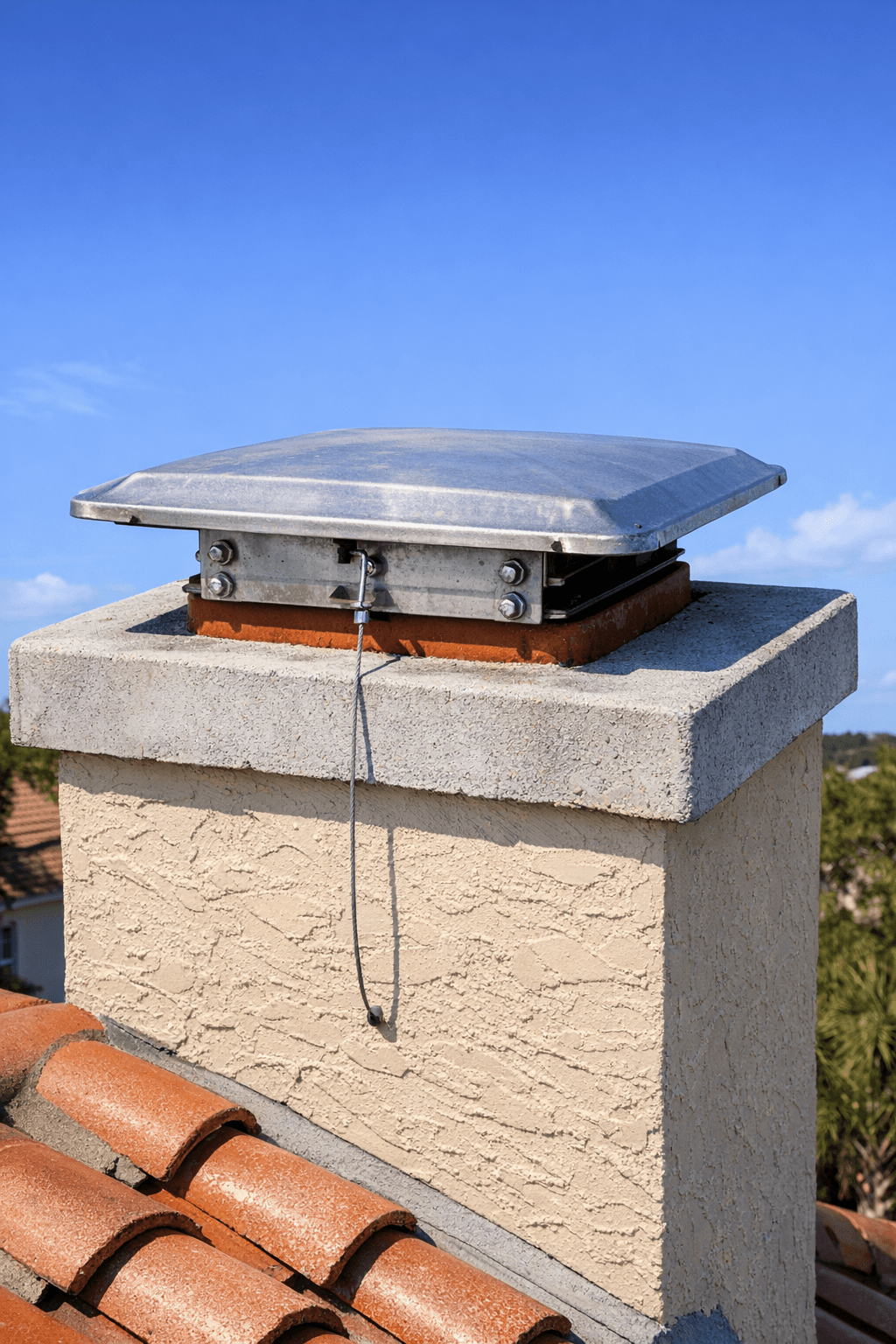
A top-mount damper is installed at the top of the chimney flue, usually incorporating a gasketed lid that seals against the chimney crown.
Location: At the chimney top, visible from outside
Operation: Controlled by a stainless steel cable that runs down through the flue to a bracket or handle near the firebox
Advantages:
- Much tighter seal than throat dampers (uses rubber or silicone gasket)
- Also functions as a chimney cap, keeping out rain, animals, and debris
- Located away from direct heat, reducing wear
- Better energy efficiency (can reduce air leakage by up to 90%)
- Visible from outside for easy inspection of position
Disadvantages:
- Higher initial cost ($150-$300 for the unit plus installation)
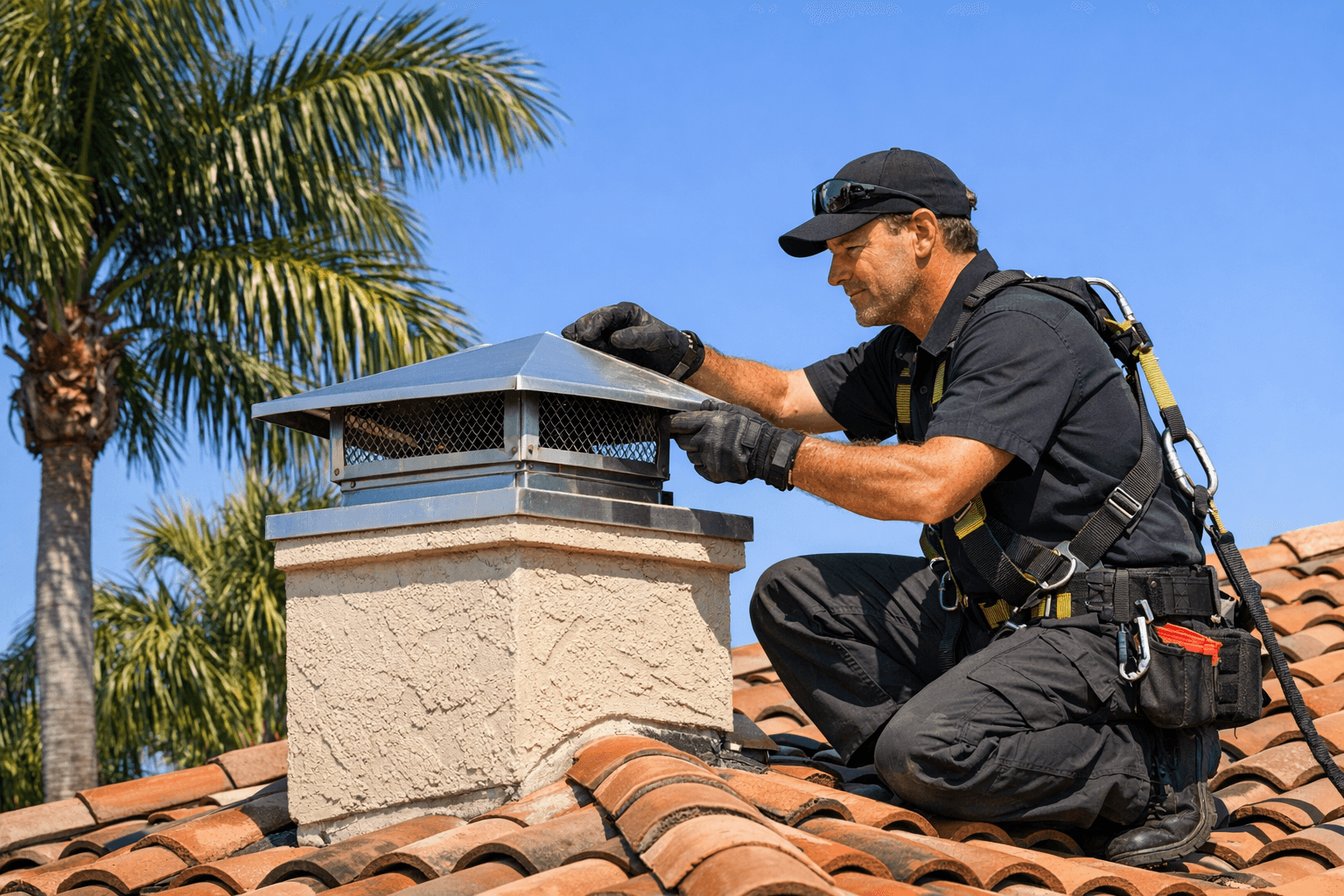
- Requires rooftop access for installation and service
- Cable can fray or bind over time
- Gasket may need periodic replacement
Which type is better?
For most homeowners, especially in Florida where energy costs are a concern, a top-sealing damper offers better performance despite the higher cost. The improved seal pays for itself over time through reduced energy loss. However, if your existing throat damper is working properly and you're not experiencing draft issues, replacement may not be necessary.
If you're unsure which type you have or whether it's functioning correctly, schedule an inspection with /services/chimney-repairs.
When to open and close your damper
Proper damper operation is critical for both safety and efficiency.
Always open the damper BEFORE lighting a fire
Why: If you light a fire with the damper closed, smoke has nowhere to go and will pour directly into your living space. This creates:
- Immediate smoke damage to furnishings and walls
- Carbon monoxide exposure risk
- Potential for triggering smoke alarms
- Unpleasant odor that can linger for days
How to verify it's open:
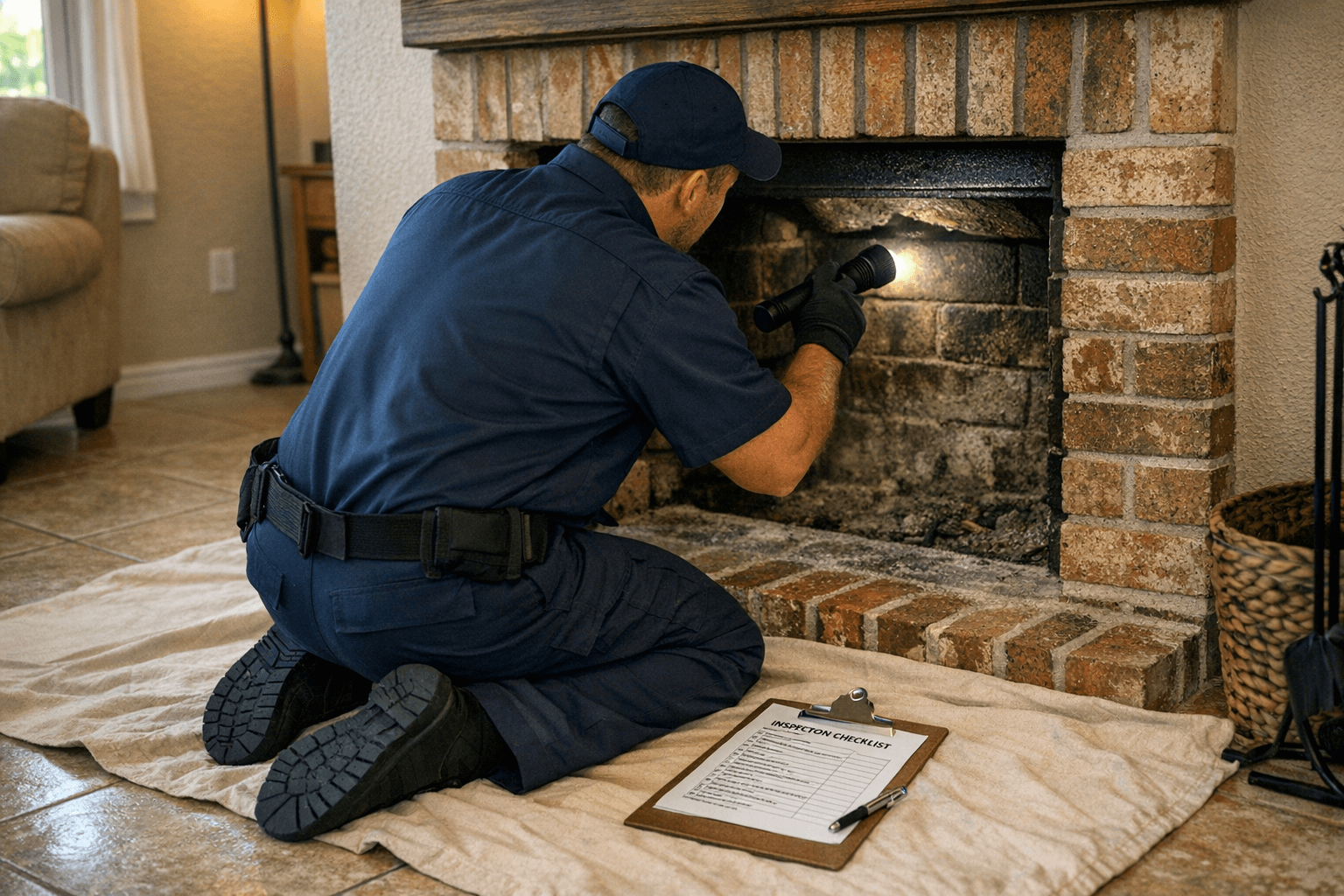
- Look up into the fireplace with a flashlight
- You should see the flue opening (or daylight if the chimney is clear)
- Feel for a draft of air moving upward
- Check the damper handle position
Keep the damper open while any embers remain
Even after flames have died down, hot coals continue producing carbon monoxide. Keep the damper fully open until:
- All visible embers have turned to gray ash
- The fireplace interior is cool to the touch
- At least 12-24 hours have passed since the last fire
Close the damper only when the fireplace is completely cold
Once you're certain all combustion has stopped:
- Close the damper fully
- This prevents conditioned air from escaping
- Blocks outside air, moisture, and pests from entering
- Reduces your heating and cooling costs
Special considerations for gas logs
If you have vented gas logs, check your owner's manual for specific requirements. Many installations require:
- A damper clamp or stop that prevents full closure
- The damper to remain partially open at all times during gas log season
- Specific clearance requirements for combustion air
Never operate vented gas logs with a fully closed damper.
Damper maintenance requirements
Regular damper maintenance helps ensure safe operation and extends the life of your chimney system.
Before every use
- Visually confirm the damper opens fully before lighting any fire
- Check that the handle or cable operates smoothly
- Listen for unusual scraping or grinding sounds
- Look for visible obstructions in the flue
Annual inspection (NFPA 211 recommendation)
The National Fire Protection Association (NFPA 211) and CSIA recommend that chimneys, fireplaces, and vents be inspected at least once per year and cleaned or maintained as needed.
During a professional inspection, a technician will check:
- Damper plate condition (warping, cracks, rust)
- Seal quality and air leakage
- Handle or cable mechanism function
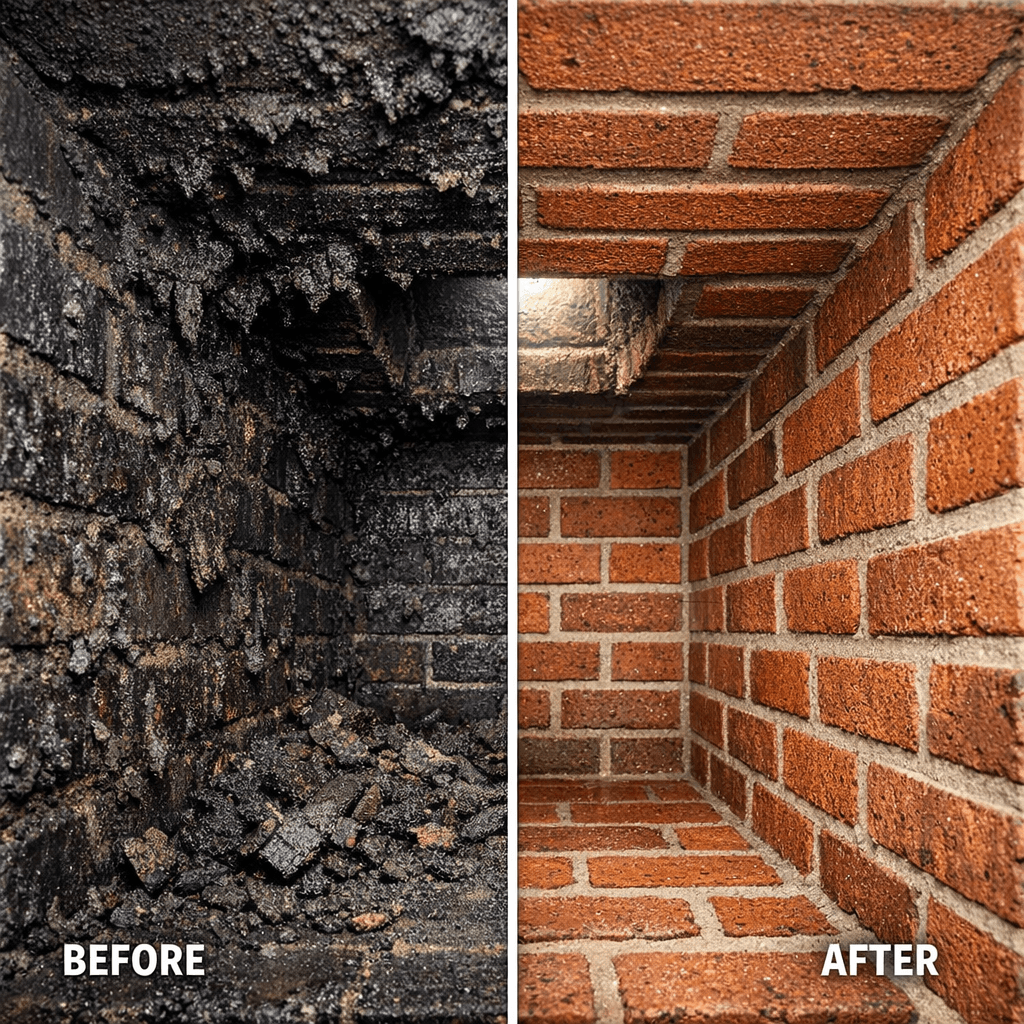
- Creosote buildup around the damper area
- Signs of water damage or corrosion
Throat damper maintenance
- Remove accumulated ash and debris from the damper area
- Check for rust or corrosion on metal surfaces
- Lubricate pivot points if the mechanism sticks (use high-temperature lubricant only)
- Clear any creosote buildup that may prevent full closure
Top-mount damper maintenance
- Inspect the cable for fraying or kinking
- Check the gasket for deterioration or gaps
- Verify the lid seats flat against the crown
- Look for visible damage to the cap portion
- Test operation from inside the fireplace
For comprehensive chimney maintenance, see /services/chimney-cleaning.
Signs your damper needs repair or replacement
Watch for these indicators that your damper may be failing:
Signs of a stuck or damaged throat damper
- Damper won't open or close fully
- Scraping, grinding, or resistance when operating the handle
- Visible rust, warping, or cracks on the damper plate
- Smoke enters the room even when the damper should be open
- Difficulty maintaining a fire (poor draft)
- Handle is loose, broken, or disconnected
Signs of a failing top-mount damper
- Cable is frayed, kinked, or won't move freely
- Damper lid doesn't seat flat (visible gap from below)
- Gasket appears cracked, compressed, or missing sections
- Water leaking around the damper area after rain
- Increased outside noise or drafts when closed
- Visible damage to the cap or housing
General warning signs
- Cold drafts from the fireplace when damper should be closed
- Higher than expected heating/cooling bills
- Moisture, water stains, or musty odors near the fireplace
- Evidence of birds, squirrels, or insects entering the chimney
- Strong smoky odor in the home even when not burning
If you notice any of these issues, schedule an inspection before your next fire. A malfunctioning damper can be dangerous and should be addressed promptly at /services/chimney-repairs.
Florida homeowner? Get an honest assessment of your damper and chimney system. Call Pro Air Chimney at 813-513-7861 or book at https://proairchimney.com/contact.
Fireplace damper replacement costs
Based on 2025 industry data, here are typical costs for damper replacement:
Average replacement cost
- National average: approximately $360
- Typical range: $160-$520
- Extended range: $120-$700 depending on type and complexity
Cost breakdown by damper type
| Damper Type | Parts Cost | Labor Cost | Total Installed |
|---|---|---|---|
| Throat damper | $50-$150 | $100-$250 | $150-$400 |
| Top-mount damper | $150-$300 | $150-$400 | $300-$700 |
Factors affecting cost
- Damper type: Top-mount dampers cost more but offer better performance
- Accessibility: Difficult-to-reach chimneys increase labor costs
- Chimney height: Taller chimneys require more time and equipment
- Existing damage: Additional repairs may be needed
- Geographic location: Florida pricing may vary from national averages
Repair vs. replacement
In some cases, a damper can be repaired rather than replaced:
- Stuck throat damper: Cleaning and lubrication ($75-$150)
- Broken handle: Handle replacement ($50-$100)
- Frayed top-mount cable: Cable replacement ($75-$150)
- Worn gasket: Gasket replacement ($50-$100)
A professional can advise whether repair or replacement makes more sense for your situation.
Common damper problems and solutions
Problem: Damper is stuck closed
Possible causes:
- Rust or corrosion welding the plate in place
- Creosote buildup binding the mechanism
- Warped plate from heat exposure
- Broken or disconnected handle
Solutions:
- Apply penetrating oil and work the handle gently
- Professional cleaning to remove creosote
- May require damper replacement if severely warped
Problem: Damper won't stay open
Possible causes:
- Worn or broken springs
- Damaged pivot mechanism
- Handle not engaging properly
Solutions:
- Adjust or replace springs
- Repair pivot points
- Replace handle mechanism
Problem: Drafts when damper is closed
Possible causes:
- Warped damper plate leaving gaps
- Normal metal-to-metal seal leakage (throat dampers)
- Damaged or missing gasket (top-mount)
Solutions:
- Replace throat damper or add insulation
- Upgrade to top-sealing damper for better seal
- Replace gasket on top-mount units
Problem: Water leaking around damper
Possible causes:
- Failed top-mount gasket
- Damaged chimney crown or cap
- Improper flashing around chimney
Solutions:
- Replace gasket or entire top-mount unit
- Repair crown or cap damage
- Address flashing issues separately
Damper safety considerations
Carbon monoxide risk
A closed damper during a fire traps combustion gases, including carbon monoxide (CO), inside your home. CO is odorless and colorless but can cause:
- Headaches and dizziness
- Nausea and confusion
- Loss of consciousness
- Death in severe cases
Always ensure your damper is fully open before any fire, and install CO detectors near sleeping areas and on every level of your home.
Fire hazard
A damper that won't open fully restricts draft, which can cause:
- Smoke spillage into the room
- Incomplete combustion and creosote buildup
- Overheating of firebox components
- Potential for chimney fires
Pest and moisture entry
A damper that won't close properly allows:
- Birds, squirrels, and insects to enter the chimney
- Rainwater to damage the firebox and flue liner
- Humidity to promote rust and deterioration
- Outside air to infiltrate your home
Regular inspection helps catch these issues before they become serious problems. Learn more about creosote and chimney safety at /resources/what-is-creosote.
FAQ
What is a fireplace damper?
A fireplace damper is a movable metal plate or valve in your chimney that controls airflow. You open it before lighting a fire to allow smoke to escape, and close it when the fireplace isn't in use to prevent conditioned air from escaping and outside air from entering.
Should the fireplace damper be open or closed?
The damper should be fully open whenever a fire is burning or embers remain. Close it only when the fireplace is completely cold to conserve energy. Never light a fire with a closed damper.
What's the difference between a throat damper and a top-mount damper?
A throat damper is located just above the firebox and is operated by a handle inside the fireplace. A top-mount damper is installed at the top of the chimney and is controlled by a cable. Top-mount dampers typically seal better and also function as a chimney cap.
How do I know if my damper is open?
Look up into the fireplace with a flashlight. If you can see up into the flue (or daylight), the damper is open. You should also feel air moving upward. Check the handle position and listen for a difference in ambient noise when you operate it.
How much does it cost to replace a fireplace damper?
Damper replacement typically costs $160-$520, with an average around $360. Top-mount dampers cost more ($300-$700 installed) but offer better energy efficiency and also serve as a chimney cap.
Can I use my fireplace if the damper is broken?
Using a fireplace with a broken damper is dangerous. If the damper is stuck closed, smoke and carbon monoxide will enter your home. If it's stuck open, you'll lose heated/cooled air constantly. Have the damper repaired before using the fireplace.
How often should a fireplace damper be replaced?
With proper maintenance, a damper can last 20-30 years or more. However, throat dampers exposed to direct heat and moisture may need replacement sooner. Top-mount damper gaskets should be inspected annually and replaced as needed (typically every 5-10 years).