Chimney Cap Installation: DIY or Professional?
A chimney cap costs $75-$500 installed, with most homeowners paying around $300. (homeadvisor.com) This simple addition protects your chimney from rain, animals, debris, and downdrafts. But should you install it yourself or hire a professional? The answer depends on your roof setup, cap type, and comfort with heights.
Call Pro Air Chimney at 813-513-7861 for a same-day chimney cap quote.
Table of Contents
- What Does a Chimney Cap Do
- Types of Chimney Caps
- Materials Comparison
- DIY vs Professional Installation
- DIY Installation Process
- Cost Comparison
- Florida Weather Considerations
- Common Mistakes to Avoid
- FAQ
- Related Services
- Service Areas
- Final CTA
What Does a Chimney Cap Do
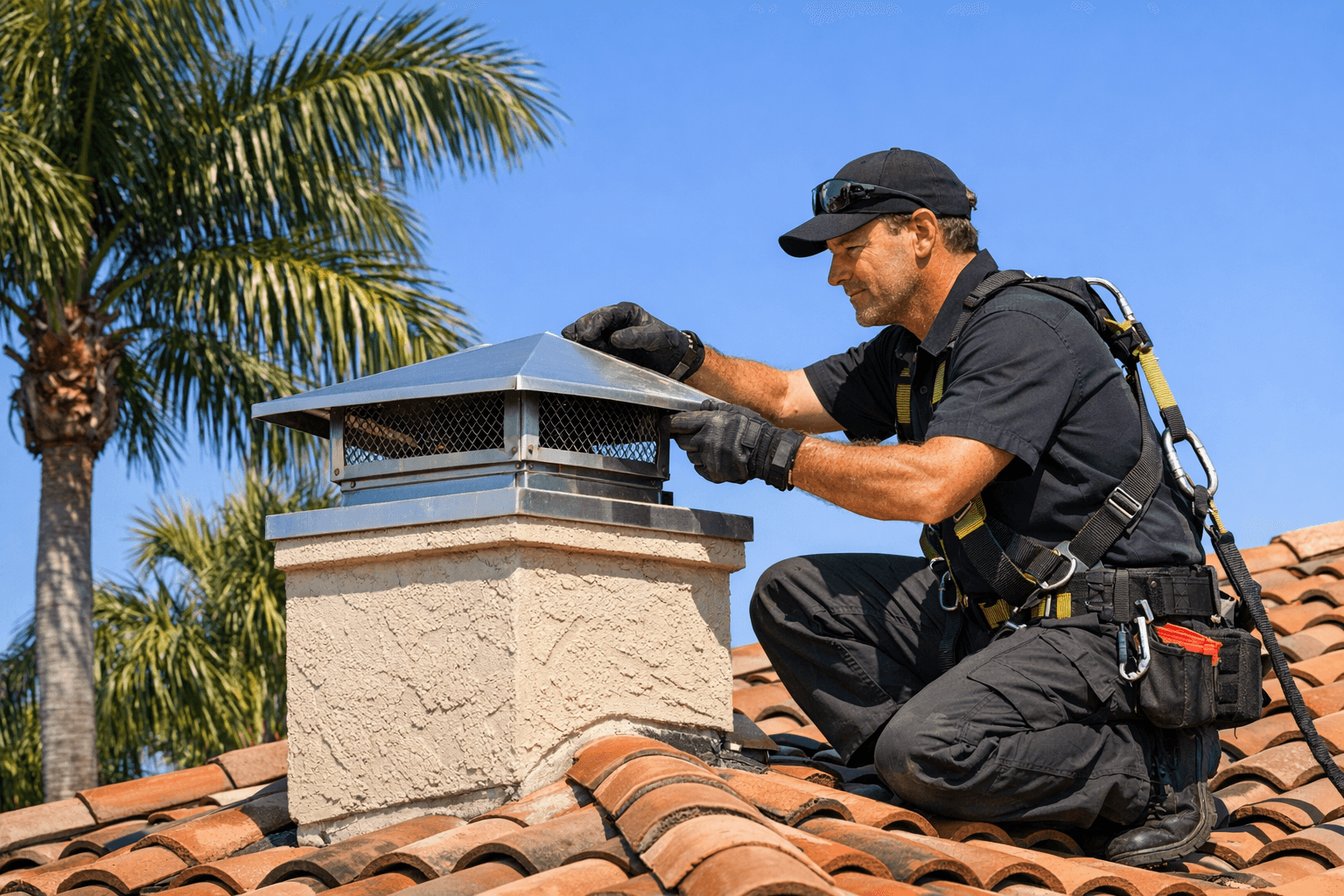
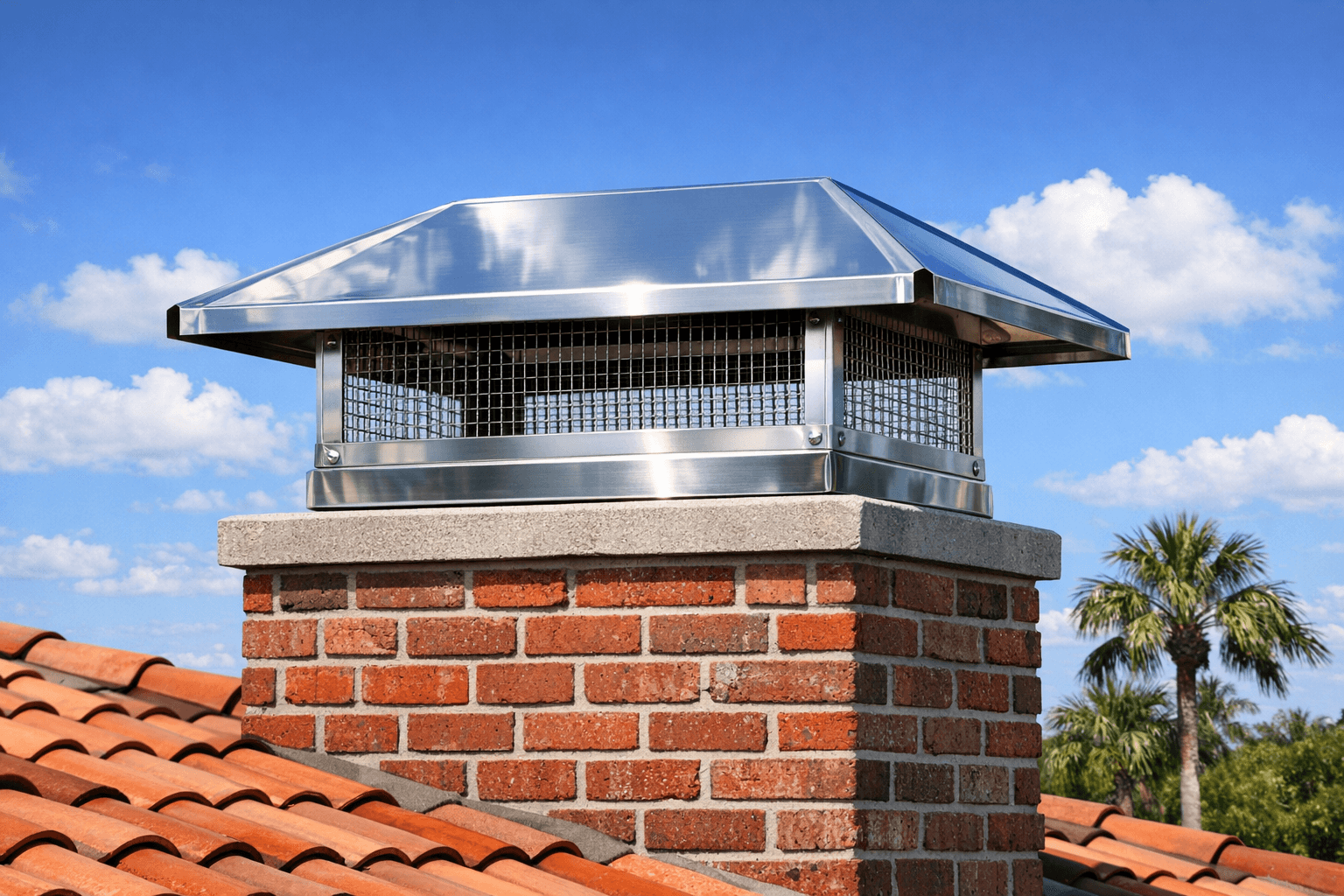
A chimney cap is a protective cover that sits on top of your chimney flue. Despite its simple appearance, it performs several critical functions:
Rain and moisture protection: The cap's solid top deflects rain, preventing water from entering your flue. Water inside a chimney causes rust on dampers, deteriorates mortar joints, and can lead to expensive masonry repairs. In Florida's humid climate with frequent afternoon thunderstorms, this protection is essential.
Animal exclusion: The mesh screening around the cap keeps out birds, squirrels, raccoons, and other wildlife that commonly nest in uncapped chimneys. Animal nests create dangerous blockages that can cause carbon monoxide buildup or chimney fires.
Spark arrestor: The mesh also catches burning embers and sparks, preventing them from landing on your roof or nearby vegetation. This is a code requirement in many areas, especially during dry seasons.
Downdraft prevention: A properly designed cap reduces wind-induced downdrafts that push smoke back into your home. Some caps are specifically engineered to improve draft performance in windy locations.
Debris blocking: Leaves, twigs, and other debris can accumulate in an open flue, creating blockages and fire hazards. A cap keeps your chimney clear year-round.
Types of Chimney Caps
Choosing the right cap type is crucial for proper fit and function. Here's what's available:
Single-Flue Caps
The most common and affordable option. These caps cover one flue opening and attach directly to the flue tile or liner. They're available in standard sizes and work well for most residential chimneys.
Best for: Single-flue masonry chimneys, straightforward DIY installation, budget-conscious homeowners.
Multi-Flue Caps
A single large cap that covers the entire chimney crown and multiple flue openings. These provide more comprehensive protection and a cleaner appearance than multiple single-flue caps.
Best for: Chimneys with 2+ flues, improved aesthetics, better overall crown protection.
Top-Mount (Outside-Mount) Caps
These attach to the outside edges of the chimney crown rather than to individual flue tiles. They cover the entire chimney top and protect the crown from weather damage.
Best for: Chimneys with damaged crowns, non-standard flue sizes, maximum weather protection.
Draft-Increasing Caps
Specialized caps designed to improve chimney draw. They use wind to create an upward suction effect, helping smoke exit more efficiently.
Best for: Chimneys with chronic draft problems, homes in windy areas, smoky fireplaces.
Chase Covers
Not technically caps, but covers for prefabricated metal chimney enclosures ("chases"). These replace the entire top of the chase rather than just covering a flue.
Best for: Factory-built fireplaces, metal chimney chases, replacing rusted original covers.
Decorative Caps
Custom or ornamental caps that add architectural appeal while providing standard protection. Available in copper, painted steel, and specialty designs.
Best for: Historic homes, visible chimneys, homeowners prioritizing curb appeal.
Materials Comparison
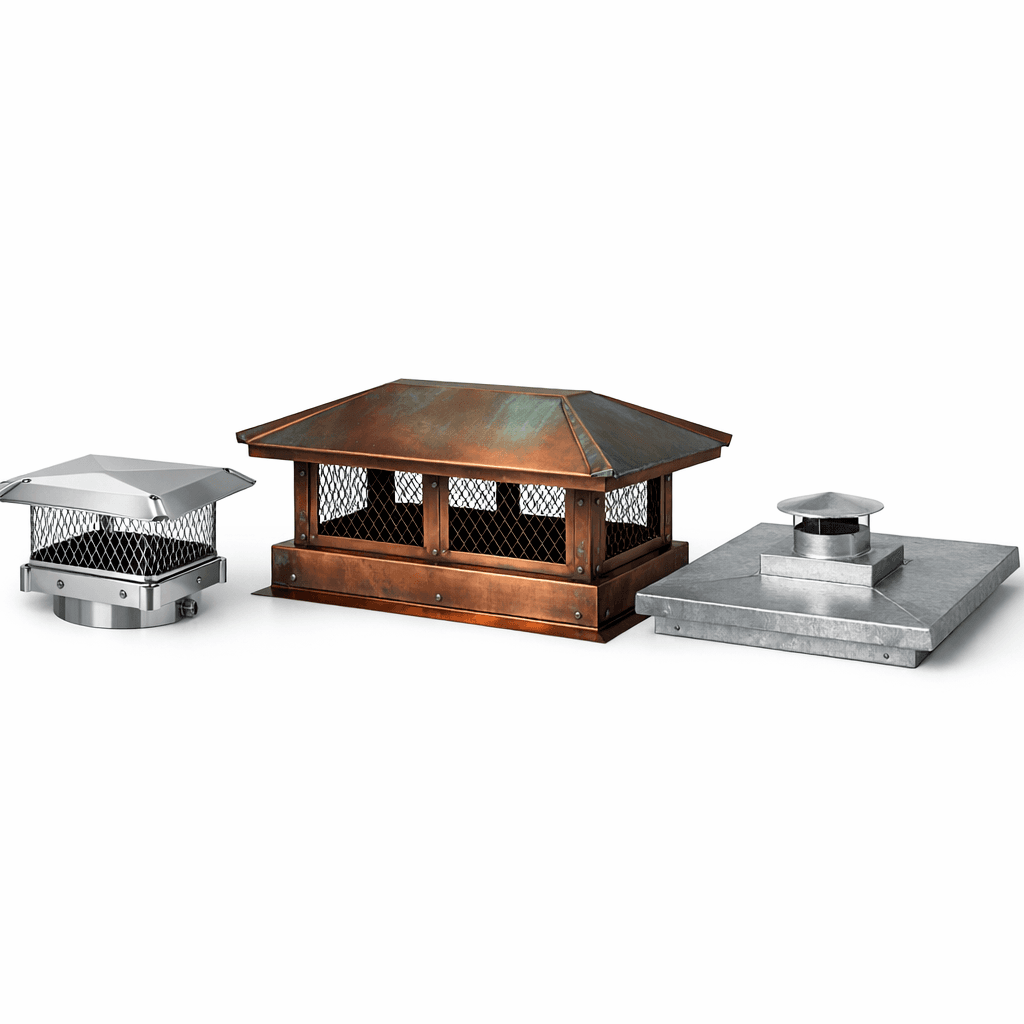
Cap material affects durability, appearance, and cost. Here's how they compare:
| Material | Cost Range (Cap Only) | Durability | Best For | Drawbacks |
|---|---|---|---|---|
| Galvanized Steel | $15-$75 | 5-10 years | Budget option, low-use chimneys | Rusts in humid/coastal areas |
| Aluminum | $30-$100 | 10-15 years | Lightweight, corrosion-resistant | Can dent, not for wood-burning |
| Stainless Steel | $50-$200 | 15-25+ years | Best value, all climates | Higher upfront cost |
| Copper | $150-$900+ | 50+ years | Premium look, historic homes | Expensive, develops patina |
Florida recommendation: Stainless steel is the best choice for most Florida homes. Galvanized steel rusts quickly in our humid, salty coastal air. Copper is excellent but expensive. Aluminum works for gas fireplaces but isn't recommended for wood-burning applications.
DIY vs Professional Installation
When DIY Makes Sense
DIY installation can save $100-$250 in labor costs and is reasonable if:
- Single-story home with a low-slope roof you can safely access
- Standard single-flue cap that clamps or bolts to the flue tile
- Good chimney condition (intact crown, no damaged flue tiles)
- Comfortable on ladders and have proper safety equipment
- Clear, accurate measurements of your flue dimensions
DIY cost: Typically $80-$300 for materials only (cap, hardware, sealant if needed).
When to Hire a Professional
Professional installation is recommended when:
- Multi-story home or steep roof pitch (fall risk is significant)
- Multi-flue or custom cap requiring precise fitting
- Unknown chimney condition (cracks, damaged crown, deteriorated mortar)
- Draft problems that may require a specialized cap
- Wood-burning system where improper fit creates safety hazards
- Warranty concerns (some cap warranties require professional installation)
- No ladder or safety equipment (renting adds cost and risk)
Professional cost: $150-$400 for labor, plus cap cost. (angi.com)
DIY vs Pro Cost Comparison
| Installation Type | DIY Cost | Professional Cost | Savings |
|---|---|---|---|
| Single-flue stainless cap | $75-$150 | $200-$350 | $125-$200 |
| Multi-flue cap | $150-$300 | $300-$500 | $150-$200 |
| Top-mount cap | $200-$400 | $350-$600 | $150-$200 |
| Copper decorative cap | $300-$900 | $500-$1,200 | $200-$300 |
Important: DIY savings disappear if you need to buy a ladder ($150-$400), safety harness ($50-$150), or if you damage the cap or chimney during installation.
DIY Installation Process
If you've determined DIY is appropriate for your situation, here's the basic process:
Step 1: Safety Preparation
- Use an extension ladder rated for your weight plus materials
- Set up on level ground with a helper holding the base
- Consider a ladder stabilizer for roof edge work
- Wear non-slip shoes, gloves, and eye protection
- Never work on a wet or icy roof
Step 2: Measure Your Flue
Accurate measurements are critical. Measure:
- Inside dimensions of the flue opening (length x width for rectangular, diameter for round)
- Outside dimensions of the flue tile (if using a clamp-on cap)
- Height of the flue above the crown (cap legs must be appropriate length)
Tip: Measure twice. A cap that doesn't fit is a wasted trip up the ladder.
Step 3: Select the Right Cap
- Match cap size to your measurements (order 1/4" larger than flue if between sizes)
- Choose appropriate material for your climate
- Verify mesh size meets local code (typically 3/4" maximum opening)
- Confirm attachment method works for your flue type
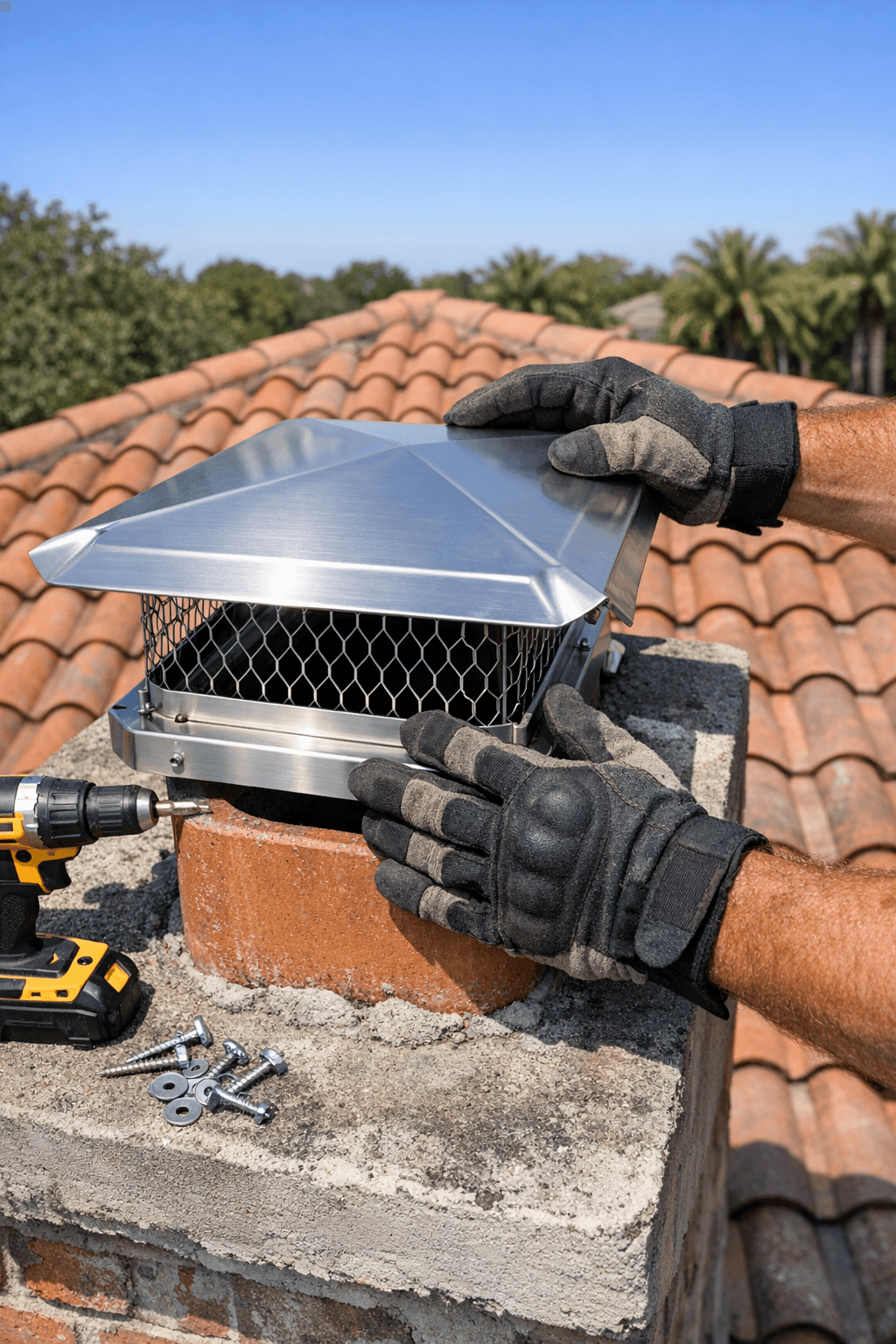
Step 4: Install the Cap
For clamp-on single-flue caps:
- Position cap over flue tile
- Ensure it sits level and centered
- Tighten adjustment screws evenly around the perimeter
- Check for secure fit by gently pulling up on the cap
For bolt-on or adhesive caps:
- Mark screw locations on flue tile
- Drill pilot holes with masonry bit (if required)
- Apply silicone sealant if recommended by manufacturer
- Secure with stainless steel screws or adhesive
- Verify cap is level and secure
Step 5: Final Inspection
- Confirm cap is firmly attached
- Check that damper operates freely (no interference)
- Verify mesh screening is intact all around
- Clean up any debris from the crown
Cost Comparison
Here's what Florida homeowners typically pay for chimney cap installation:
Complete Installation Costs (2025-2026)
| Service | DIY Cost | Professional Cost |
|---|---|---|
| Single-flue galvanized cap | $30-$75 | $150-$250 |
| Single-flue stainless cap | $75-$150 | $200-$350 |
| Multi-flue stainless cap | $150-$300 | $350-$500 |
| Top-mount/outside-mount cap | $200-$400 | $400-$650 |
| Chase cover (prefab chimney) | $200-$500 | $400-$800 |
| Copper decorative cap | $300-$900 | $600-$1,200 |
What Affects Installation Cost
- Roof access: Steep roofs, multi-story homes, and tile roofs increase labor time and risk
- Chimney height: Taller chimneys require more setup and safety equipment
- Number of flues: Each flue may need its own cap or a larger multi-flue unit
- Cap type: Custom sizing, draft-improving designs, and premium materials cost more
- Chimney condition: Damaged crowns or flue tiles may need repair before cap installation
- Location: Coastal areas may require corrosion-resistant materials (higher cost)
Florida Weather Considerations
Florida's climate creates unique challenges for chimney caps:
Humidity and Rain
Florida averages 50+ inches of rain annually, with intense afternoon thunderstorms common from May through October. This constant moisture exposure means:
- Galvanized steel caps rust within 3-5 years (avoid for Florida chimneys)
- Stainless steel or copper is essential for long-term durability
- Proper overhang on the cap top prevents rain from entering at an angle
- Mesh screen quality matters (cheap mesh rusts and fails first)
Hurricane and Storm Damage
Florida's hurricane season (June-November) brings high winds that can damage or remove improperly installed caps:
- Secure attachment is critical (screws or heavy-duty clamps, not just friction fit)
- Inspect after major storms for shifted or damaged caps
- Consider a top-mount cap for better wind resistance
- Wind-rated caps are available for high-exposure locations
Coastal Salt Air
If you live within 15 miles of the coast, salt air accelerates corrosion:
- Stainless steel 304 grade minimum (316 grade is better for beachfront)
- Inspect annually for signs of rust or deterioration
- Copper performs well in salt air but costs more
- Avoid galvanized and aluminum in coastal environments
Wildlife Pressure
Florida's year-round warm weather means more active wildlife seeking shelter in chimneys:
- Mesh screening is essential (chimney swifts, raccoons, and squirrels are common invaders)
- Check mesh integrity annually (animals can damage screens)
- Standard 3/4" mesh meets code and excludes most animals
- Smaller mesh (5/8") may be needed for persistent bird problems
Common Mistakes to Avoid
-
Wrong size cap: Measuring errors lead to caps that don't fit or seal properly. Always measure the actual flue opening, not the crown.
-
Cheap materials: Galvanized caps in Florida are false economy. They rust out in a few years, requiring replacement and potentially causing damage.
-
Improper attachment: Caps that just sit on the flue blow off in storms. Always use screws, clamps, or adhesive as specified.
-
Ignoring chimney damage: Installing a cap on a damaged chimney doesn't fix the underlying problem. Have cracks, damaged crowns, or deteriorated mortar repaired first.
-
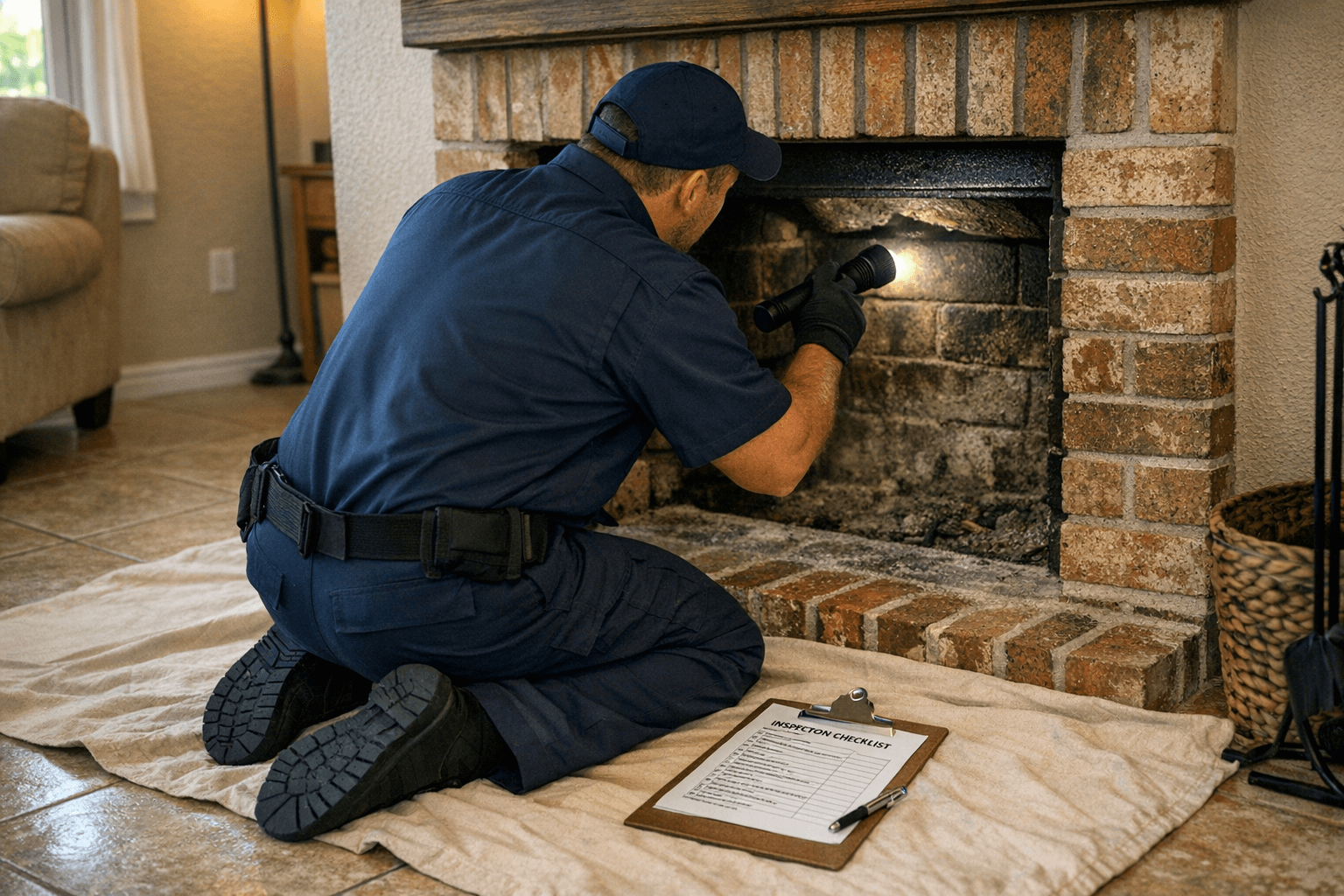
Skipping the inspection: Before installing a cap, look down the flue for blockages, nests, or debris. Address these issues first.
-
DIY on unsafe roofs: Saving $200 isn't worth a fall. If your roof is steep, high, or you're uncomfortable with heights, hire a professional.
-
Forgetting about the damper: Make sure your new cap doesn't interfere with damper operation. Test it before leaving the roof.
FAQ
Q: How much does chimney cap installation cost in Florida? A: Most Florida homeowners pay $200-$500 total for professional chimney cap installation, including the cap and labor. DIY installation costs $75-$300 for materials only. Price varies by cap type, material, and roof access difficulty.
Q: Can I install a chimney cap myself? A: DIY installation is reasonable for single-story homes with low-slope roofs and standard single-flue caps. However, if your roof is steep, multi-story, or you're uncomfortable on ladders, hiring a professional is safer and often more cost-effective.
Q: What type of chimney cap is best for Florida? A: Stainless steel caps offer the best value for Florida's humid climate. They resist rust, handle heavy rain, and typically last 15-25 years. Avoid galvanized steel, which rusts quickly in Florida's humidity.
Q: How long does a chimney cap last? A: Lifespan varies by material: galvanized steel (5-10 years), aluminum (10-15 years), stainless steel (15-25+ years), copper (50+ years). Florida's humidity and coastal salt air reduce lifespan for lower-quality materials.
Q: Do I need a chimney cap if I don't use my fireplace? A: Yes. Even unused chimneys need caps to prevent water damage, animal entry, and debris accumulation. An uncapped chimney is an open hole in your roof.
Q: Will a chimney cap stop rain from coming down the chimney? A: A properly installed cap stops most rain. However, wind-driven rain can still enter around the edges. If you're experiencing water problems, have a professional inspect for other issues like damaged flashing or a cracked crown.
Q: Can a chimney cap improve draft? A: Standard caps have minimal effect on draft. However, draft-increasing caps (designed to use wind to create suction) can significantly improve draw in chimneys with draft problems.
Q: How do I know what size chimney cap I need? A: Measure the inside dimensions of your flue opening at the top. For round flues, measure the diameter. For rectangular flues, measure length and width. Order a cap that matches these measurements or is slightly larger.
Related Services
Service Areas
Final CTA
Need help choosing the right chimney cap or want professional installation? Pro Air Chimney provides honest assessments and quality workmanship throughout Florida.
Call 813-513-7861 for a same-day quote.
JSON-LD FAQ Schema
{
  "@context": "https://schema.org",
  "@type": "FAQPage",
  "mainEntity": [
    {
      "@type": "Question",
      "name": "How much does chimney cap installation cost in Florida?",
      "acceptedAnswer": {
        "@type": "Answer",
        "text": "Most Florida homeowners pay $200-$500 total for professional chimney cap installation, including the cap and labor. DIY installation costs $75-$300 for materials only. Price varies by cap type, material, and roof access difficulty."
      }
    },
    {
      "@type": "Question",
      "name": "Can I install a chimney cap myself?",
      "acceptedAnswer": {
        "@type": "Answer",
        "text": "DIY installation is reasonable for single-story homes with low-slope roofs and standard single-flue caps. However, if your roof is steep, multi-story, or you're uncomfortable on ladders, hiring a professional is safer and often more cost-effective."
      }
    },
    {
      "@type": "Question",
      "name": "What type of chimney cap is best for Florida?",
      "acceptedAnswer": {
        "@type": "Answer",
        "text": "Stainless steel caps offer the best value for Florida's humid climate. They resist rust, handle heavy rain, and typically last 15-25 years. Avoid galvanized steel, which rusts quickly in Florida's humidity."
      }
    },
    {
      "@type": "Question",
      "name": "How long does a chimney cap last?",
      "acceptedAnswer": {
        "@type": "Answer",
        "text": "Lifespan varies by material: galvanized steel (5-10 years), aluminum (10-15 years), stainless steel (15-25+ years), copper (50+ years). Florida's humidity and coastal salt air reduce lifespan for lower-quality materials."
      }
    },
    {
      "@type": "Question",
      "name": "Do I need a chimney cap if I don't use my fireplace?",
      "acceptedAnswer": {
        "@type": "Answer",
        "text": "Yes. Even unused chimneys need caps to prevent water damage, animal entry, and debris accumulation. An uncapped chimney is an open hole in your roof."
      }
    },
    {
      "@type": "Question",
      "name": "Will a chimney cap stop rain from coming down the chimney?",
      "acceptedAnswer": {
        "@type": "Answer",
        "text": "A properly installed cap stops most rain. However, wind-driven rain can still enter around the edges. If you're experiencing water problems, have a professional inspect for other issues like damaged flashing or a cracked crown."
      }
    },
    {
      "@type": "Question",
      "name": "Can a chimney cap improve draft?",
      "acceptedAnswer": {
        "@type": "Answer",
        "text": "Standard caps have minimal effect on draft. However, draft-increasing caps (designed to use wind to create suction) can significantly improve draw in chimneys with draft problems."
      }
    },
    {
      "@type": "Question",
      "name": "How do I know what size chimney cap I need?",
      "acceptedAnswer": {
        "@type": "Answer",
        "text": "Measure the inside dimensions of your flue opening at the top. For round flues, measure the diameter. For rectangular flues, measure length and width. Order a cap that matches these measurements or is slightly larger."
      }
    }
  ]
}