Gas Fireplace vs Wood-Burning: Chimney Maintenance Differences
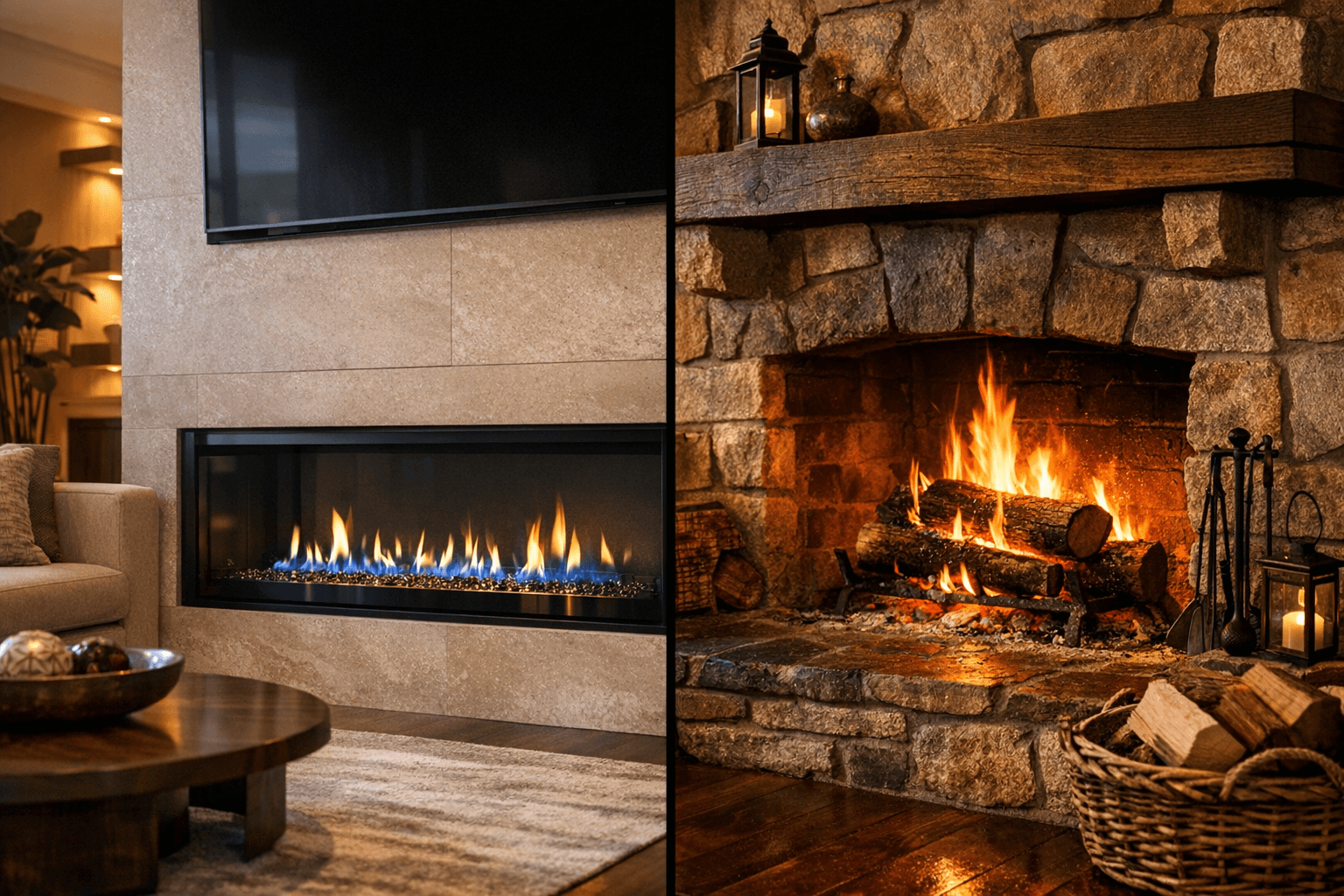
Choosing between a gas fireplace and a wood-burning fireplace involves more than just aesthetics and ambiance. Each type comes with distinct maintenance requirements, safety considerations, and long-term costs that Florida homeowners should understand before making a decision.
This guide compares gas vs wood-burning fireplace maintenance to help you understand what each system requires, how often cleaning is needed, and which option makes the most sense for Florida's unique climate.
Need professional chimney service? Call Pro Air Chimney at 813-513-7861 or schedule at https://proairchimney.com/contact.
Table of Contents
- Key differences at a glance
- Wood-burning fireplace maintenance requirements
- Gas fireplace maintenance requirements
- Cleaning frequency comparison
- Safety considerations
- Cost comparison: maintenance and operation
- Which is better for Florida?
- Wood to gas conversion options
- When to schedule professional service
- FAQ
- Sources
Key Differences at a Glance
| Factor | Gas Fireplace | Wood-Burning Fireplace |
|---|---|---|
| Annual inspection | Required | Required |
| Cleaning frequency | Yearly service | Yearly or when 1/8" buildup |
| Creosote risk | None | High |
| CO risk | Moderate (venting) | Lower (open draft) |
| Typical cleaning cost | $80-$130 | $150-$300 |
| Primary safety concern | Venting/CO | Chimney fires |
| Maintenance complexity | Moderate | Higher |
| Best for Florida | Occasional use | Wood fire enthusiasts |
Wood-Burning Fireplace Maintenance Requirements
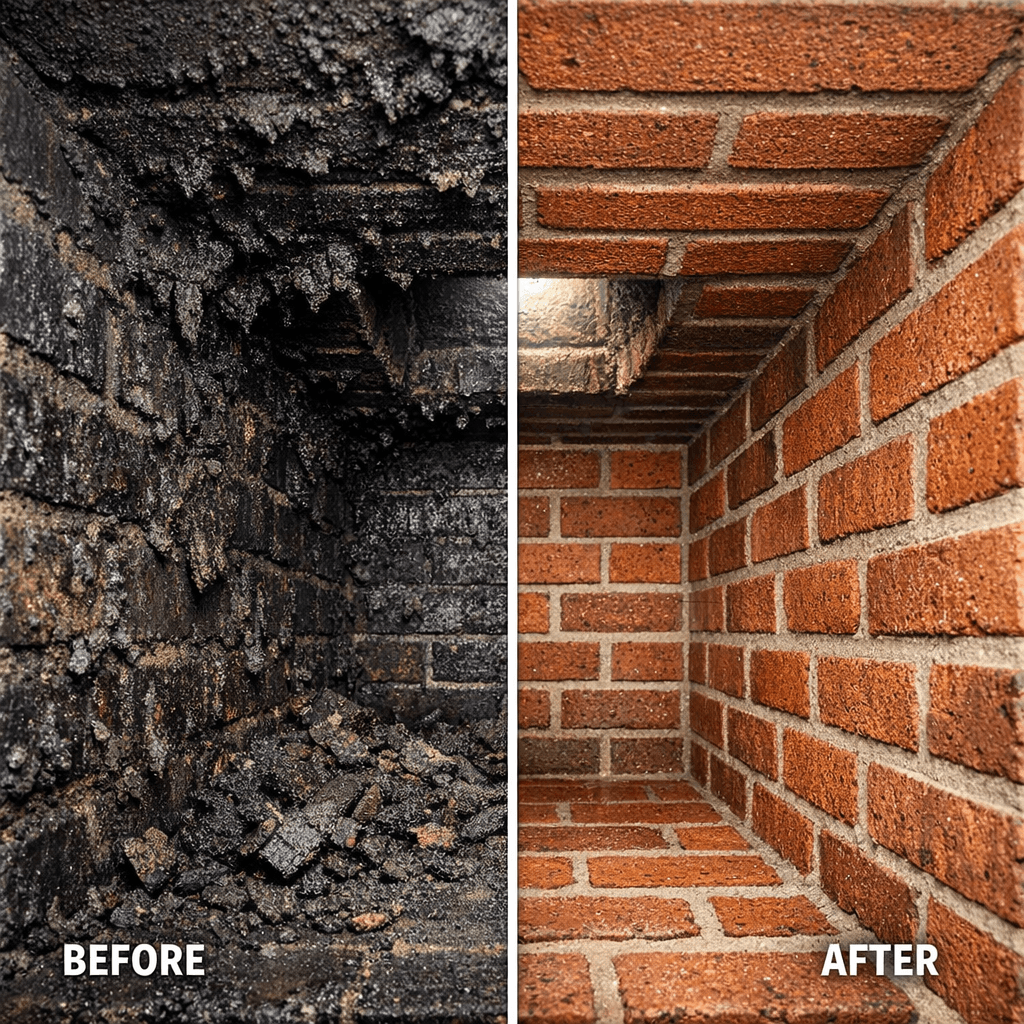
Wood-burning fireplaces require the most hands-on maintenance of any fireplace type. The combustion of wood creates byproducts that accumulate in the chimney and require regular attention.
What wood burning produces
When wood burns, it releases:
- Soot (fine black particles)
- Creosote (condensed tar and smoke residue)
- Ash (burned wood remains)
- Smoke particles that coat the flue lining
These byproducts build up inside your chimney liner and can create serious fire hazards if not removed.
Essential maintenance tasks
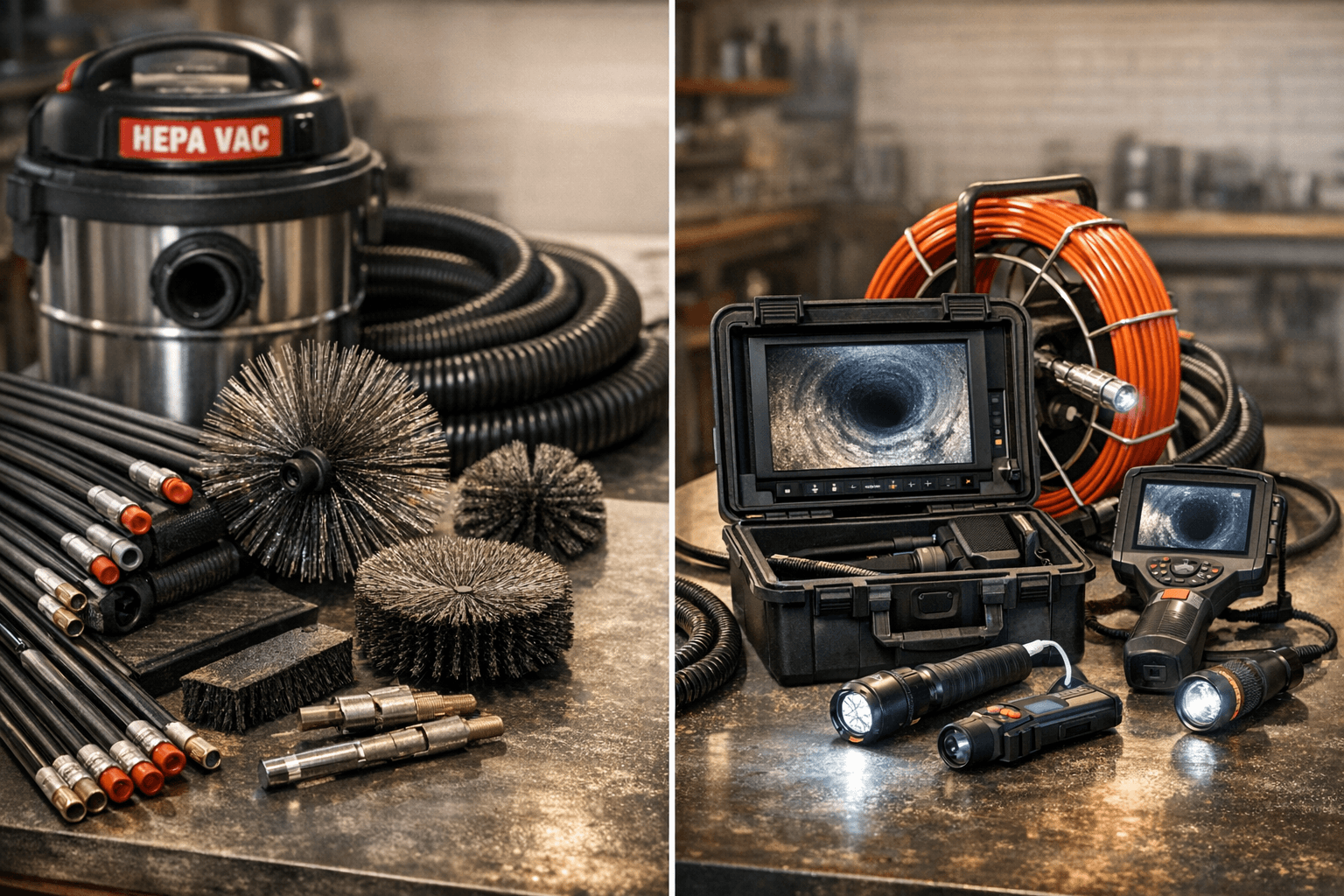
Chimney sweeping:
- Remove soot and creosote deposits from the flue
- CSIA recommends sweeping when buildup reaches 1/8 inch
- More frequent cleaning needed for heavy users
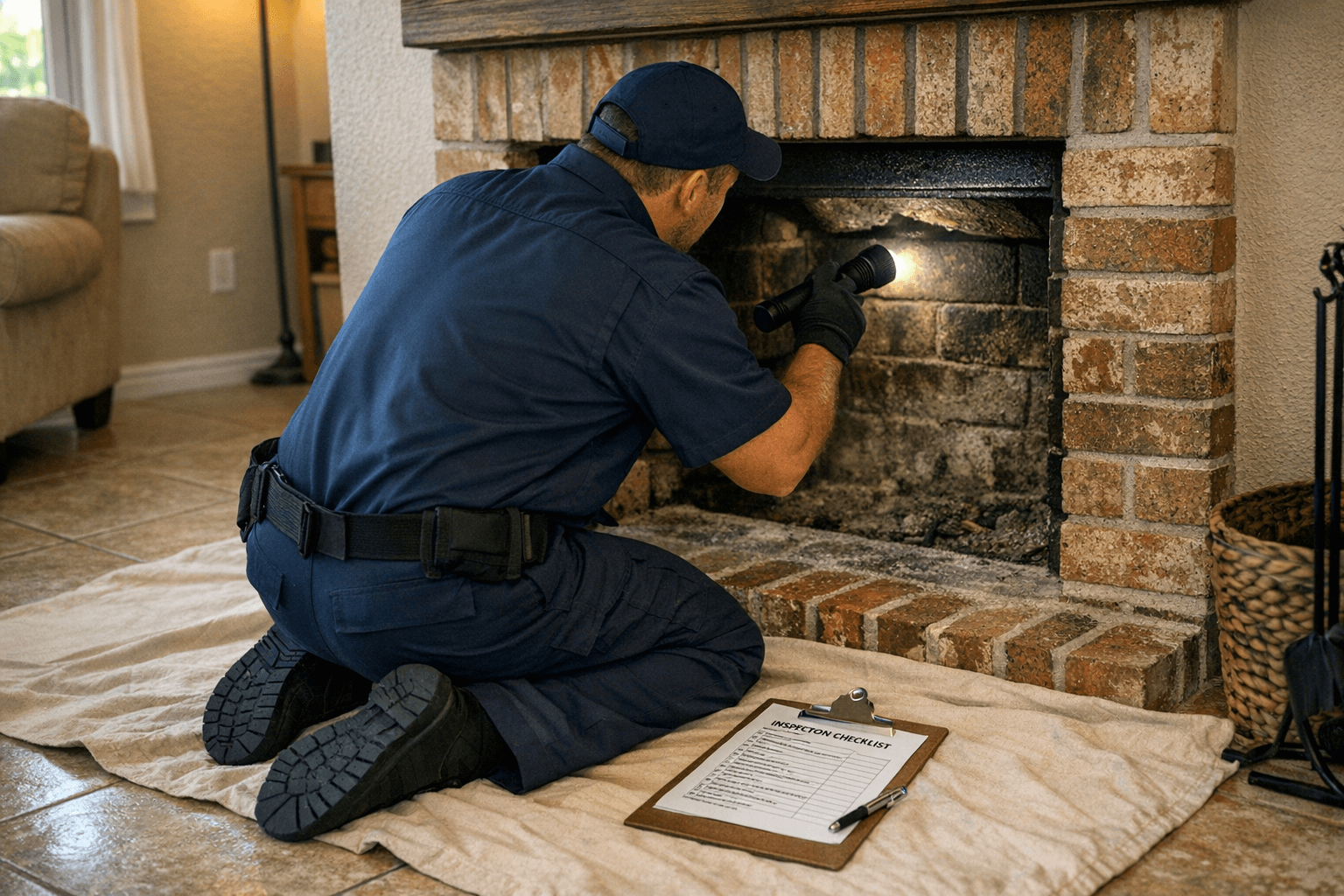
Chimney inspection:
- NFPA 211 requires annual inspection of all chimneys
- Check liner integrity, mortar joints, and cap condition
- Identify cracks, gaps, or deterioration
Firebox maintenance:
- Remove ash regularly (leave 1" bed for insulation)
- Inspect firebricks for cracks or damage
- Check damper operation and seal
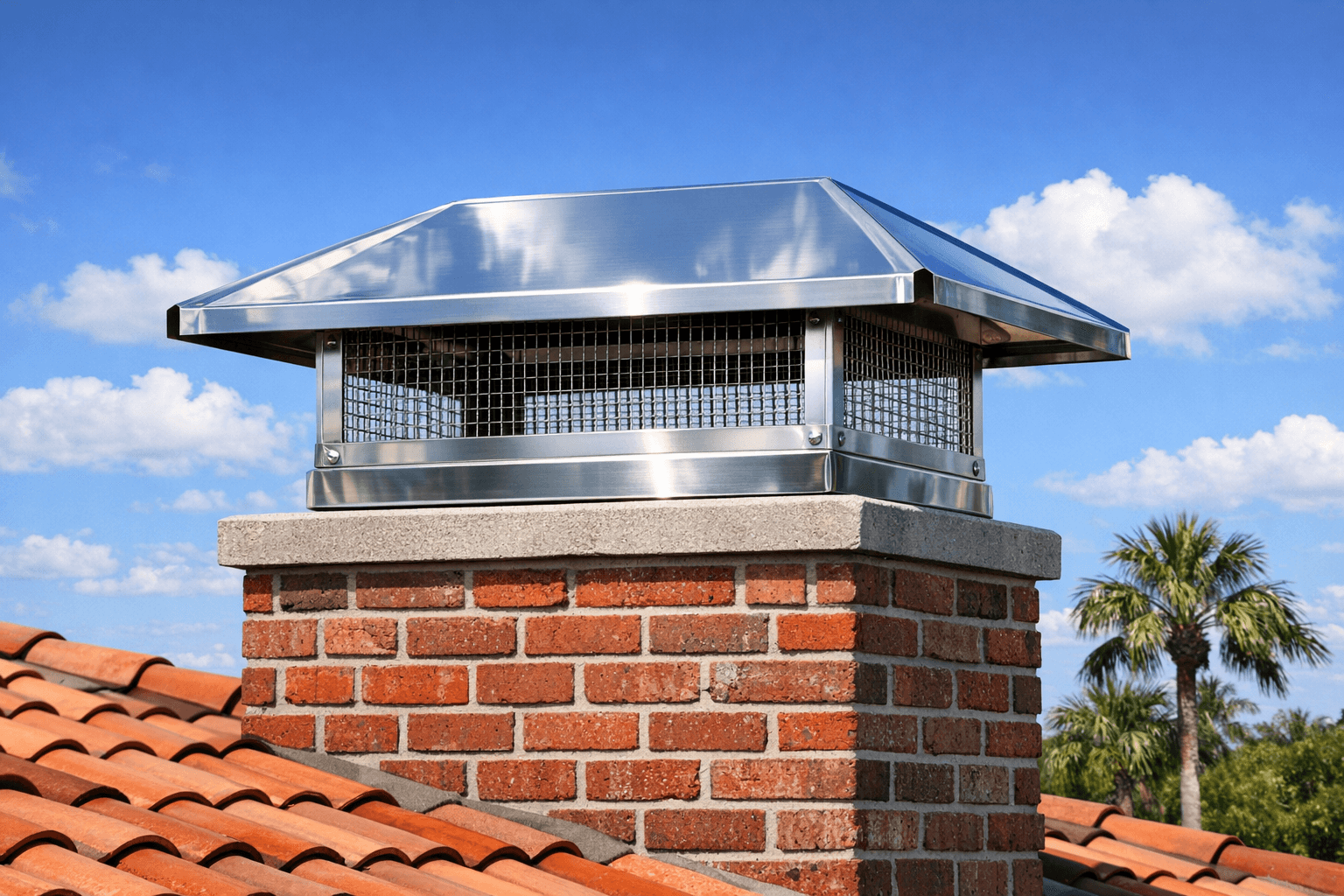
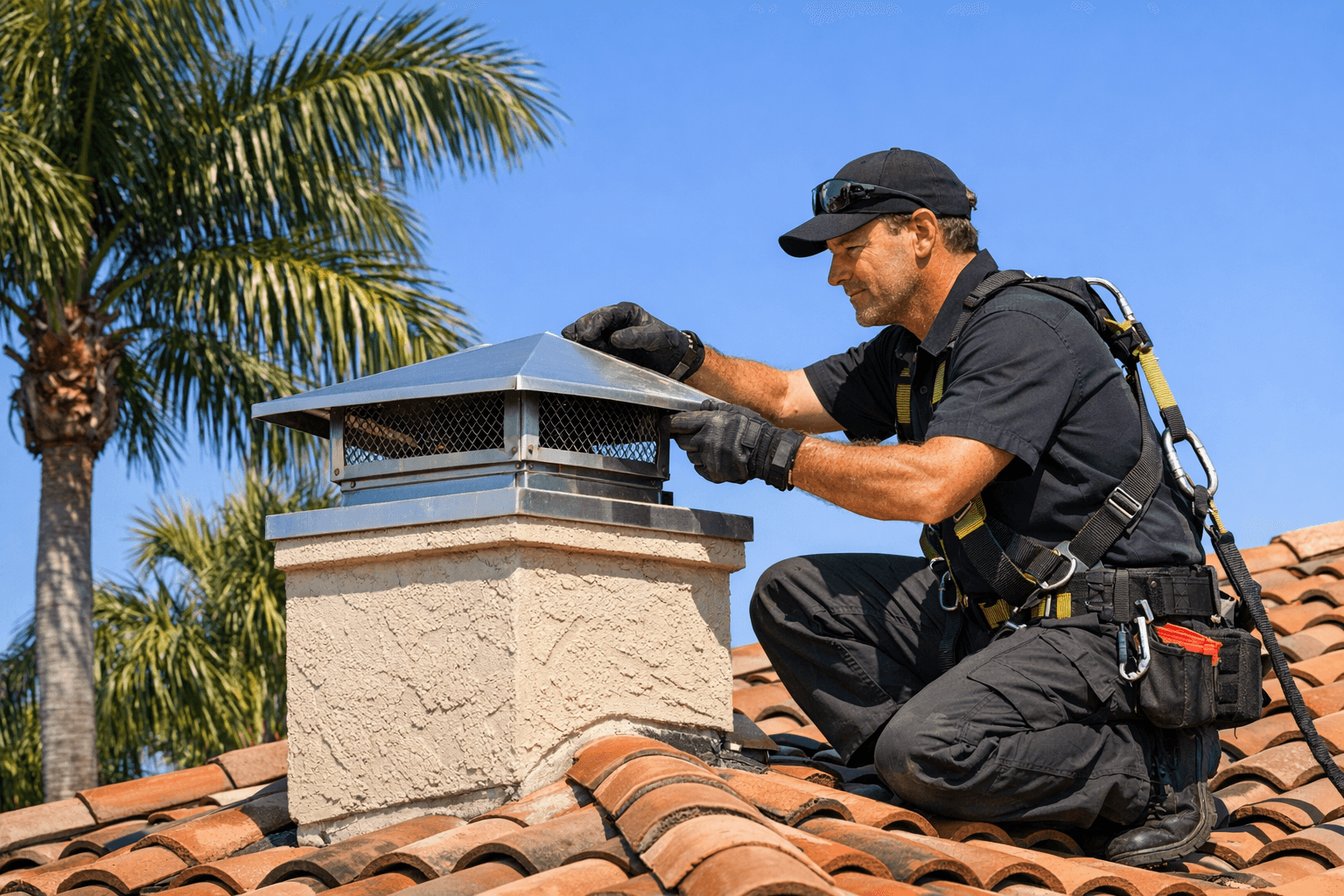
Cap and crown inspection:
- Ensure cap prevents animal entry and water intrusion
- Check crown for cracks that allow moisture damage
For more information on creosote and why it matters, see What Is Creosote?.
Gas Fireplace Maintenance Requirements
Gas fireplaces are generally lower maintenance than wood-burning units, but they still require regular professional attention to operate safely.
What gas combustion produces
Gas burns much cleaner than wood:
- No creosote or significant soot buildup
- Small amounts of combustion residue on logs and burner
- Carbon monoxide (requires proper venting)
- Minor dust accumulation on components
Essential maintenance tasks
Annual professional service:
- Inspect venting system for leaks, blockages, or disconnections
- Clean burner ports and pilot assembly
- Check ignition system and safety controls
- Verify proper flame pattern and color
- Test gas valve operation
- Inspect glass door seals and gaskets
Venting inspection (critical):
- Check for blockages from debris, nests, or deterioration
- Verify vent termination is clear and properly positioned
- Ensure no leaks in vent connections (CO hazard)
Component cleaning:
- Clean ceramic logs or fire glass
- Remove dust from blower assembly (if equipped)
- Wipe down glass doors
Thermocouple and thermopile:
- Test safety sensors that shut off gas if flame fails
- Clean or replace as needed
Cleaning Frequency Comparison
Wood-burning fireplace cleaning schedule
The CSIA (Chimney Safety Institute of America) and NFPA (National Fire Protection Association) recommend:
- Annual inspection at minimum
- Sweep when creosote reaches 1/8 inch thickness
- More frequent cleaning for:
- Heavy users (burning weekly during season)
- Burning unseasoned or wet wood
- Poor draft conditions
- Visible smoke spillage or odor
Florida-specific note: Many Florida homeowners use fireplaces only a few times per season. Even infrequent use can produce creosote, especially during short "ambiance" fires that don't fully heat the flue.
Gas fireplace service schedule
The CPSC (Consumer Product Safety Commission) recommends:
- Annual professional inspection before each heating season
- Service should include:
- Complete venting system check
- Combustion component cleaning
- Safety control verification
Key difference: Gas fireplaces don't need "sweeping" in the traditional sense, but they do need systematic inspection of venting and components that can fail and create CO hazards.
Safety Considerations
Wood-burning fireplace safety risks
Primary concern: Chimney fires
Creosote is highly combustible. When deposits reach dangerous levels, a spark or excessive heat can ignite them, causing a chimney fire that can:
- Damage the flue liner
- Crack masonry
- Spread to the home structure
- Create toxic smoke conditions
Other wood-burning risks:
- Smoke inhalation from poor draft or backdrafting
- Spark and ember escape without proper screens
- Carbon monoxide (less common with open fireplaces but possible)
- House fire from improper ash disposal or nearby combustibles
Prevention:
- Regular chimney cleaning and inspection
- Burn only seasoned, dry wood
- Use proper fireplace screens
- Maintain working smoke and CO detectors
Gas fireplace safety risks
Primary concern: Carbon monoxide
Gas fireplaces produce CO during combustion. If venting fails, disconnects, or becomes blocked, CO can enter the living space. The CPSC specifically warns about this risk and recommends annual professional inspection of all fuel-burning appliances.
Other gas fireplace risks:
- Gas leaks from damaged valves or connections
- Burns from hot glass panels (can exceed 400°F)
- Fire from accumulated dust in blower or around components
- Improper installation issues (especially with ventless units)
Prevention:
- Annual professional venting inspection
- Install CO detectors on every floor
- Never disable safety switches or controls
- Keep combustibles away from unit
Important: The EPA notes that fuel-burning appliances, including gas fireplaces, can produce nitrogen dioxide (NO₂) which may worsen asthma and respiratory conditions.
Cost Comparison: Maintenance and Operation
Annual maintenance costs
| Service | Gas Fireplace | Wood-Burning |
|---|---|---|
| Basic cleaning/service | $80-$130 | $150-$300 |
| Full inspection | $100-$200 | $150-$300 |
| Cap replacement | $150-$400 | $150-$500 |
| Liner repair/replacement | $1,000-$3,000 | $1,000-$4,000 |
| Damper repair | $150-$350 | $200-$500 |
Costs based on 2025 national averages from HomeAdvisor
Operating costs
Gas fireplace:
- Natural gas: $0.50-$1.50/hour of operation
- Propane: $1.00-$3.00/hour (higher fuel cost)
- Electricity for ignition/blower: minimal
Wood-burning:
- Firewood: $200-$400/cord (varies by region)
- One cord may last 2-3 months of regular use
- Additional cost if you don't have wood storage/splitting capability
Long-term cost considerations
Gas wins on:
- Lower annual maintenance costs
- More predictable operating expenses
- Less time investment in maintenance
Wood wins on:
- No utility cost if you source your own wood
- No gas line installation or connection fees
- Potential heating during power outages
Which Is Better for Florida?
For most Florida homes, gas fireplaces are the better practical choice. Here's why:
Florida climate factors
Limited heating need: Florida's mild winters mean most fireplaces see only occasional use-perhaps 10-20 fires per season for ambiance rather than heat. Gas is ideal for this use pattern because:
- Instant on/off operation
- No fire-building or cleanup
- Better for spontaneous use
Humidity concerns: Florida's high humidity creates unique challenges:
- Unused wood fireplace chimneys act as air leak pathways
- Open dampers can let humid air into/out of the home
- Increases HVAC load and energy costs
- Gas fireplaces with sealed combustion minimize this issue
Inefficiency of wood burning: The EPA notes that traditional wood-burning fireplaces are generally inefficient heaters and can actually pull warm air up the chimney, making other rooms cooler. This matters less in Florida where heating demand is low.
When wood-burning makes sense in Florida
- You genuinely enjoy the wood fire experience
- You have access to affordable, seasoned firewood
- You're willing to commit to proper maintenance
- You want a heat source that works during power outages
Florida-specific maintenance note
Because Florida fireplaces sit unused for long periods:
- Check for pest activity before each season (birds, squirrels, insects)
- Inspect for moisture damage from summer storms
- Test damper operation before first use each year
For professional chimney service in Florida, visit /services/chimney-cleaning.
Wood to Gas Conversion Options
If you have a wood-burning fireplace and want the convenience of gas, several conversion options exist.
Option 1: Gas log set ($500-$2,000 installed)
What it is: Ceramic logs with a gas burner that sits inside your existing fireplace opening.
Types:
- Vented gas logs - Use existing chimney, more realistic flame
- Ventless gas logs - No chimney required, higher efficiency but indoor air quality concerns
Pros:
- Lowest cost conversion option
- Keeps masonry fireplace appearance
- Minimal modification required
Cons:
- Less efficient than sealed inserts
- Ventless models may add humidity and combustion byproducts to indoor air
Option 2: Gas fireplace insert ($2,300-$8,000 installed)
What it is: A sealed firebox unit that fits into the existing fireplace opening and vents through the chimney or a new liner.
Pros:
- Most efficient conversion option
- Better heat output control
- Sealed combustion (better for indoor air quality)
- Realistic appearance with modern features
Cons:
- Higher upfront cost
- May require electrical work for blower/ignition
- Needs proper liner installation
Option 3: Direct-vent gas fireplace ($3,000-$10,000+ installed)
What it is: Complete replacement with a new gas fireplace unit that vents directly through an exterior wall, not necessarily using the existing chimney.
Pros:
- Maximum efficiency and design flexibility
- Modern features and aesthetics
- Can be installed where wood fireplaces couldn't go
Cons:
- Most expensive option
- Significant construction/finishing work
- May not use existing chimney at all
Conversion cost factors
| Cost Component | Typical Range |
|---|---|
| Gas line installation | $200-$1,000 |
| Chimney liner (if needed) | $1,000-$3,000 |
| Electrical work | $150-$500 |
| Permits | $100-$400 |
| Total conversion | $500-$5,500 |
Average conversion cost: approximately $3,000 (HomeAdvisor 2025)
When to Schedule Professional Service
Before the season
Both gas and wood-burning fireplaces should be inspected before the first use each season:
- Verify venting/chimney is clear
- Test all safety systems
- Clean components as needed
- Address any issues found
After these events
Schedule service after:
- Storm damage near the chimney
- Water intrusion signs (staining, odor, rust)
- Unusual odors when operating or not
- Visible damage to cap, crown, or flashing
- Animal activity sounds or evidence
- Smoke issues (spillage into room, slow draft)
- Pilot problems (gas: won't stay lit, weak flame)
Based on usage
Heavy use (weekly): Consider mid-season inspection for wood-burning Moderate use (monthly): Annual inspection sufficient Light use (few times/season): Annual inspection, with extra attention to pest and moisture issues
Ready to schedule? Contact Pro Air Chimney at 813-513-7861.
Frequently Asked Questions
Do gas fireplaces need chimney cleaning?
Gas fireplaces don't produce creosote like wood, so they don't need traditional chimney sweeping. However, they require annual professional inspection of the venting system, burner components, and safety controls. Blockages from debris or animal nests can still occur and create dangerous CO conditions.
How often should a wood-burning chimney be cleaned?
The CSIA recommends cleaning when creosote buildup reaches 1/8 inch thickness. For most users, this means at least once per year. Heavy users who burn frequently may need cleaning more often. Annual inspection is recommended regardless of cleaning frequency.
Is a gas or wood fireplace safer?
Each has different risks. Wood fireplaces primarily risk chimney fires from creosote buildup. Gas fireplaces primarily risk carbon monoxide exposure from venting failures. Both are safe when properly maintained with annual professional service.
Which costs more to maintain: gas or wood?
Gas fireplaces cost less to maintain annually-typically $80-$130 for service compared to $150-$300 for wood-burning chimney cleaning. However, gas fireplaces have higher component replacement costs when parts like thermocouples or gas valves fail.
Can I convert my wood fireplace to gas?
Yes. Options include gas log sets ($500-$2,000), gas inserts ($2,300-$8,000), or complete direct-vent replacement ($3,000-$10,000+). The best option depends on your budget, efficiency goals, and whether you want to use the existing chimney.
Which is better for occasional use in Florida?
Gas is generally better for occasional Florida use because of instant on/off convenience, lower maintenance requirements, and no need to store firewood. Wood-burning is fine if you enjoy the traditional fire experience and commit to proper maintenance.
Do I need a CO detector with a gas fireplace?
Absolutely yes. The CPSC recommends CO detectors on every floor of any home with fuel-burning appliances. Gas fireplaces produce carbon monoxide during normal operation, and venting failures can allow CO to enter living spaces.
How do I know if my chimney needs cleaning?
Signs include: strong smoky or tar odor (even when not in use), black debris falling into the firebox, smoke entering the room when starting fires, and visible dark buildup around the damper area. For wood-burning, professional inspection can measure creosote thickness.