Signs Your Chimney Needs Repair: Don't Ignore These Warning Signs
A damaged chimney is more than an eyesore-it's a safety hazard that can lead to house fires, carbon monoxide exposure, and costly structural damage. Knowing the warning signs early can save you thousands in repairs and protect your family.
Florida chimneys face unique challenges: high humidity, hurricane-force winds, salt air corrosion, and intense rain. Even if you rarely use your fireplace, these conditions can deteriorate your chimney faster than you might expect.
If you notice any of these warning signs, call Pro Air Chimney at 813-513-7861 for a professional inspection.
Table of Contents
- High-Urgency Warning Signs (Stop Using Immediately)
- Exterior Warning Signs
- Interior and Fireplace Warning Signs
- Florida-Specific Chimney Problems
- Warning Signs Checklist
- When Repairs Are Urgent
- DIY Inspection vs Professional Assessment
- FAQ
- Related Services
- Service Areas
- Final CTA
High-Urgency Warning Signs (Stop Using Immediately) {#high-urgency-warning-signs}
These signs indicate serious structural or safety issues. Stop using your fireplace and schedule an inspection immediately if you notice any of the following:
Leaning or Tilting Chimney
A chimney that leans away from the house or appears to be pulling away from the roofline signals structural failure. This can indicate:
- Foundation problems beneath the chimney
- Deteriorated mortar joints that can no longer support the weight
- Water damage that has weakened the internal structure
- Seismic activity or ground settling
A leaning chimney poses a collapse risk and should be evaluated by a professional immediately. (chimneymasterscleaning.com)
Cracked or Deteriorated Flue Liner
The flue liner (clay tiles or metal) contains combustion gases and prevents heat transfer to combustible materials. NFPA 211 requires repair or relining if the liner is cracked or deteriorated. (lifetimechimneysupply.com)
Signs of liner damage include:
- Pieces of clay tile in the firebox
- Visible cracks when looking up the flue
- Excessive creosote buildup in specific areas
- Carbon monoxide detector alarms when using the fireplace
Smoke Backing Up Into the Home
If smoke fills your room instead of going up the chimney, this indicates a serious venting problem:
- Blockage from animal nests, debris, or collapsed liner
- Draft issues from structural damage
- Improper flue sizing after appliance changes
- Cap or crown damage preventing proper airflow
Poor venting creates carbon monoxide poisoning risk-a silent, potentially deadly hazard. (chicagofireplaceinc.com)
Loose Bricks or Falling Masonry
Bricks or stone pieces falling from the chimney indicate severe structural weakening. This creates:
- Direct hazard to people below
- Water entry points that accelerate deterioration
- Risk of partial or complete chimney collapse
If you find brick pieces on your roof or ground near the chimney, do not use the fireplace until a professional assesses the damage.
Exterior Warning Signs {#exterior-warning-signs}
These signs are often visible from the ground and indicate repairs are needed before problems worsen.
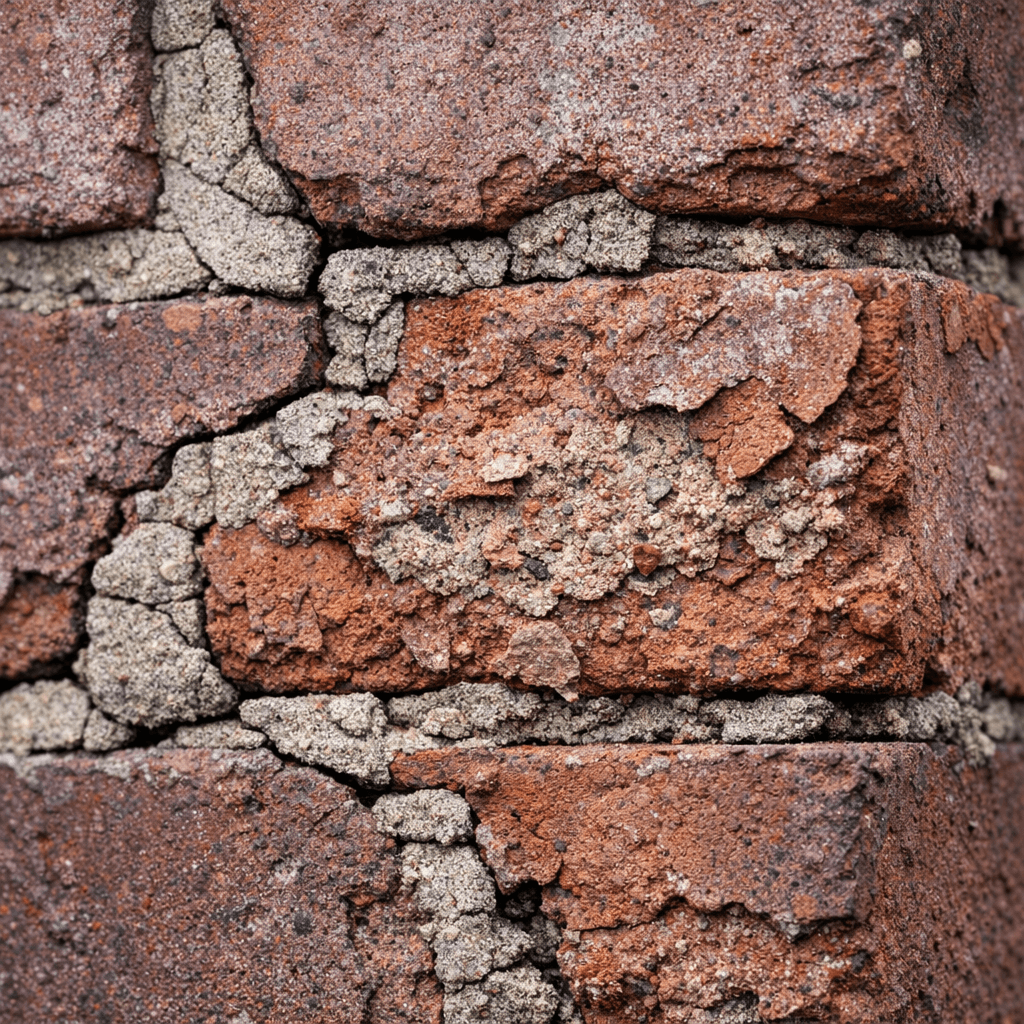
Cracked, Missing, or Crumbling Mortar Joints
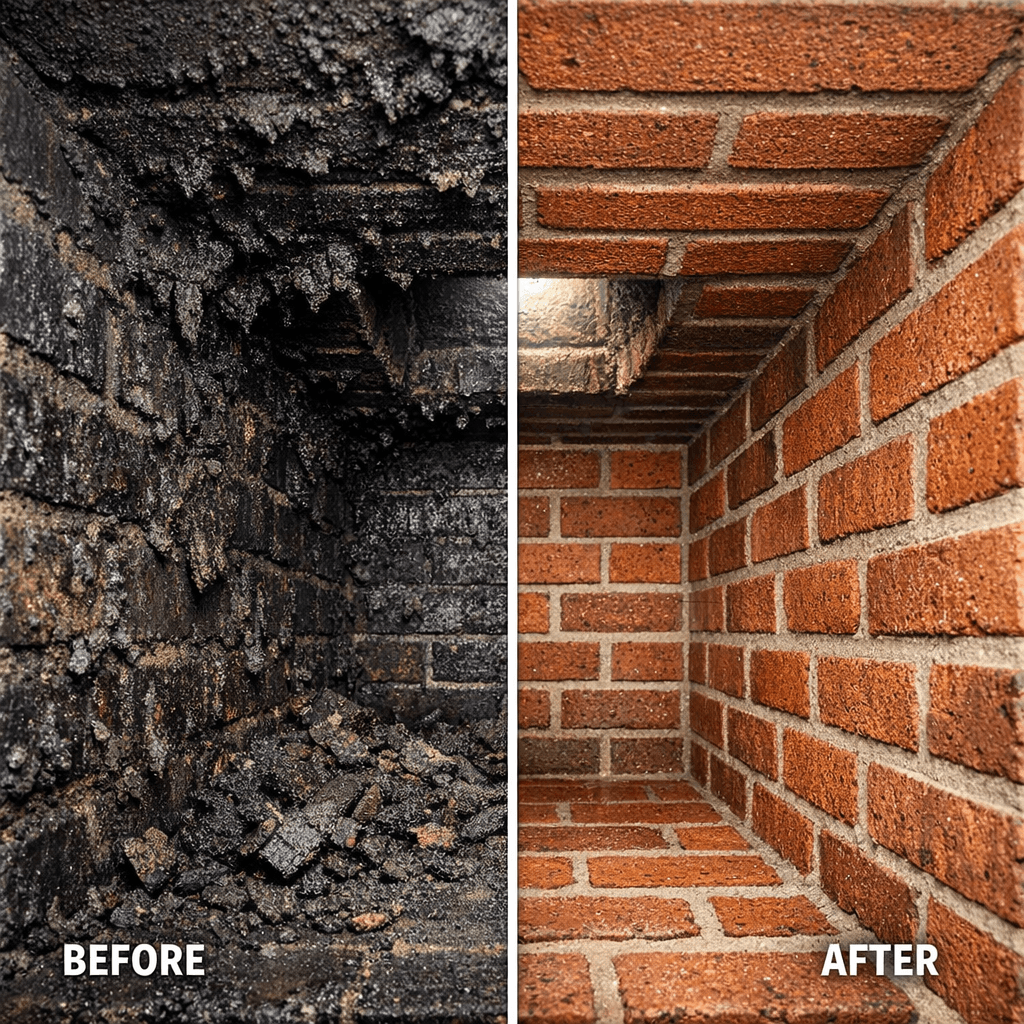
Mortar joints (the material between bricks) are your chimney's first line of defense against water. Damaged mortar allows moisture to penetrate the structure, leading to:
- Accelerated freeze-thaw damage (less common in Florida, but still occurs)
- Interior moisture damage
- Structural weakening over time
- Spalling bricks
Tuckpointing (replacing damaged mortar) is typically needed every 25-30 years, but Florida's humidity can accelerate this timeline. (royalextremeclean.com)
Spalling Bricks
Spalling occurs when water penetrates brick faces and causes them to flake, chip, or pop off. You might notice:
- Brick faces crumbling or missing
- Piles of brick fragments at the chimney base
- Exposed inner brick layers
- Rough, pitted brick surfaces
Spalling indicates chronic moisture intrusion and will spread if not addressed. The underlying water entry point (crown, cap, flashing) must be fixed along with brick replacement.
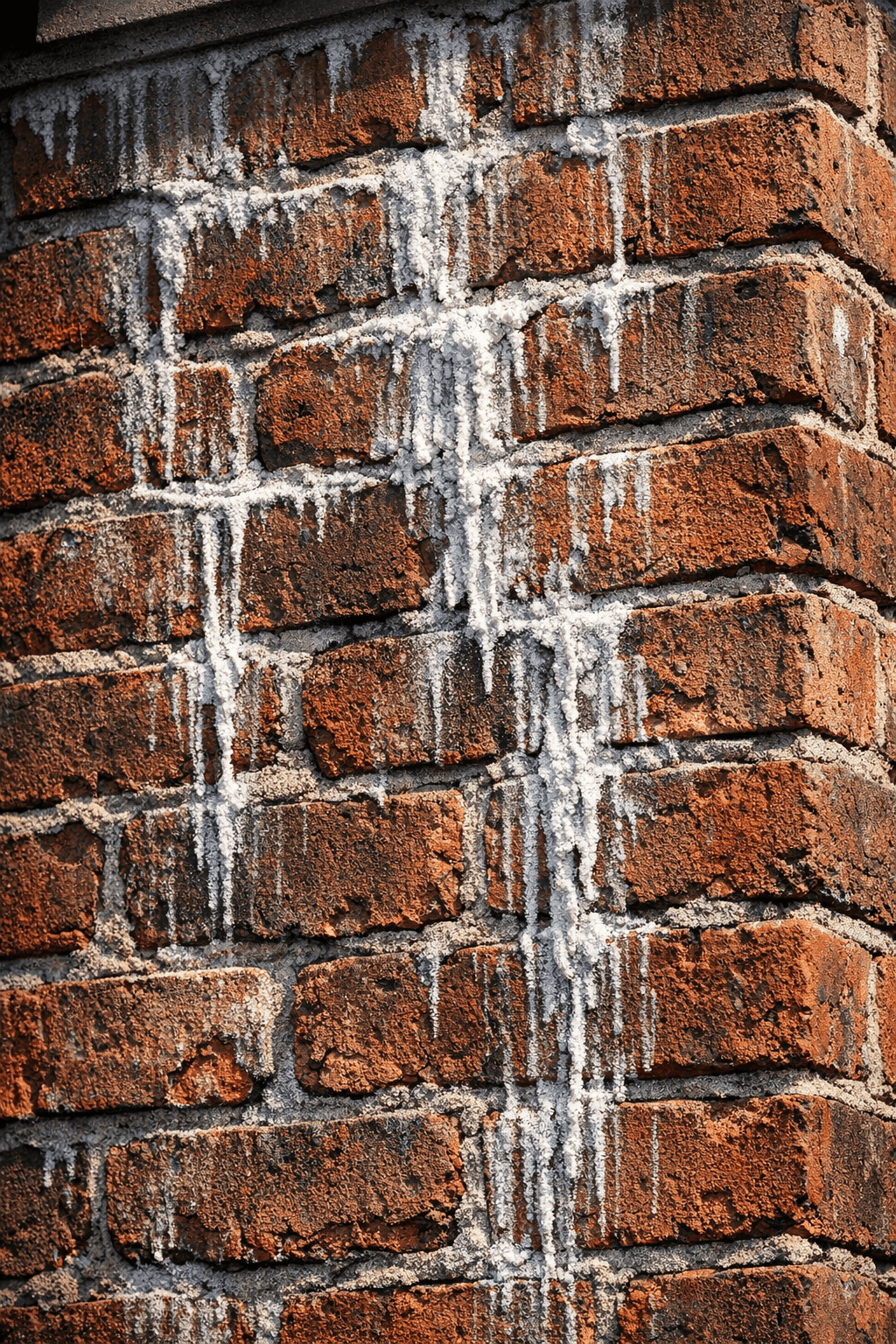
White Staining (Efflorescence)
White, chalky deposits on brick surfaces indicate moisture moving through the masonry and depositing mineral salts. While sometimes dismissed as cosmetic, efflorescence signals:
- Active water penetration
- Potential internal moisture damage
- Need to identify and fix the water source
Efflorescence itself can be cleaned, but the underlying moisture problem requires professional attention. (royalextremeclean.com)
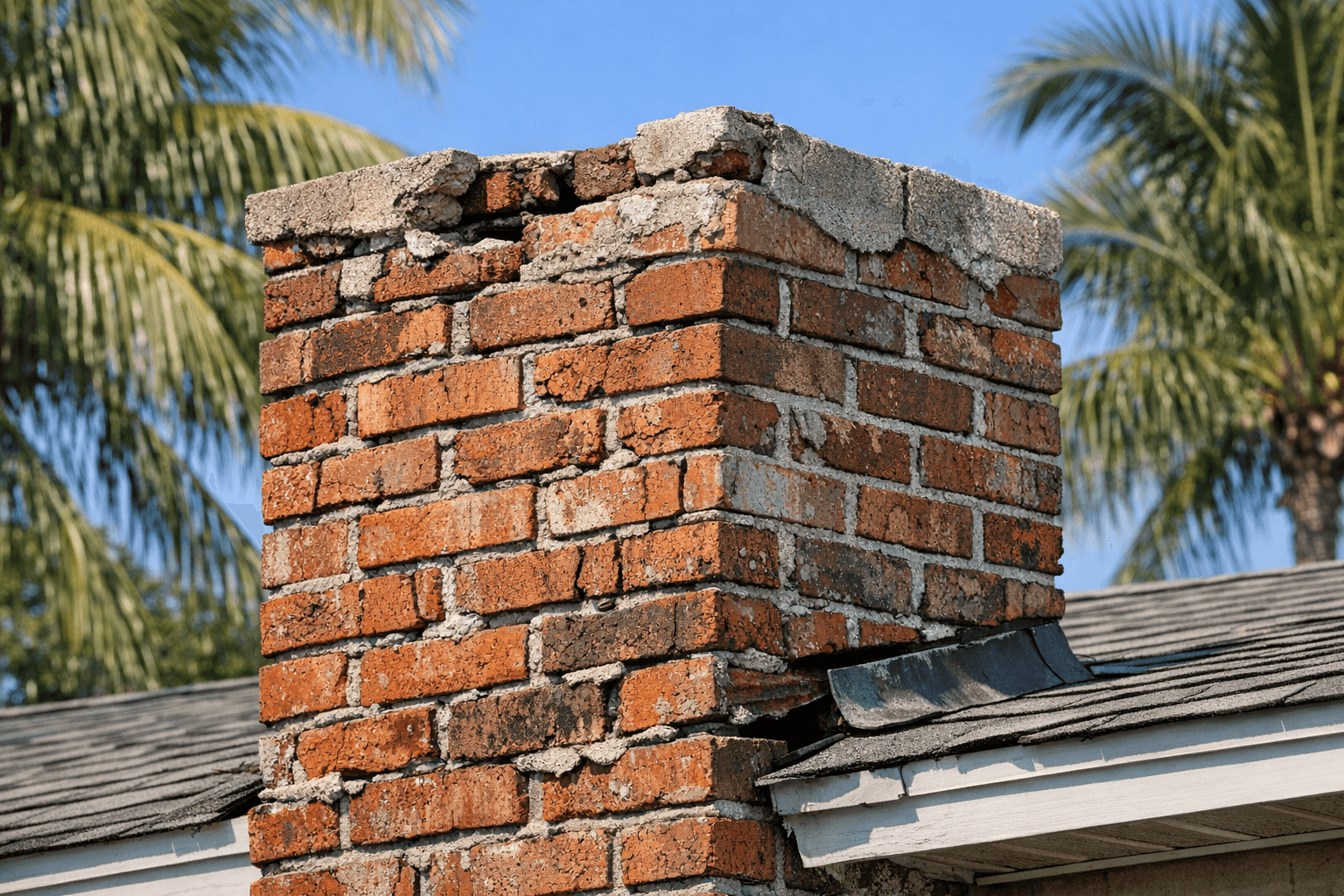
Cracked Chimney Crown
The chimney crown is the concrete or mortar slab covering the top of the chimney around the flue. Crown cracks are one of the most common water entry points. Signs include:
- Visible hairline or larger cracks on the crown surface
- Pieces of crown material falling
- Gaps between the crown and flue tiles
- Water stains on chimney exterior below the crown
A damaged crown can often be repaired with sealants if caught early, but severe damage may require crown replacement. (forcemasonry.net)
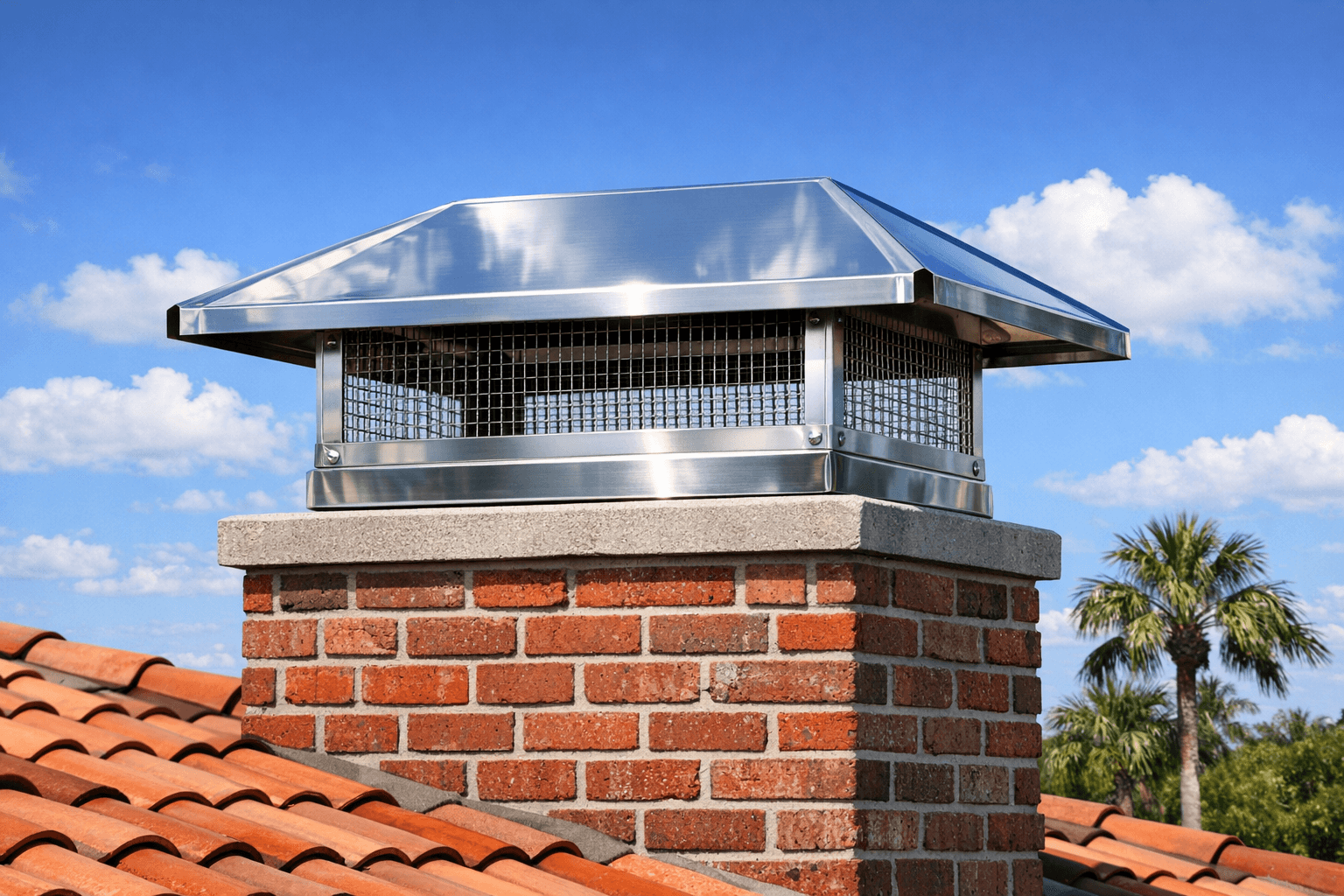
Damaged or Missing Chimney Cap
The chimney cap covers the flue opening, keeping out rain, animals, and debris. A damaged cap leads to:
- Water pouring directly into the flue
- Animal nests blocking the flue
- Debris accumulation
- Accelerated interior deterioration
Check that your cap is securely attached, has intact mesh screening, and shows no rust or corrosion.
Flashing Problems
Flashing is the metal seal where the chimney meets the roof. Failed flashing causes leaks into your attic and walls. Watch for:
- Visible gaps between flashing and chimney
- Lifted or bent metal edges
- Rust or corrosion on flashing material
- Water stains on ceilings or walls near the chimney
Flashing repair is often the solution to mysterious interior water stains near chimneys. (forcemasonry.net)
Interior and Fireplace Warning Signs {#interior-warning-signs}
Problems inside your home often indicate external chimney damage that's progressed significantly.
Rust on Damper or Firebox Components
Rust inside your fireplace indicates moisture intrusion-firebox components shouldn't be exposed to water. Check for:
- Rust on the damper mechanism
- Difficulty opening or closing the damper
- Rust on firebox walls or grate
- Rust stains dripping down interior walls
Moisture entering through a damaged cap, crown, or flashing causes this corrosion. (royalextremeclean.com)
Water Staining Around the Fireplace
Water stains on walls or ceilings near the chimney indicate active leaks. Common causes include:
- Failed flashing at the roofline
- Cracked crown allowing water entry
- Missing or damaged cap
- Deteriorated mortar joints
Don't ignore water stains-the visible damage represents only a fraction of the moisture affecting your structure.
Musty Odors from the Fireplace
A persistent musty smell indicates moisture has entered and possibly created mold growth inside the chimney chase or surrounding structure. This is especially common in:
- Humid Florida climates
- Chimneys that haven't been used recently
- Systems with ventilation problems
Professional inspection can identify the moisture source and assess any mold concerns. (chimney-expert.com)
Wallpaper or Paint Damage Near the Chimney
Peeling wallpaper, bubbling paint, or discoloration near the chimney indicates moisture migration through walls. This moisture likely originates from:
- Chimney leaks penetrating into wall cavities
- Condensation from improper venting
- Rising damp from foundation issues
Florida-Specific Chimney Problems {#florida-specific-problems}
Florida chimneys face unique challenges that homeowners in other states don't experience. Understanding these helps you maintain your chimney properly.
Humidity and Heavy Rain Damage
Florida's constant humidity and intense rainstorms create chronic water intrusion problems:
Common symptoms:
- Musty odors even without recent rain
- Persistent efflorescence (white staining)
- Rapid mortar deterioration
- Peeling paint around the fireplace surround
- Rusted components despite limited fireplace use
Primary causes:
- Undersized or missing chimney caps that can't handle wind-driven rain
- Porous brick absorbing atmospheric moisture
- Failed flashing allowing roof runoff into the chimney structure
- Deteriorated crowns with multiple crack entry points
Florida-specific solutions:
- Install high-quality caps with proper drip edges sized for wind-driven rain
- Apply breathable masonry water repellent (silane/siloxane type) after repairs
- Ensure proper crown slope for water runoff
- Check flashing condition annually
Hurricane and Storm Damage
Tropical storms and hurricanes cause specific chimney damage patterns:
What happens:
- Caps blown off or bent
- Chase covers peeled back or dented
- Flashing lifted or torn
- Debris impact cracking crowns or bricks
- Tree limb damage to the chimney stack
- Shifting from high winds or flooding
Post-storm action:
- Do not use the fireplace until inspected if you suspect any damage
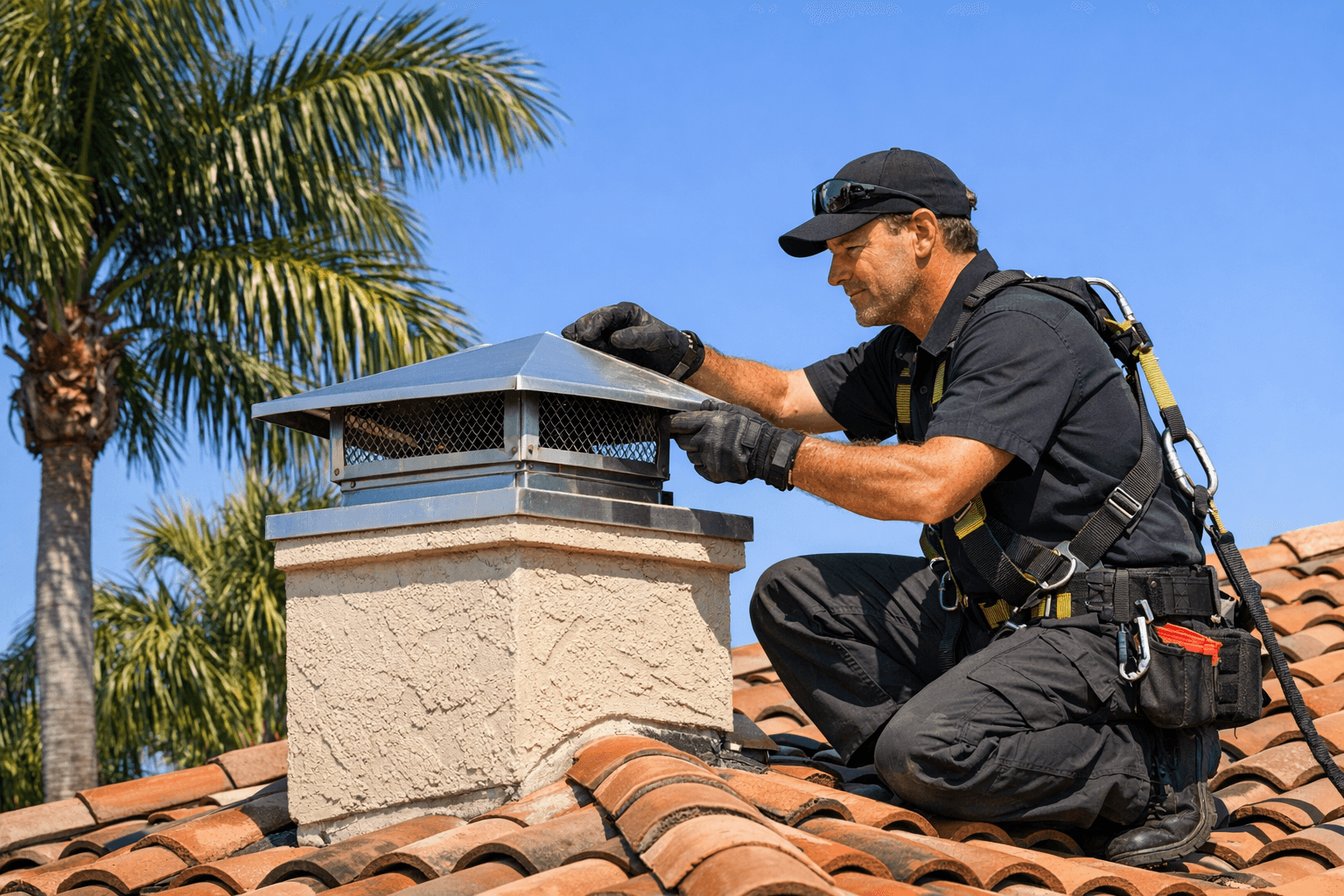
- Get a roof-level inspection of cap, crown, flashing, and overall alignment
- Request a Level 2 inspection after significant storm events-NFPA 211 requires this after external events likely to cause damage
- Address water intrusion quickly to prevent mold growth in chase areas
Salt Air Corrosion (Coastal Areas)
Coastal Florida properties face accelerated corrosion from salt air:
Components affected:
- Metal chimney caps
- Chase covers on prefab systems
- Spark arrestors and mesh screens
- Damper mechanisms
- Gas log components
- Metal flue liners
Best practices for coastal chimneys:
- Specify 316 stainless steel for exterior components (better chloride resistance than 304 grade)
- Avoid galvanized parts exposed to salt spray
- Rinse exterior metal components occasionally with fresh water
- Inspect metal components annually for corrosion
- Replace corroded caps before they fail completely
Prefab Chimney Chase Issues
Many Florida homes have factory-built (prefab) fireplaces with framed wood chases instead of masonry chimneys. These systems have specific failure points:
Common problems:
- Chase cover failure: The metal lid rusts through, allowing water into the chase
- Storm collar gaps: Seals fail around the flue pipe
- Wood rot: Water in the chase rots framing members
- Interior rust: Firebox and flue sections corrode from moisture
Solutions:
- Replace rusted chase covers with properly sloped stainless steel covers
- Reseal storm collars and pipe penetrations
- Inspect chase interior for rot or water damage
- Install a quality cap on the flue termination
Warning Signs Checklist {#warning-signs-checklist}
Use this checklist to assess your chimney's condition. Check any signs you observe:
Exterior Signs
- Chimney leaning or tilting
- Bricks loose, falling, or missing
- Cracked, crumbling, or missing mortar between bricks
- Spalling bricks (flaking, chipping, pitting)
- White staining (efflorescence) on bricks
- Cracks visible in the chimney crown
- Cap missing, damaged, or rusted
- Flashing lifted, bent, or showing gaps
- Rust stains running down chimney exterior
Interior Signs
- Smoke backing up into the room when using fireplace
- Damper difficult to open or close
- Rust on damper, firebox, or grate
- Water stains on walls or ceiling near chimney
- Musty or smoky odor from fireplace area
- Paint or wallpaper damage near chimney
- Water in firebox or ash pit
- Debris or animal evidence in firebox
Performance Signs
- Poor draft (fire struggles to stay lit)
- Excessive smoke during use
- Carbon monoxide detector alarms during fireplace use
- Strong creosote smell even without fire
Scoring:
- 1-3 signs: Schedule an inspection within 30 days
- 4-6 signs: Schedule an inspection within 2 weeks
- 7+ signs or any high-urgency sign: Stop using fireplace and call immediately
When Repairs Are Urgent {#when-repairs-are-urgent}
Some chimney problems require immediate attention. Stop using your fireplace and call a professional right away if you experience:
- Any leaning or structural shifting of the chimney
- Smoke filling the room instead of venting properly
- Carbon monoxide detector alarms during fireplace use
- Visible flames or fire in areas outside the firebox
- Large sections of masonry falling from the chimney
- Strong gas smell from a gas fireplace or insert
- After any hurricane, earthquake, or major storm that may have caused damage
Inspection Levels Explained
The Chimney Safety Institute of America (CSIA) defines three inspection levels based on NFPA 211:
Level 1 Inspection ($100-$250)
- Visual examination of accessible areas
- Appropriate for regularly maintained chimneys with no changes
- Included with many cleaning services
Level 2 Inspection ($250-$500)
- Includes video scanning of flue interior
- Required after system changes, property transfers, or external events (storms, earthquakes)
- Recommended when problems are suspected but not visible
Level 3 Inspection ($500-$1,000+)
- Involves removing components to access hidden areas
- Required when serious hazards are suspected
- May include partial demolition to assess concealed damage
(csia.org)
DIY Inspection vs Professional Assessment {#diy-vs-professional}
What You Can Check Yourself
From ground level with binoculars, you can observe:
- Overall chimney alignment (leaning?)
- Visible crown cracks
- Cap condition and presence
- Major brick damage or spalling
- Flashing condition at roofline
- Efflorescence (white staining)
Inside, you can check:
- Damper operation
- Visible rust on components
- Water or debris in firebox
- Odors from the fireplace area
When to Call a Professional
Professional inspection is essential when:
- You observe any warning signs from the checklist
- The chimney hasn't been inspected in over a year
- You're buying or selling a home
- After any significant storm or weather event
- The fireplace has been unused for extended periods
- You've made changes to the heating system
- You detect smoke or carbon monoxide issues
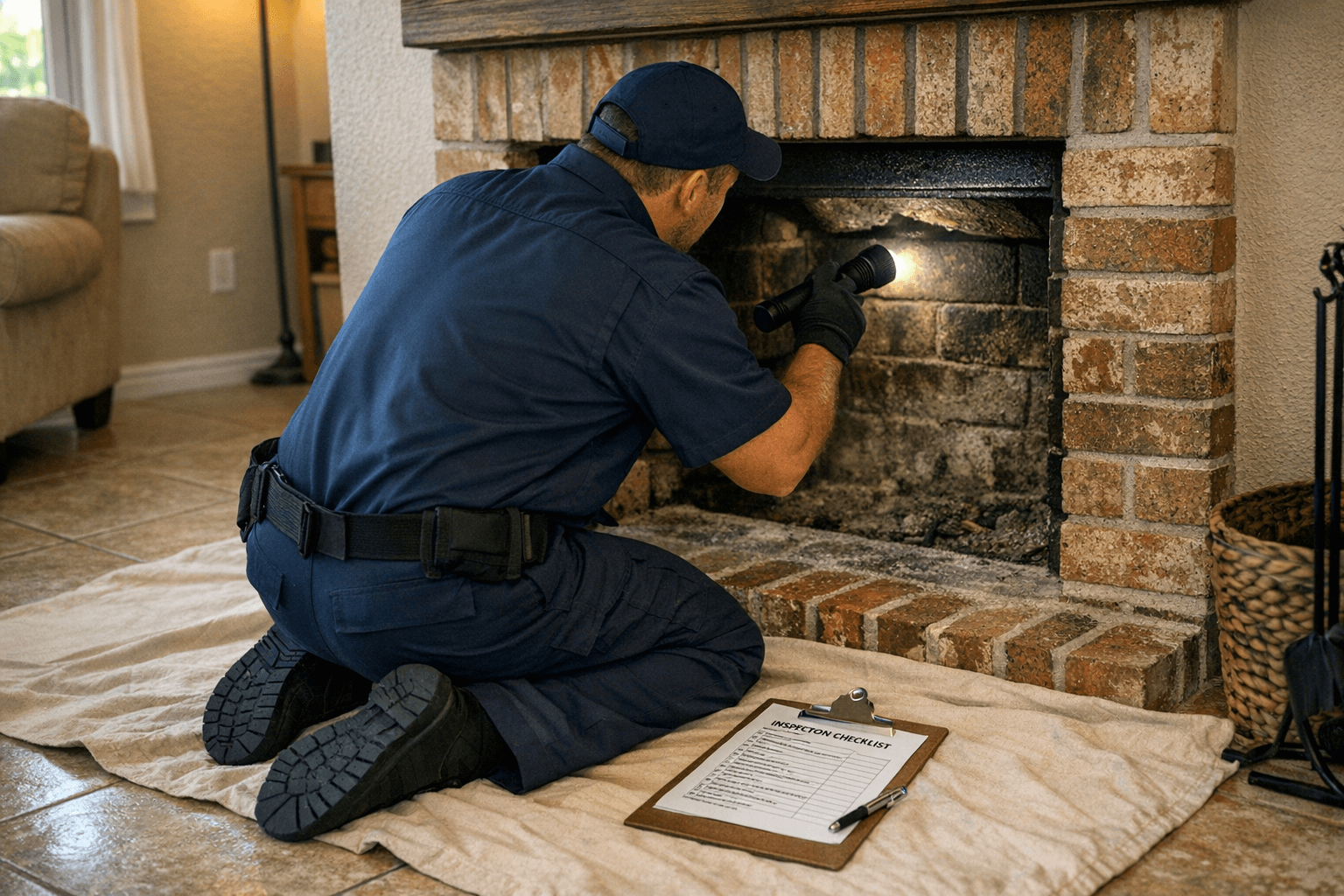
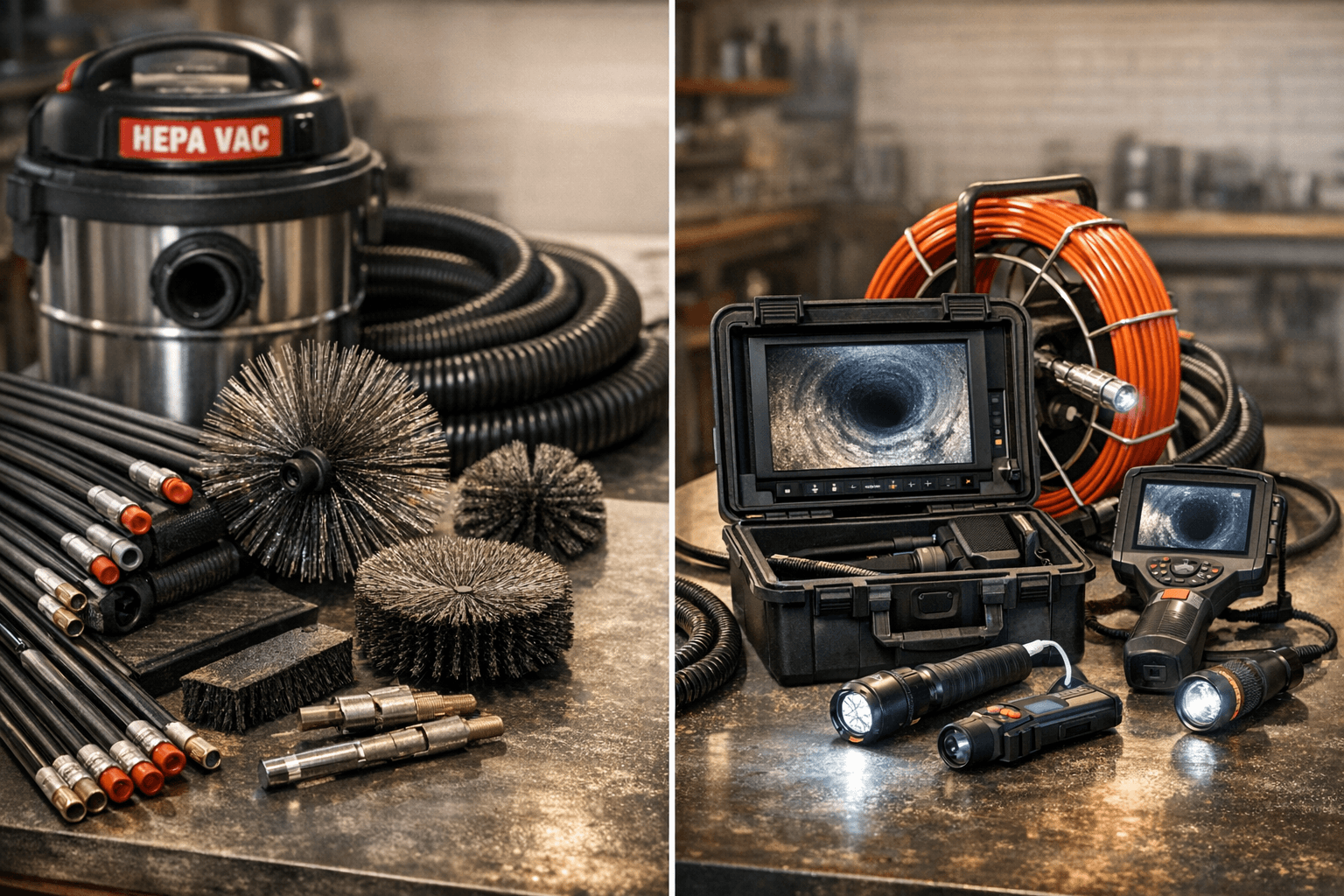
A certified chimney professional has the tools (cameras, specialized lighting) and expertise to identify problems you can't see from ground level or inside the firebox.
FAQ {#faq}
Q: How do I know if my chimney needs repair or just cleaning? A: Cleaning removes soot and creosote buildup. Repair addresses structural issues like cracked mortar, damaged crowns, or deteriorated liners. A professional inspection determines which services you need-often both are recommended together.
Q: Can I use my fireplace if I notice minor cracks in the mortar? A: Minor mortar cracks don't always require immediate fireplace shutdown, but they should be repaired soon. Water entering through cracks accelerates damage, especially in Florida's humid climate. Schedule an inspection to assess severity.
Q: How much does chimney repair typically cost in Florida? A: Costs vary widely based on repair type. Tuckpointing runs $500-$2,500, crown repair $150-$750, cap replacement $150-$500, and flashing repair $200-$500. Major structural repairs or rebuilds can cost $1,000-$10,000+. Get multiple quotes for significant work.
Q: Why is my chimney leaning away from my house? A: Chimney leaning typically indicates foundation failure beneath the chimney, severely deteriorated mortar that can't support the structure, or water damage that has weakened internal components. This is a serious structural issue requiring professional assessment.
Q: How often should I have my chimney inspected in Florida? A: NFPA 211 recommends annual inspection for all chimneys, fireplaces, and vents. Florida's humidity and storm exposure make this especially important. Schedule inspections before hurricane season and after any significant weather events.
Q: What causes white powder on my chimney bricks? A: White powder (efflorescence) indicates water moving through the masonry and depositing mineral salts on the surface. While the powder itself is harmless, it signals moisture intrusion that can cause serious damage over time.
Q: Is a cracked chimney crown a serious problem? A: Yes. Crown cracks allow water directly into the chimney structure, leading to liner damage, spalling bricks, deteriorated mortar, and interior water damage. Small cracks can be sealed, but larger damage may require crown replacement.
Q: Do I need chimney repair if I never use my fireplace? A: Yes. Unused chimneys still experience moisture damage, animal intrusion, and structural deterioration. Annual inspection is recommended regardless of use. Many "unused" chimneys develop serious problems that become expensive if ignored.
Related Services {#related-services}
Service Areas {#service-areas}
We provide chimney repair services throughout Florida:
Final CTA {#final-cta}
Don't wait for minor chimney problems to become major structural failures. Whether you've noticed warning signs or just want peace of mind, a professional inspection can identify issues before they become expensive emergencies.
Call Pro Air Chimney at 813-513-7861 for a same-day quote on chimney inspection and repair.
JSON-LD FAQ Schema
{
  "@context": "https://schema.org",
  "@type": "FAQPage",
  "mainEntity": [
    {
      "@type": "Question",
      "name": "How do I know if my chimney needs repair or just cleaning?",
      "acceptedAnswer": {
        "@type": "Answer",
        "text": "Cleaning removes soot and creosote buildup. Repair addresses structural issues like cracked mortar, damaged crowns, or deteriorated liners. A professional inspection determines which services you need-often both are recommended together."
      }
    },
    {
      "@type": "Question",
      "name": "Can I use my fireplace if I notice minor cracks in the mortar?",
      "acceptedAnswer": {
        "@type": "Answer",
        "text": "Minor mortar cracks don't always require immediate fireplace shutdown, but they should be repaired soon. Water entering through cracks accelerates damage, especially in Florida's humid climate. Schedule an inspection to assess severity."
      }
    },
    {
      "@type": "Question",
      "name": "How much does chimney repair typically cost in Florida?",
      "acceptedAnswer": {
        "@type": "Answer",
        "text": "Costs vary widely based on repair type. Tuckpointing runs $500-$2,500, crown repair $150-$750, cap replacement $150-$500, and flashing repair $200-$500. Major structural repairs or rebuilds can cost $1,000-$10,000+."
      }
    },
    {
      "@type": "Question",
      "name": "Why is my chimney leaning away from my house?",
      "acceptedAnswer": {
        "@type": "Answer",
        "text": "Chimney leaning typically indicates foundation failure beneath the chimney, severely deteriorated mortar that can't support the structure, or water damage that has weakened internal components. This is a serious structural issue requiring professional assessment."
      }
    },
    {
      "@type": "Question",
      "name": "How often should I have my chimney inspected in Florida?",
      "acceptedAnswer": {
        "@type": "Answer",
        "text": "NFPA 211 recommends annual inspection for all chimneys, fireplaces, and vents. Florida's humidity and storm exposure make this especially important. Schedule inspections before hurricane season and after any significant weather events."
      }
    },
    {
      "@type": "Question",
      "name": "What causes white powder on my chimney bricks?",
      "acceptedAnswer": {
        "@type": "Answer",
        "text": "White powder (efflorescence) indicates water moving through the masonry and depositing mineral salts on the surface. While the powder itself is harmless, it signals moisture intrusion that can cause serious damage over time."
      }
    },
    {
      "@type": "Question",
      "name": "Is a cracked chimney crown a serious problem?",
      "acceptedAnswer": {
        "@type": "Answer",
        "text": "Yes. Crown cracks allow water directly into the chimney structure, leading to liner damage, spalling bricks, deteriorated mortar, and interior water damage. Small cracks can be sealed, but larger damage may require crown replacement."
      }
    },
    {
      "@type": "Question",
      "name": "Do I need chimney repair if I never use my fireplace?",
      "acceptedAnswer": {
        "@type": "Answer",
        "text": "Yes. Unused chimneys still experience moisture damage, animal intrusion, and structural deterioration. Annual inspection is recommended regardless of use. Many unused chimneys develop serious problems that become expensive if ignored."
      }
    }
  ]
}