What Is Ductwork? Types, Materials & Maintenance Guide for Florida Homes
Ductwork is the network of tubes, pipes, and channels that distributes conditioned air throughout your home. It connects your HVAC system (air conditioner, furnace, or heat pump) to every room, delivering cooled or heated air through supply vents and returning stale air through return grilles.
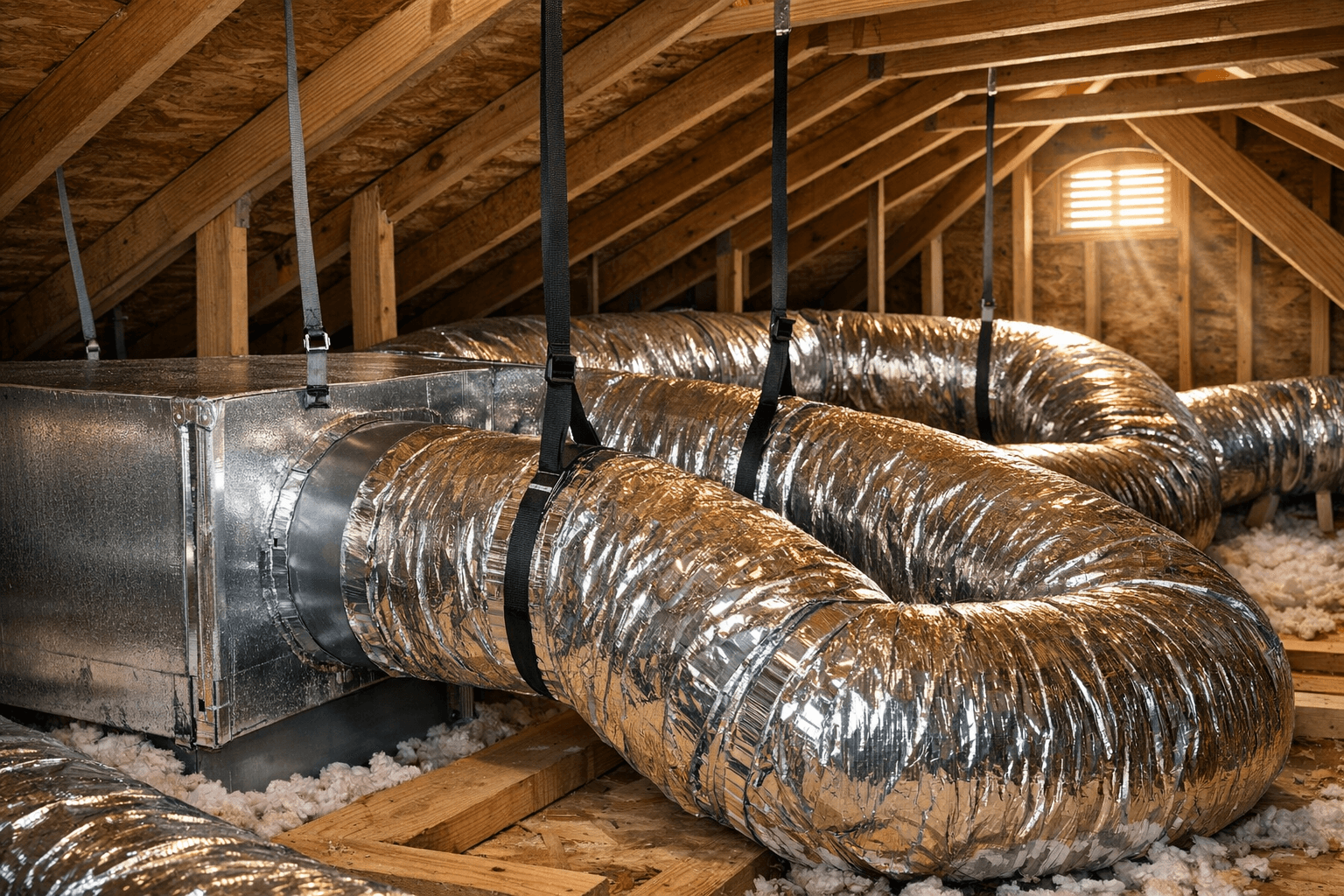
In Florida, ductwork plays a critical role in comfort and energy efficiency. Most homes here use flexible duct installed in hot, humid attics-a challenging environment that makes proper installation and maintenance essential.
This guide explains what ductwork is, how it works, the main types and materials, common problems, and what Florida homeowners need to know about keeping their duct systems in good condition.
Need duct service in Florida? Call Pro Air Chimney at 813-513-7861 or schedule at https://proairchimney.com/contact.
Table of Contents
- What ductwork is and how it works
- The two parts of a duct system
- Types of ductwork materials
- Flex duct vs. metal duct: pros and cons
- Why Florida homes mostly use flex duct
- Common ductwork problems
- Ductwork maintenance: what actually matters
- When to clean vs. when to replace
- Signs your ductwork needs attention
- FAQ
- Sources
What ductwork is and how it works
Ductwork is the delivery system for your HVAC. Think of it as the "lungs" of your home's heating and cooling system.
Here's how it works:
- The air handler (or furnace) pulls air from your home through return ducts
- The air passes through filters and over heating or cooling coils
- Conditioned air is pushed through supply ducts to each room
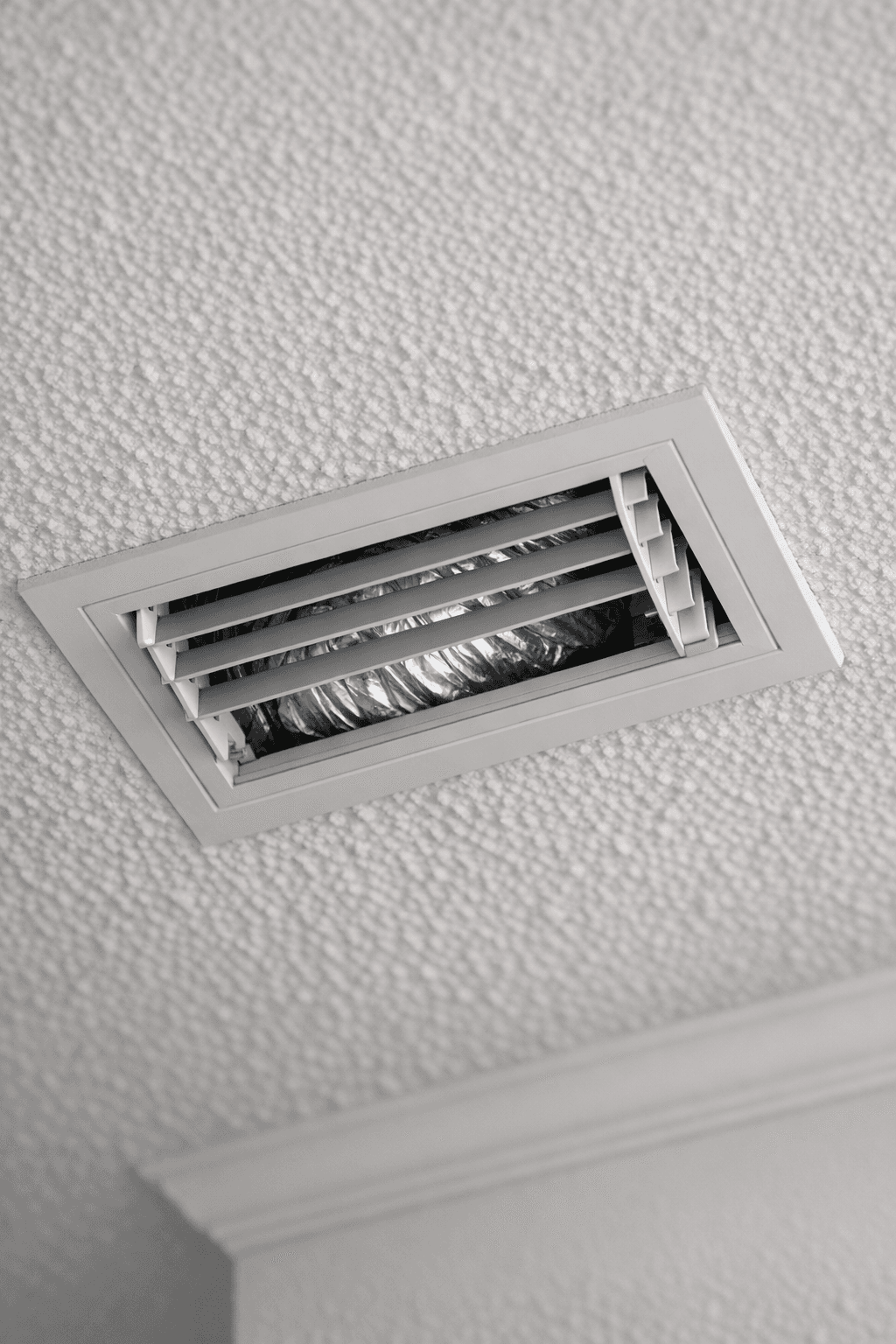
- Air exits through supply registers (vents) in walls, floors, or ceilings
- Return grilles pull air back to the system, completing the cycle
The entire process relies on pressure differences created by the blower fan. When ductwork is properly designed and sealed, air flows efficiently. When it's not, you get hot/cold spots, higher energy bills, and indoor air quality issues.
The two parts of a duct system
Every duct system has two main components:
Supply ducts
- Carry conditioned air from the air handler to rooms
- Typically smaller diameter (6-inch to 12-inch runs)
- End at supply registers (vents)
- Should deliver air at the correct velocity for comfort
Return ducts
- Bring air back to the HVAC system for reconditioning
- Usually larger diameter to handle volume
- Fewer in number than supply ducts
- Critical for maintaining proper system pressure
Florida note: Leaky return ducts are especially problematic. If your return is in the attic and has gaps, it can pull hot, humid attic air into your system-raising indoor humidity and making the AC work harder.
Types of ductwork materials
There are three main types of residential ductwork, each with different characteristics.
1. Flexible duct (flex duct)
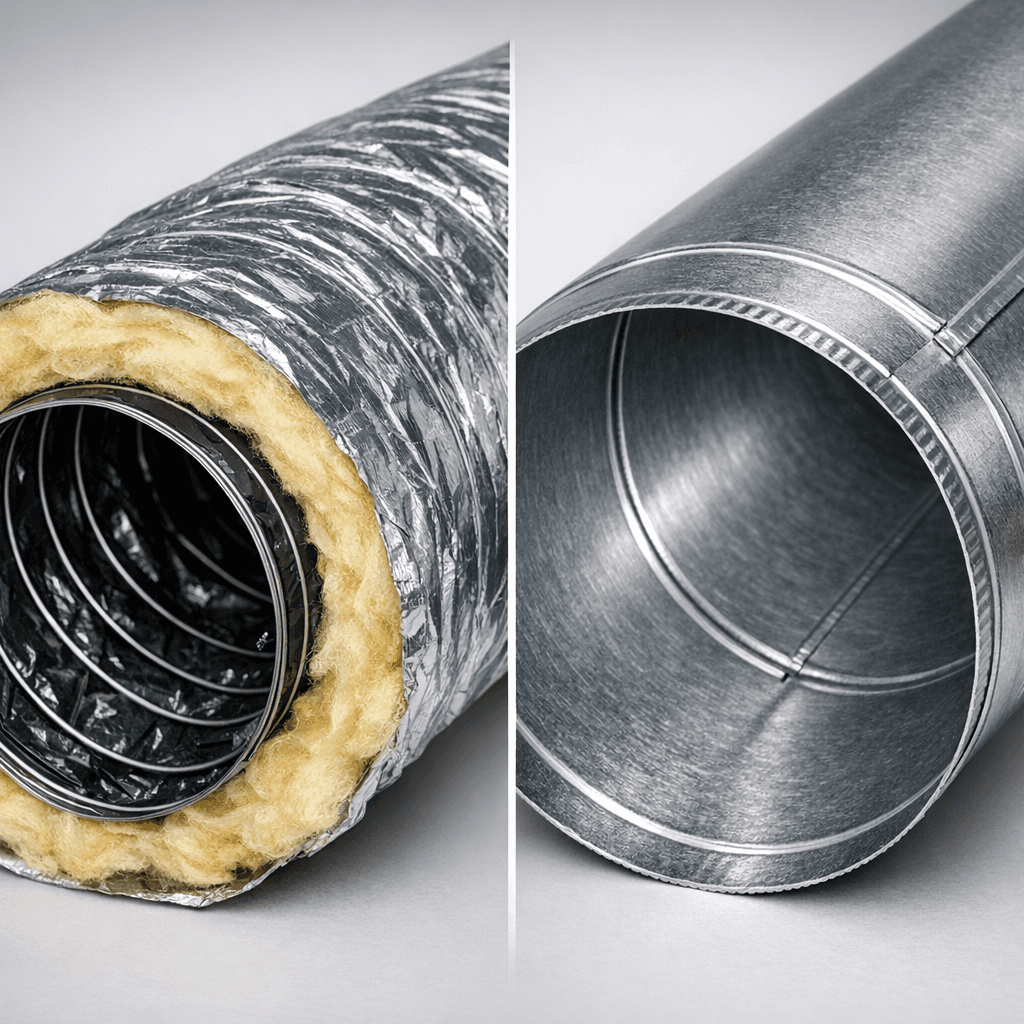
What it is: A wire helix wrapped with a plastic inner liner and insulation jacket.
Appearance: Silver or gray insulated tube that compresses and bends easily.
Where it's used: Branch runs from main trunks to individual rooms. Extremely common in Florida attics.
Pros:
- Inexpensive
- Fast to install
- Easy to route through tight spaces
- Built-in insulation
Cons:
- Easily kinked, crushed, or sagged
- More airflow resistance when improperly installed
- Harder to clean than metal
- Shorter lifespan (typically 15-25 years)
2. Sheet metal ducts (rigid metal)
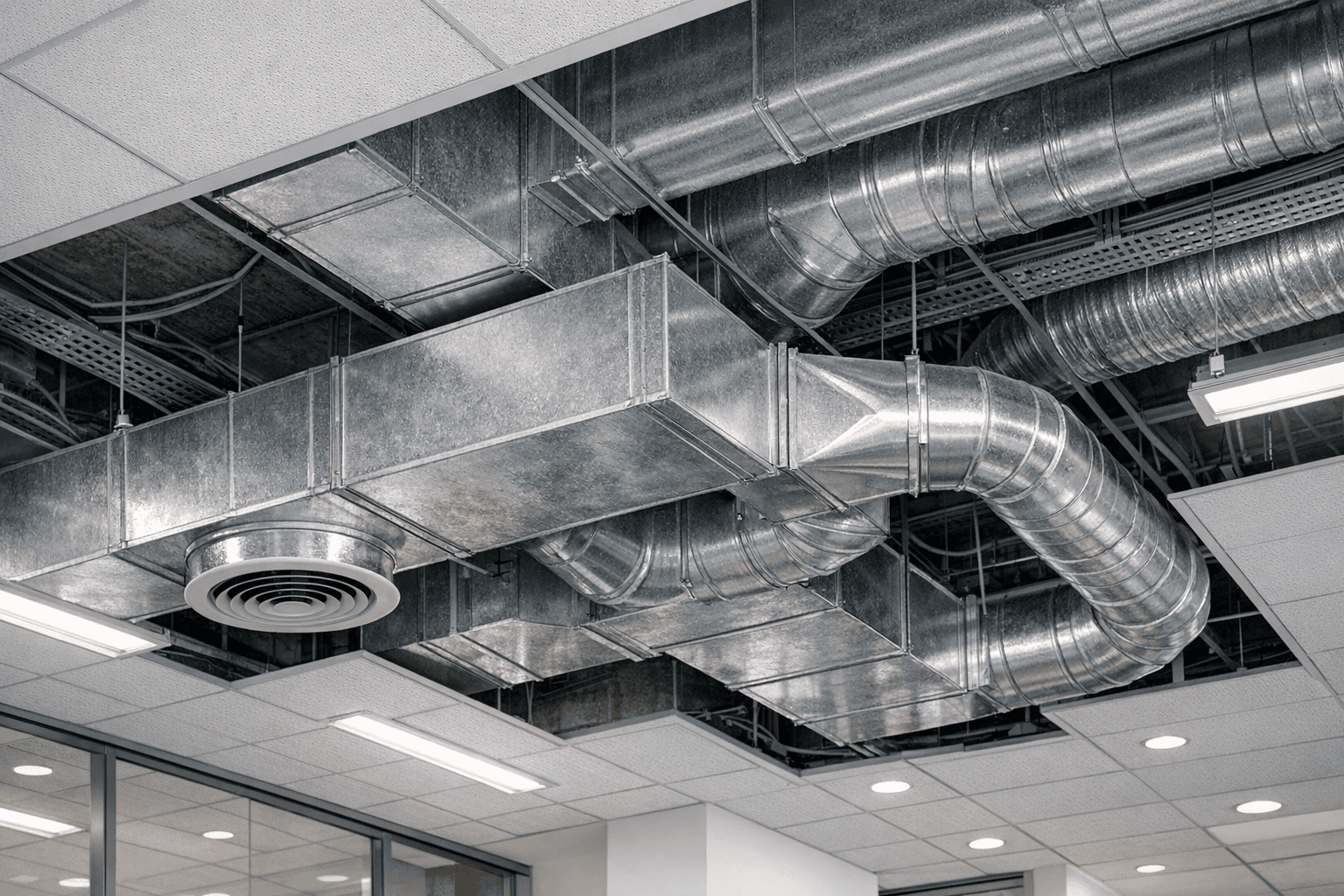
What it is: Galvanized steel or aluminum ducts, either rectangular or round.
Appearance: Shiny metal pipes or rectangular trunk lines.
Where it's used: Main trunk lines, commercial buildings, and some higher-end residential installations.
Pros:
- Durable (can last 30+ years)
- Non-porous interior (easier to clean)
- Better airflow when properly sized
- Won't sag or crush
Cons:
- More expensive to install
- Can sweat/condense without insulation
- Joints can leak if not sealed properly
- Can be noisy if poorly designed
3. Fiberglass duct board
What it is: Rigid panels made of fiberglass, often foil-faced on the outside.
Appearance: Large rectangular ducts that look like foil-covered panels.
Where it's used: Some older installations and specific commercial applications.
Pros:
- Built-in insulation
- Good sound dampening
- Pre-insulated
Cons:
- Fibrous interior can be damaged by aggressive cleaning
- Difficult to remediate if water-damaged
- Not ideal for humid climates like Florida
- EPA recommends only soft-bristled brushes for cleaning
4. Fiberglass-lined metal ducts
What it is: Metal ducts with fiberglass lining on the interior for acoustics and insulation.
Pros: Quieter than bare metal, good in some designs.
Cons: Same cleaning concerns as fiberglass surfaces-avoid harsh agitation.
Flex duct vs. metal duct: pros and cons
| Factor | Flex Duct | Sheet Metal |
|---|---|---|
| Cost | Lower | Higher |
| Installation speed | Faster | Slower |
| Durability | 15-25 years | 30+ years |
| Airflow efficiency | Good if stretched properly | Excellent |
| Cleanability | More difficult | Easier |
| Florida suitability | Very common (with proper install) | Excellent but less common |
| Insulation | Built-in | Requires separate wrap |
The bottom line: Flex duct works well when installed correctly-fully stretched, properly supported, and with minimal bends. Metal is more forgiving but costs more. Most Florida homes use flex due to cost and ease of installation in attic spaces.
Why Florida homes mostly use flex duct
In Florida, you'll find flexible duct in the vast majority of residential HVAC systems. Here's why:
Attic installations: Most Florida homes have air handlers and ductwork in vented attics. Flex duct is easier to route through these spaces.
Cost considerations: Builders favor flex for its lower material and labor costs.
Mild heating needs: Florida's minimal heating requirements mean the thermal performance differences matter less than in colder climates.
The challenge: Florida's humid climate
Flex duct in a hot, humid attic faces unique stresses:
- Temperature extremes: Attics can exceed 140°F in summer
- Condensation risk: Cold supply air (50-60°F) running through hot attics can cause sweating
- Humidity infiltration: Any gap in the vapor barrier allows moisture into insulation
- Leakage consequences: Leaky returns pull hot, wet attic air into the system
What this means for homeowners: Proper installation and maintenance are more critical in Florida than in drier, milder climates. Small problems compound quickly.
For help with Florida duct issues, see /services/air-duct-cleaning.
Common ductwork problems
Understanding what can go wrong helps you spot issues early.
1. Air leaks
The problem: Gaps at joints, connections, or damaged sections allow conditioned air to escape.
Impact: ENERGY STAR reports that leaky ducts can reduce HVAC efficiency by 20% or more.
Signs: Rooms that won't cool, dusty air, high energy bills.
2. Poor airflow (kinked or sagging ducts)
The problem: Flex duct that's kinked, crushed, or sagging restricts airflow.
Impact: Weak airflow in certain rooms, system works harder, uneven temperatures.
Signs: Some registers blow weakly while others are fine.
3. Condensation and moisture damage
The problem: Temperature differences cause sweating; moisture damages insulation and promotes mold.
Impact: Wet insulation fails, musty odors, potential ceiling stains.
Signs: Wet spots on ceilings near vents, musty smell, visible moisture on ducts.
4. Pest intrusion
The problem: Rodents, insects, or other pests enter ductwork through gaps or damaged sections.
Impact: Contamination, odors, potential health concerns.
Signs: Strange smells, droppings near vents, scratching sounds.
5. Deteriorating flex duct
The problem: Flex duct materials degrade over time-inner liner cracks, insulation compresses, outer jacket tears.
Impact: Reduced efficiency, air quality issues, eventual failure.
Signs: Visible tears, collapsed sections, age over 15-20 years.
If you notice mold signs in your ducts, see /resources/air-duct-mold-signs-florida.
Ductwork maintenance: what actually matters
Not all duct maintenance is equal. Here's what provides the most value.
High-value maintenance
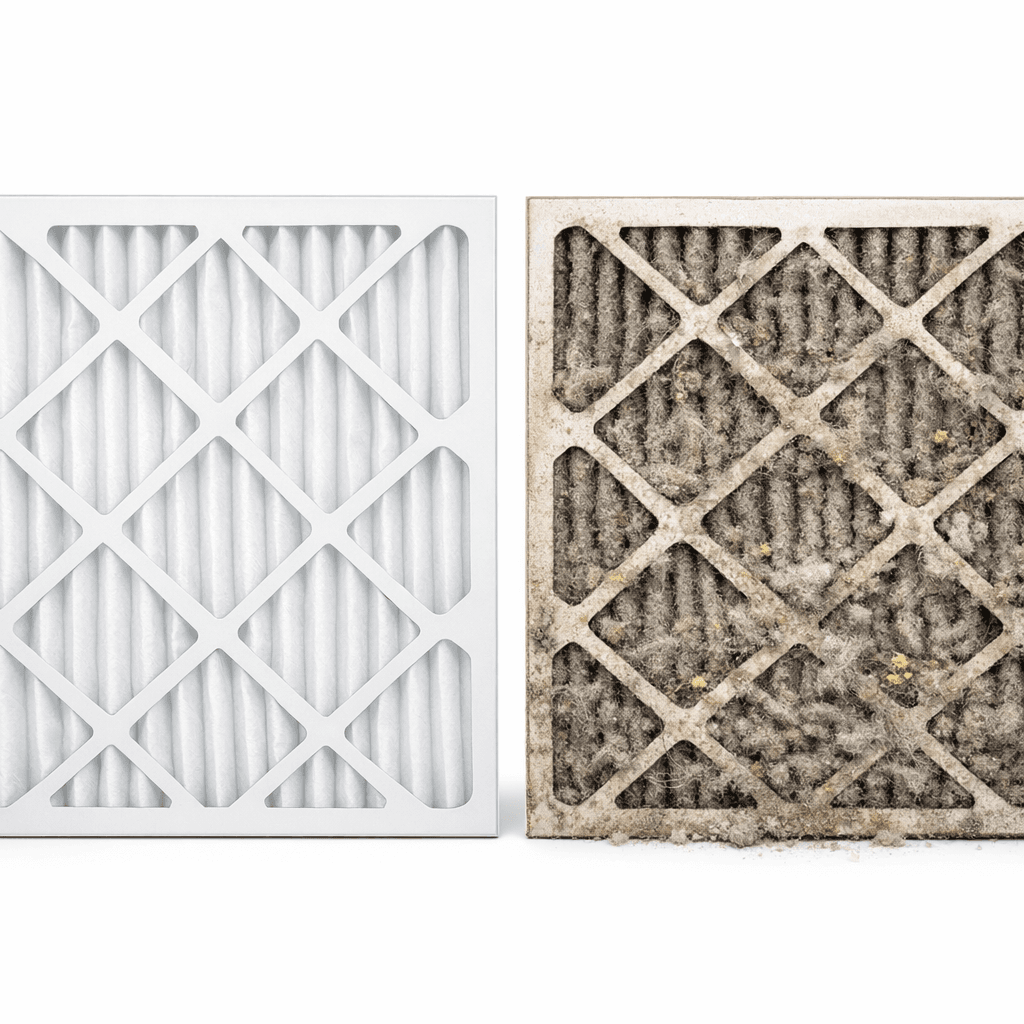
1. Regular filter changes The single most important thing you can do. Clean filters prevent debris from loading coils, blowers, and duct interiors.
2. Duct sealing Sealing leaks at joints and connections improves efficiency more than almost any other measure. ENERGY STAR emphasizes this as a priority.
3. Moisture control In Florida, preventing condensation protects duct insulation and prevents mold growth.
4. Visual inspections Periodically check accessible ductwork for obvious problems: disconnections, crushed sections, water damage.
What about duct cleaning?
The EPA does not recommend routine duct cleaning. Their guidance: clean as needed-when there's visible mold, pest evidence, heavy debris, or after water damage.
Cleaning can help in specific situations:
- Visible contamination or mold growth
- After construction or renovation
- Pest infestation aftermath
- Excessive dust despite filter changes
Learn more about when cleaning makes sense at /resources/professional-air-duct-cleaning-process.
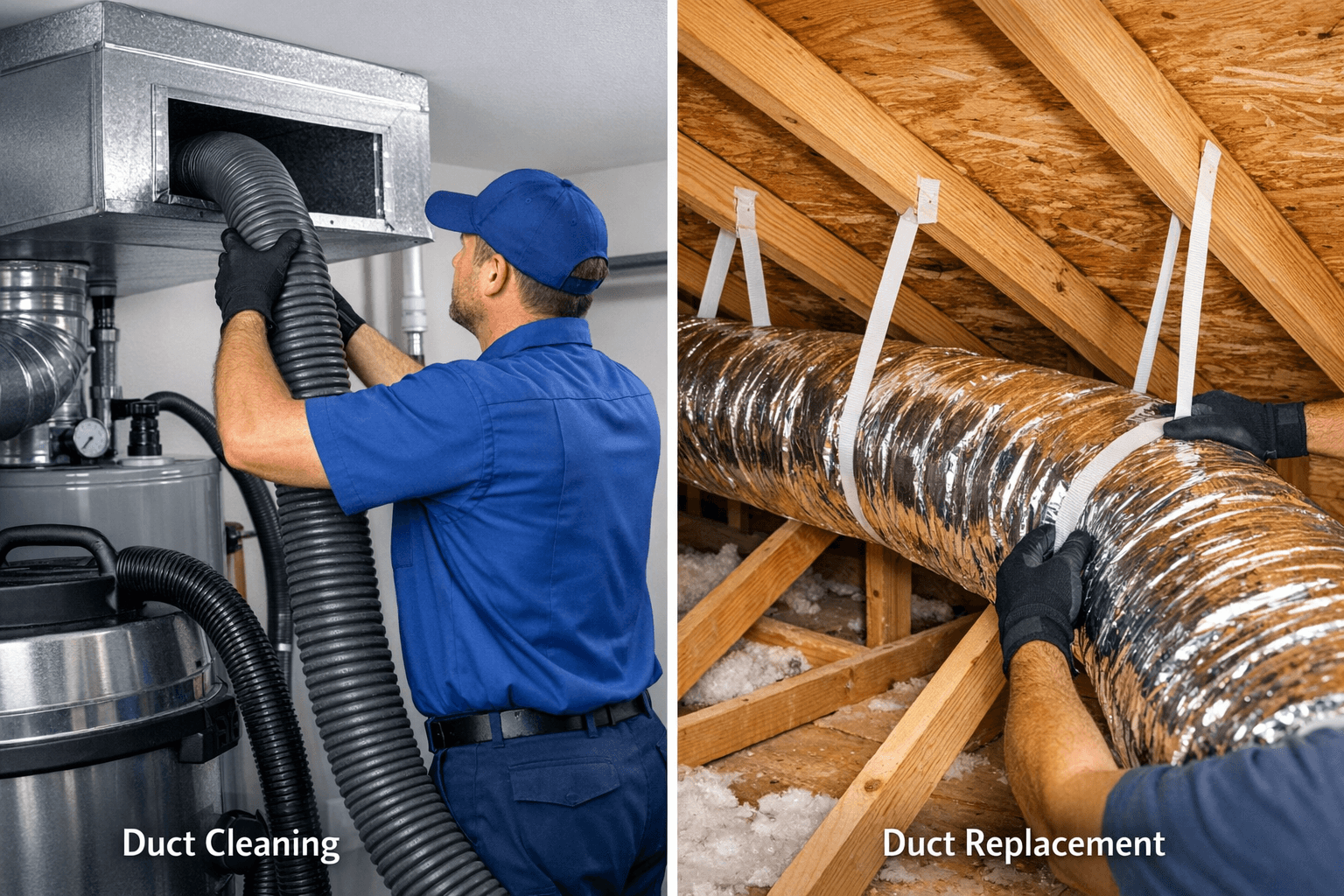
When to clean vs. when to replace
This is a common question, especially for older flex duct systems.
Consider cleaning when:
- Ducts are structurally sound
- Contamination is on the surface
- The system is less than 15 years old
- Problems are localized
Consider replacement when:
- Flex duct is over 15-20 years old
- Inner liner is cracked or deteriorated
- Ducts are crushed, kinked, or poorly routed
- Water damage has saturated insulation
- Multiple sections need repair
EPA note: For accessible flex duct, replacement can sometimes be more economical than aggressive cleaning-especially when the duct has reached the end of its useful life.
For guidance on your specific situation, see /resources/duct-sealing-vs-replacement.
Signs your ductwork needs attention
Watch for these indicators:
- Uneven temperatures: Some rooms significantly hotter or colder than others
- High humidity indoors: Consistently above 55-60% despite AC running
- Increased energy bills: Unexplained rises in cooling costs
- Visible duct damage: Tears, disconnections, crushed sections
- Dusty air: Excessive dust despite regular filter changes
- Strange odors: Musty or unusual smells from vents
- Weak airflow: Certain registers blow weakly
- Ceiling stains: Water marks near vents or duct locations
If you're experiencing these issues, professional evaluation can identify whether the problem is ductwork-related or something else.
Florida homeowners: For honest duct evaluation without high-pressure upsells, call Pro Air Chimney at 813-513-7861 or schedule at https://proairchimney.com/contact.
FAQ
What is ductwork made of?
Residential ductwork is typically made of flexible plastic and insulation (flex duct), galvanized steel or aluminum (sheet metal), or rigid fiberglass panels (duct board). Florida homes most commonly use flex duct.
How long does ductwork last?
Flex duct typically lasts 15-25 years. Sheet metal ducts can last 30+ years with proper maintenance. Lifespan depends on installation quality, climate conditions, and maintenance.
Can dirty ductwork make you sick?
Heavily contaminated ducts with mold, pest debris, or excessive dust can potentially affect indoor air quality. However, the EPA notes there's limited evidence that duct cleaning alone improves health. Addressing the source of contamination matters most.
How much does ductwork replacement cost in Florida?
Costs vary significantly based on home size, duct type, and accessibility. For Florida homes, expect rough ranges of $1,500-$5,000 for partial replacement or $3,000-$10,000+ for full system replacement. Get multiple quotes for accurate pricing.
Should I seal or replace my ducts?
If ducts are structurally sound with just leaks at joints, sealing is usually the better value. If ducts are old, damaged, or poorly installed, replacement may be more cost-effective long-term.
What type of ductwork is best for Florida?
Both flex duct and sheet metal work well in Florida when properly installed. The key factors are: proper sizing, complete sealing, adequate insulation, and correct support. For most Florida homes, well-installed flex duct provides good performance at reasonable cost.
How do I know if my ducts are leaking?
Common signs include: rooms that won't cool, high indoor humidity, dusty air, unexplained high energy bills, and hot/cold spots. Professional duct leakage testing can confirm and quantify leaks.
Do I need to clean my air ducts?
Not necessarily. The EPA recommends cleaning only when there's visible mold, pest evidence, heavy debris, or after specific events like water damage. Regular filter changes and duct sealing typically provide more benefit than routine cleaning.