Commercial Air Duct Cleaning: What Businesses Need to Know
Quick answer: Commercial air duct cleaning differs significantly from residential service. Business HVAC systems typically require cleaning every 3-5 years based on inspection findings, with costs ranging from $1,200-$4,000+ depending on building size and system complexity. For restaurants with kitchen exhaust, NFPA 96 mandates inspection frequencies from monthly to annually based on cooking volume. Contact Pro Air Chimney at 813-513-7861 for a commercial property assessment.
Table of Contents
- Commercial vs Residential: Key Differences
- How Often Should Businesses Clean Their Ducts
- Industry-Specific Requirements
- Compliance and Code Requirements
- Cost Factors for Commercial Duct Cleaning
- Florida-Specific Commercial HVAC Considerations
- Choosing a Commercial Duct Cleaning Provider
- FAQs
Commercial vs Residential Air Duct Cleaning: Key Differences
Commercial HVAC systems present challenges that residential systems simply don't have. Understanding these differences helps business owners budget appropriately and schedule maintenance effectively.
System Scale and Complexity
Commercial buildings typically feature:
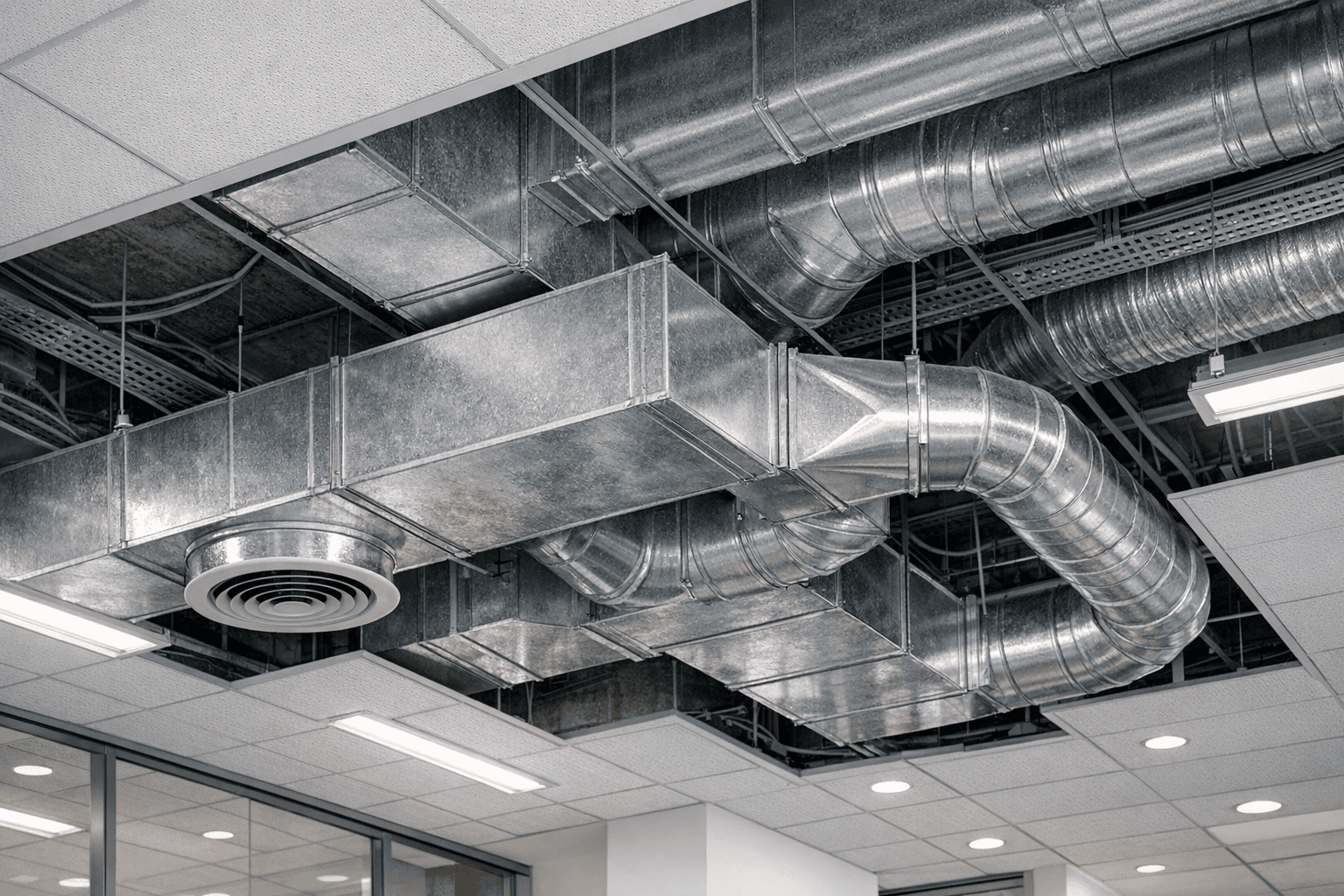
- Multiple air handling units (AHUs) or rooftop units (RTUs) instead of a single residential system
- Longer duct runs spanning multiple floors or zones
- Higher airflow volumes moving significantly more air through larger ducts
- Complex zoning with separate temperature control for different areas
- Fire and smoke dampers requiring periodic testing under NFPA 80/105
Access and Logistics
Commercial duct cleaning often requires:
- After-hours scheduling to avoid disrupting business operations
- Coordination with building management for multi-tenant properties
- Specialized access equipment for high ceilings and rooftop units
- Containment protocols to protect inventory, equipment, and workspaces
Documentation Requirements
Businesses often need detailed documentation for:
- Insurance compliance
- Health department requirements (food service)
- Lease obligations
- LEED certification maintenance
- Indoor air quality (IAQ) records
How Often Should Florida Businesses Clean Their Ducts
Unlike kitchen exhaust systems, which have mandated cleaning schedules, standard commercial HVAC ductwork follows an inspection-based maintenance approach.
The Inspection-First Approach
The EPA and NADCA (National Air Duct Cleaners Association) recommend cleaning commercial HVAC ducts when conditions justify it, not on a fixed schedule. NFPA 90A's guidance describes quarterly duct inspections with cleaning performed when inspection indicates the need.
Typical Commercial Cleaning Cycles
For most Florida office buildings and commercial spaces:
| Building Type | Typical Cleaning Frequency | Notes |
|---|---|---|
| Office buildings | Every 3-5 years | Based on inspection findings |
| Retail spaces | Every 2-4 years | Higher foot traffic = more debris |
| Warehouses | As needed | Depends on dust-generating activities |
| Medical facilities | Every 2-3 years | Stricter IAQ requirements |
| Schools | Every 3-5 years | Often during summer breaks |
Triggers That Justify Earlier Cleaning
Consider scheduling commercial duct cleaning sooner if you observe:
- Visible debris at diffusers or return grilles
- Musty odors when the HVAC system runs
- Employee complaints about air quality or allergies
- Post-renovation dust from construction or tenant improvements
- Water intrusion or humidity events affecting ductwork
- Pest evidence in or around duct pathways
Industry-Specific Requirements
Different business types have varying duct cleaning needs based on their operations and regulatory environment.
Restaurants and Commercial Kitchens
NFPA 96 governs kitchen exhaust systems (not standard HVAC) with mandatory inspection frequencies:
| Cooking Type/Volume | Minimum Inspection Frequency |
|---|---|
| Solid fuel cooking | Monthly |
| High-volume (24-hour, charbroiling, wok) | Quarterly |
| Moderate-volume | Semi-annually |
| Low-volume (seasonal, churches) | Annually |
Important distinction: These requirements apply to kitchen hood exhaust and grease ducts, not the building's comfort HVAC system. Both systems need maintenance, but the kitchen exhaust has legal compliance implications.
For kitchen exhaust cleaning, see our kitchen exhaust cleaning service.
Office Buildings
Standard office HVAC systems focus on:
- Fire damper testing every 4 years per NFPA 80/105
- Smoke damper testing on the same schedule
- Duct cleaning based on inspection findings, typically every 3-5 years
- Filter maintenance quarterly or as specified by the system
Warehouses and Industrial Facilities
Warehouse requirements depend heavily on operations:
General warehouses: Similar to offices, focus on damper testing and condition-based cleaning.
Facilities with combustible dust: NFPA 654, 664 (wood), or 484 (metals) may require:
- Dust Hazard Analysis (DHA)
- Regular housekeeping to keep accumulation below 1/8 inch threshold
- More frequent cleaning of dust collection systems
Medical and Healthcare Facilities
Healthcare environments have stricter requirements:
- Fire/smoke damper testing every 6 years (vs 4 years for other buildings)
- Infection control protocols during any duct work
- HEPA filtration requirements in certain areas
- Negative pressure maintenance in isolation rooms
Compliance and Code Requirements in Florida
Florida businesses must navigate both state and local requirements for commercial HVAC maintenance.
What's Actually Required vs Best Practice
Required by code:
- Fire damper and smoke damper inspection/testing (NFPA 80/105)
- Kitchen exhaust inspection based on cooking type (NFPA 96)
- Maintaining systems per manufacturer specifications
Best practice (not mandated for most buildings):
- Periodic duct inspection
- Cleaning when conditions warrant
- Documentation of maintenance activities
Florida Humidity Considerations
Florida's climate creates unique compliance challenges:
- Indoor relative humidity should stay below 60% (ideally below 50%) per Florida DOH guidelines
- Mold prevention requires proper drainage and condensate management
- Mold remediation requires licensed contractors in Florida if mold is found during inspection
Florida-specific: If mold is discovered during a duct inspection, Florida law requires licensed mold assessors for testing and licensed remediators for cleanup above certain thresholds.
NADCA Standards
While not legally mandated, many Florida building owners specify that commercial duct cleaning must follow NADCA ACR Standard (2025 edition). This provides:
- Cleanliness verification criteria
- Documentation requirements
- Proper containment and cleaning methods
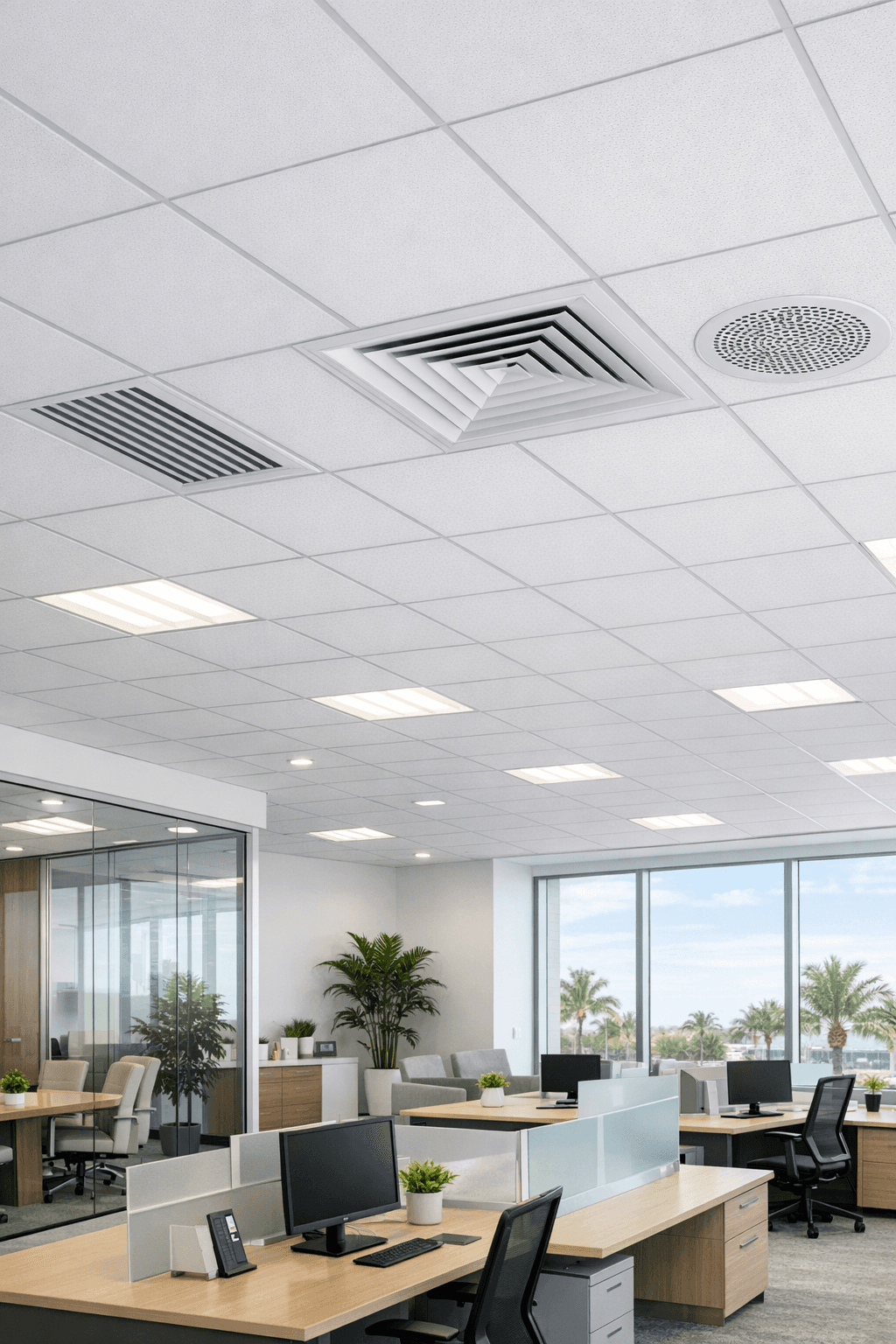
Commercial Air Duct Cleaning Cost Factors
Commercial pricing differs significantly from residential and is typically quoted based on scope rather than "per vent."
Common Pricing Methods
Commercial contractors typically quote by:
- Per air handler/RTU (each system)
- Per zone or floor
- Per square foot of building space
- Project-based for complex scopes
Florida Commercial Pricing Ranges
| Building Size | Typical Cost Range | Notes |
|---|---|---|
| Small office (2,000-5,000 sq ft) | $800-$2,000 | Single system |
| Medium office (5,000-15,000 sq ft) | $1,500-$4,000 | Multiple zones |
| Large commercial (15,000-50,000 sq ft) | $4,000-$10,000+ | Multiple AHUs |
| Multi-story buildings | Custom quote | Access complexity |
What Affects Commercial Pricing
System factors:
- Number and size of air handling units
- Duct material (flex vs rigid metal)
- Total linear feet of ductwork
- Number of diffusers and returns
Access factors:
- Ceiling height and type (drop ceiling vs exposed)
- Rooftop unit accessibility
- Hours of operation constraints
- Multi-tenant coordination needs
Condition factors:
- Current contamination level
- Age of system
- Presence of insulated ductwork
- Previous maintenance history
Getting Accurate Quotes
For a meaningful commercial quote, request:
- On-site assessment (not phone estimates)
- Written scope specifying what's included
- Pre/post verification method (photos, testing)
- NADCA compliance documentation
- Insurance certificates appropriate for commercial work
Florida-Specific Commercial HVAC Considerations
Florida's climate creates unique challenges for commercial building HVAC systems.
Humidity Control
Florida's high humidity means commercial systems work harder and collect more moisture-related contaminants:
- Condensate drain maintenance is critical to prevent backup
- Coil cleaning may be needed more frequently than in drier climates
- Duct insulation must be intact to prevent condensation
Hurricane and Storm Damage
Post-hurricane HVAC inspection should check for:
- Water intrusion into ductwork
- Debris contamination
- Damage to exterior components (RTUs)
- Compromised duct seals
Year-Round Operation
Unlike seasonal climates, Florida commercial HVAC runs nearly year-round, leading to:
- More accumulated operating hours
- Continuous filter loading
- Greater wear on components
- More frequent maintenance needs
Choosing a Commercial Duct Cleaning Provider
Not all duct cleaning companies handle commercial work. Here's what to look for.
Essential Qualifications
- Commercial experience (residential-only companies may lack appropriate equipment)
- Documented standards familiarity and a scope that matches commercial HVAC systems
- Adequate insurance (commercial liability limits)
- References from similar-sized projects
Scope Verification
A legitimate commercial scope should include:
- Supply and return ductwork (all runs, not just accessible areas)
- Air handling unit interiors (coils, blower compartments)
- Diffusers and grilles (cleaning or replacement)
- Containment to protect occupied spaces
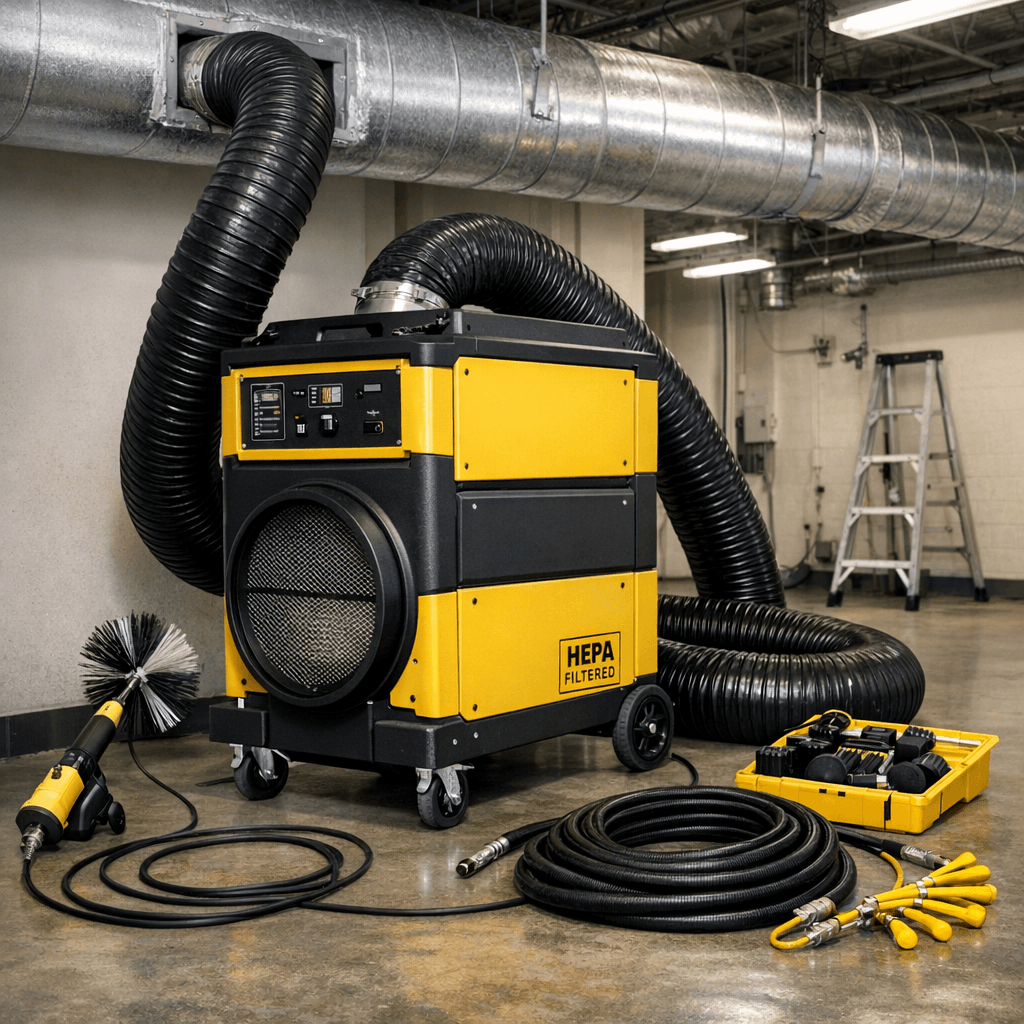
- Negative pressure extraction using HEPA filtration
- Condition documentation at key access points (photos or written findings)
Red Flags
Avoid providers who:
- Quote without seeing the building
- Offer suspiciously low prices
- Can't explain their process
- Don't mention documentation or verification
- Lack commercial insurance
Related Services
- Commercial Air Duct Cleaning
- Kitchen Exhaust Cleaning
- Air Duct Cleaning
- Duct Repair
- System Inspections
Service Areas
Schedule Your Commercial Assessment
Florida businesses need a clear scope, practical scheduling, and documentation they can review before approving work. Request a commercial assessment built around your site conditions and access constraints.
Call 813-513-7861 or request a commercial quote.
FAQs
Q: How often should a commercial building have its air ducts cleaned? A: Most commercial buildings benefit from duct cleaning every 3-5 years, based on inspection findings. However, restaurants with kitchen exhaust have specific NFPA 96 requirements ranging from monthly to annually based on cooking volume.
Q: What's the difference between commercial and residential duct cleaning? A: Commercial systems are larger, more complex, and require specialized equipment. Commercial cleaning involves multiple air handlers, longer duct runs, after-hours scheduling, and detailed documentation for compliance purposes.
Q: Is commercial duct cleaning required by law in Florida? A: Standard HVAC duct cleaning is not mandated for most commercial buildings. However, fire/smoke damper testing is required every 4-6 years, and restaurant kitchen exhaust cleaning follows NFPA 96 schedules enforced by fire marshals.
Q: How much does commercial air duct cleaning cost in Florida? A: Commercial duct cleaning typically costs $1,200-$4,000 for small to medium buildings, with larger facilities ranging from $4,000-$10,000+. Pricing depends on building size, number of systems, access complexity, and contamination level.
Q: What should be included in a commercial duct cleaning scope? A: A comprehensive commercial scope should include supply and return ductwork, air handling unit interiors, diffusers and grilles, proper containment, HEPA-filtered extraction, and clear condition documentation for the areas being cleaned.
Q: Do restaurants need separate cleaning for kitchen exhaust and HVAC? A: Yes. Kitchen exhaust (hoods, grease ducts) and comfort HVAC are separate systems with different requirements. Kitchen exhaust has mandatory NFPA 96 inspection schedules, while HVAC follows condition-based maintenance.