DIY vs Professional Air Duct Cleaning: Risks, Costs & What Really Works
Quick answer: DIY duct cleaning can handle surface-level maintenance (register cleaning, visible debris near vents) for $50-$150 in equipment. However, professional cleaning ($300-$700 in Florida) is necessary when you have visible mold, pest contamination, heavy debris, or post-renovation dust throughout the system. For a clear assessment of what your home needs, call Pro Air Chimney at 813-513-7861.
Table of Contents
- Understanding the Real Difference
- DIY vs Professional Cost Comparison
- What DIY Duct Cleaning Can Actually Do
- Risks of DIY Air Duct Cleaning
- What Professional Cleaning Includes
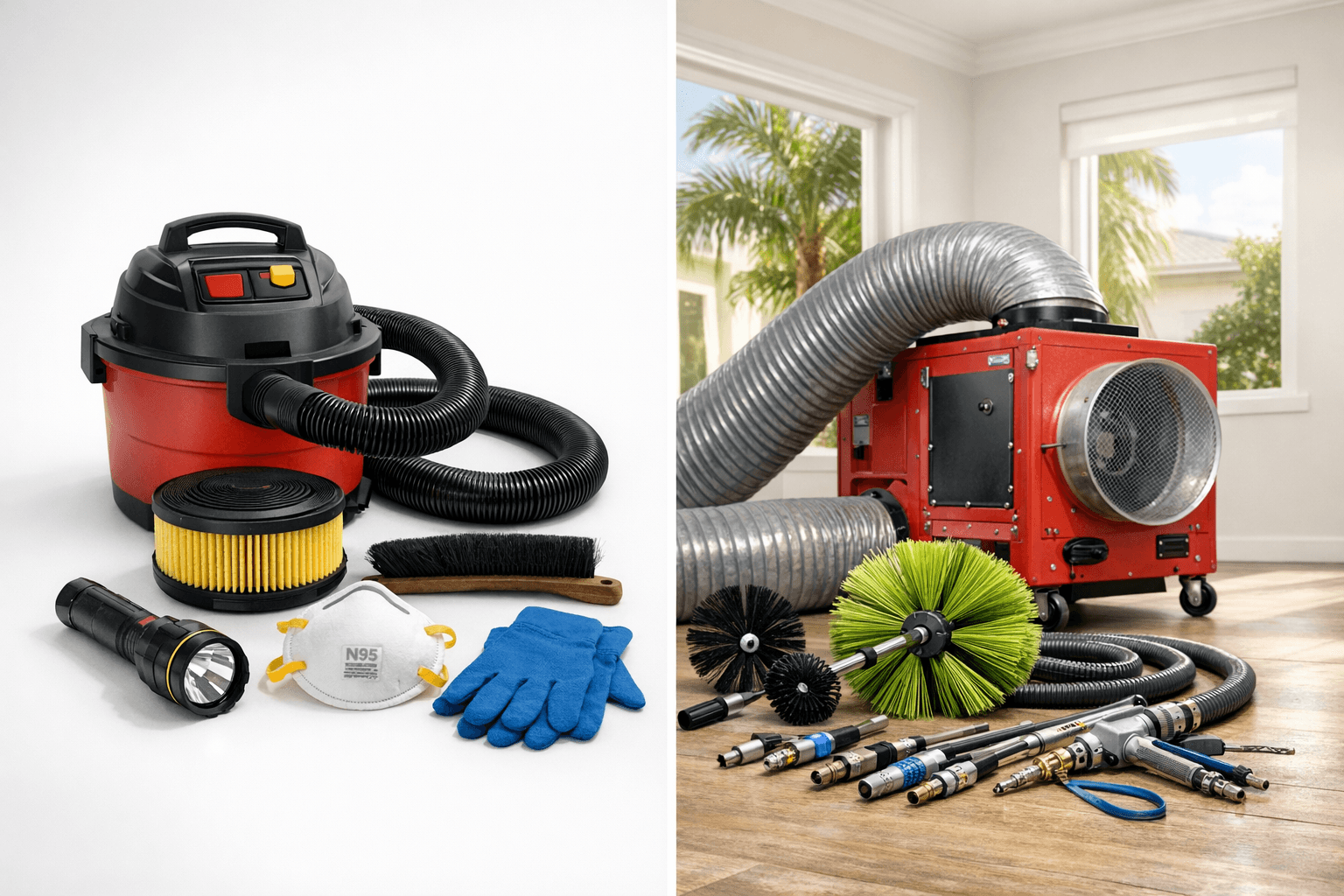
- Equipment Comparison Table
- When DIY is Acceptable
- When You Must Hire a Professional
- Florida-Specific Considerations
- How to Avoid Duct Cleaning Scams
- FAQs
Understanding the Real Difference Between DIY and Professional Duct Cleaning
The debate between DIY and professional air duct cleaning often misses the point: they accomplish different things.
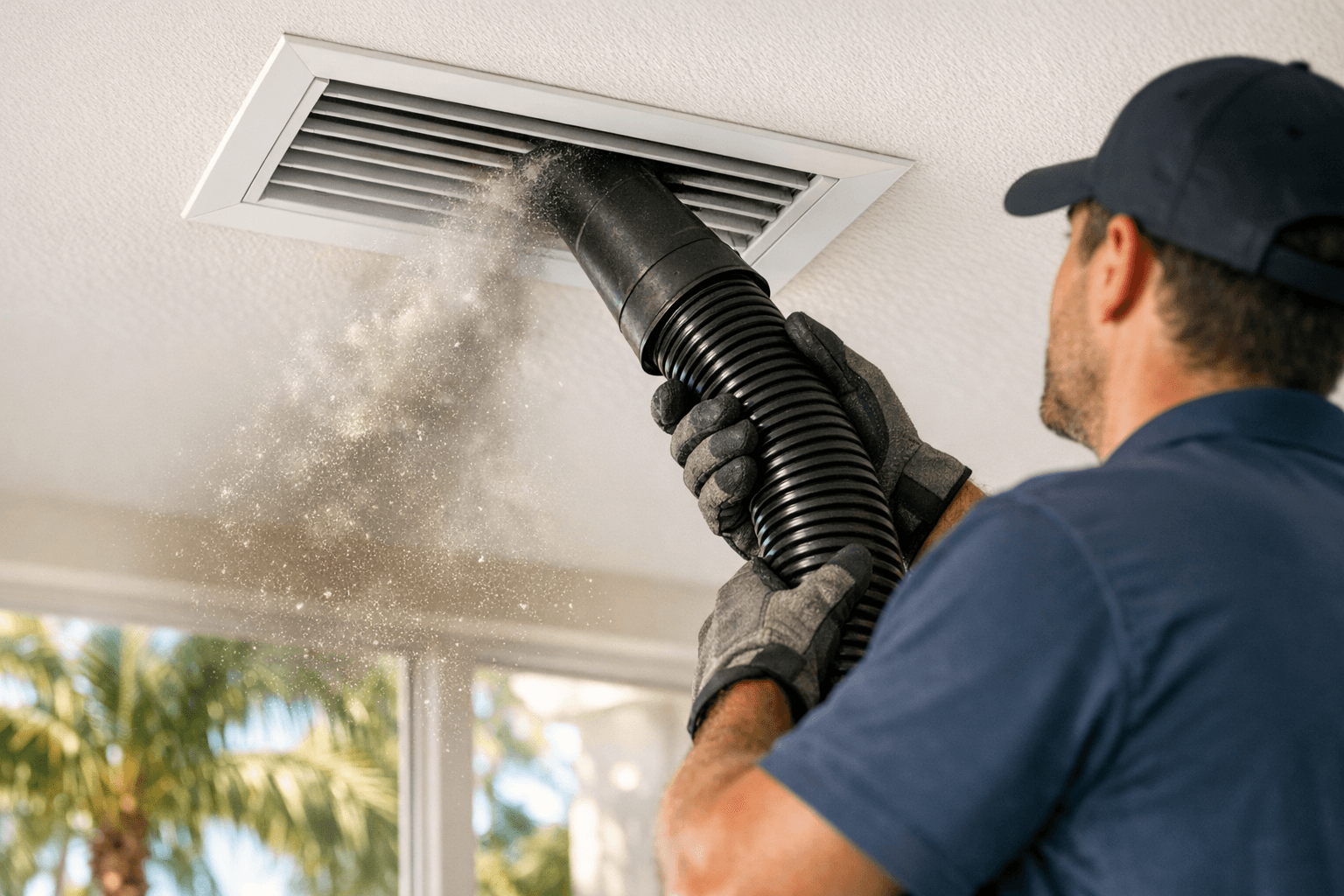
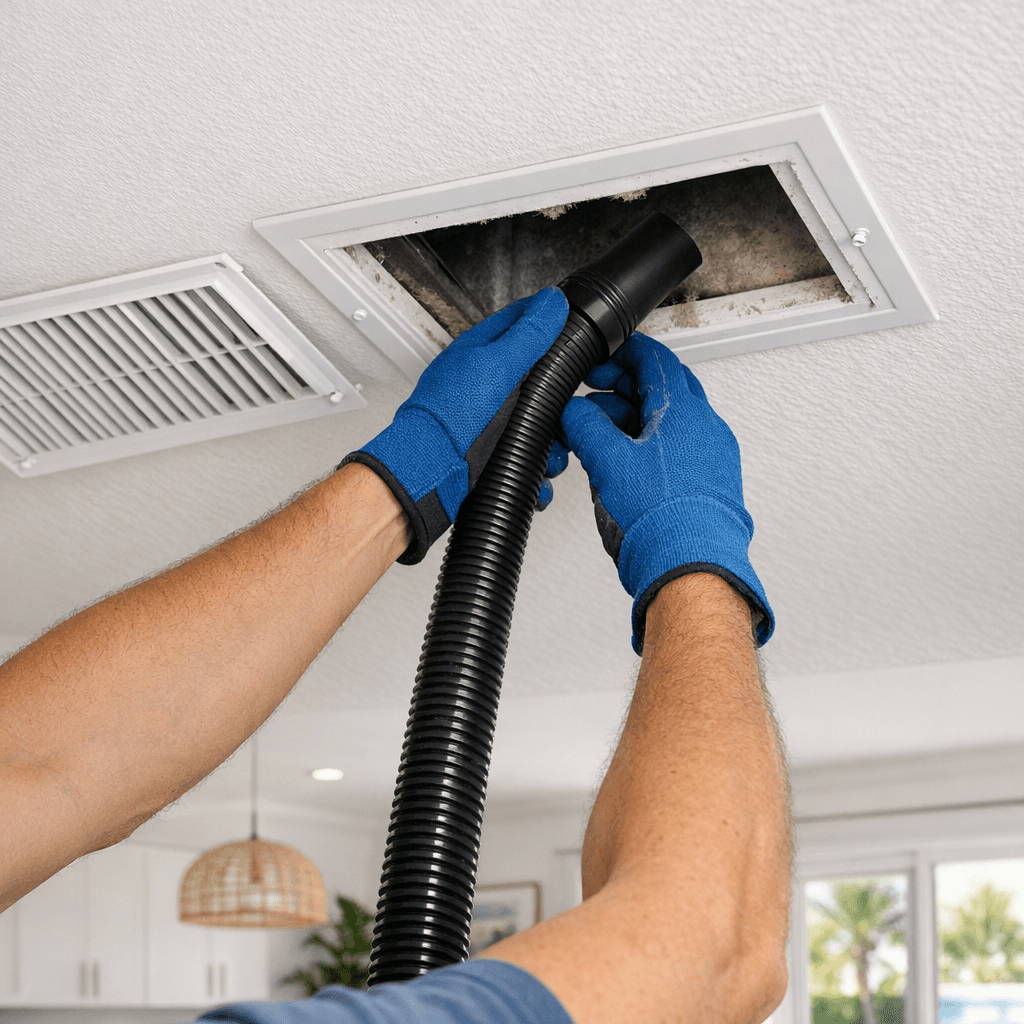
DIY cleaning is surface maintenance. You can clean register covers, vacuum visible debris near vent openings, and keep the areas you can reach dust-free. This is similar to vacuuming your floors-useful for routine upkeep.
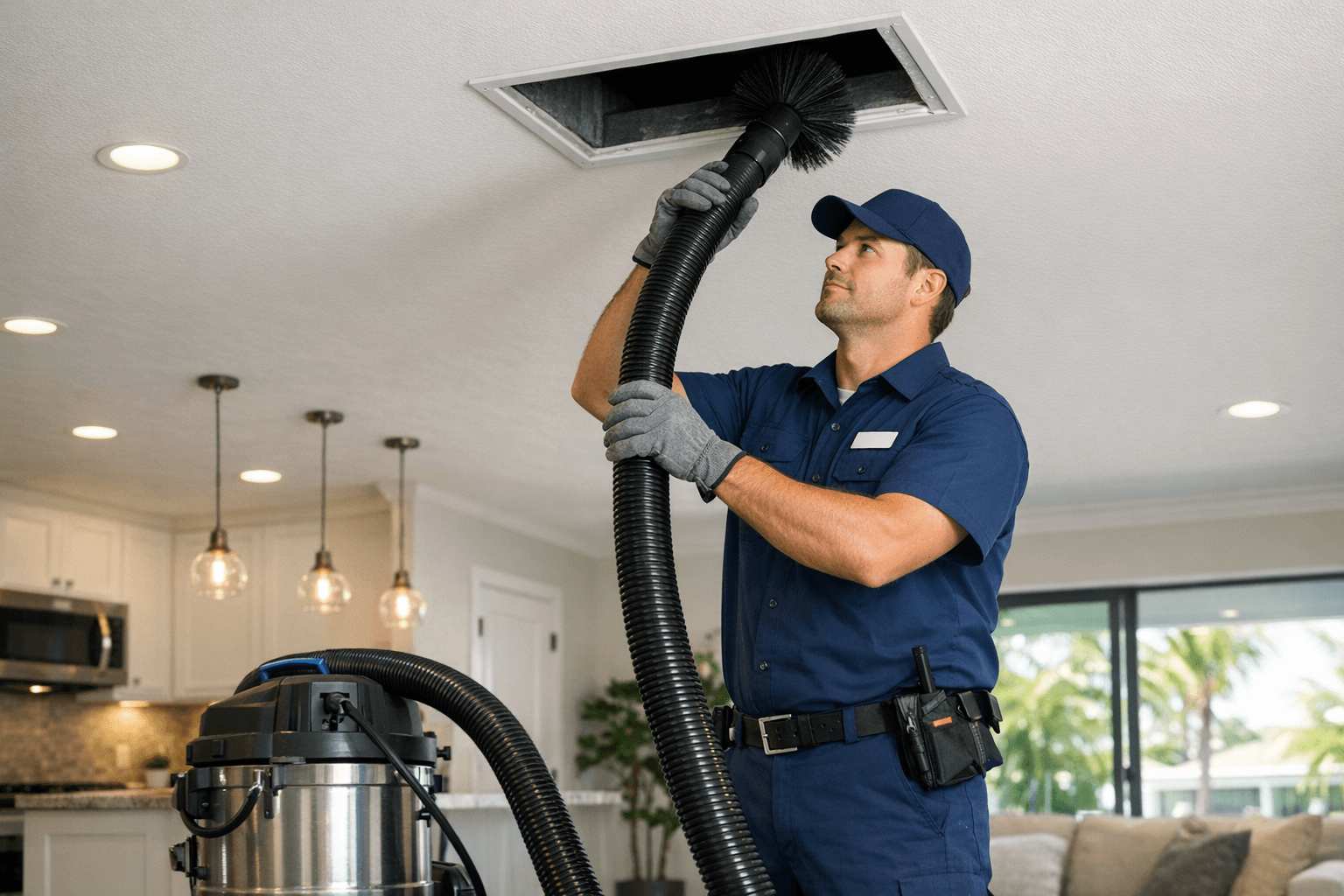
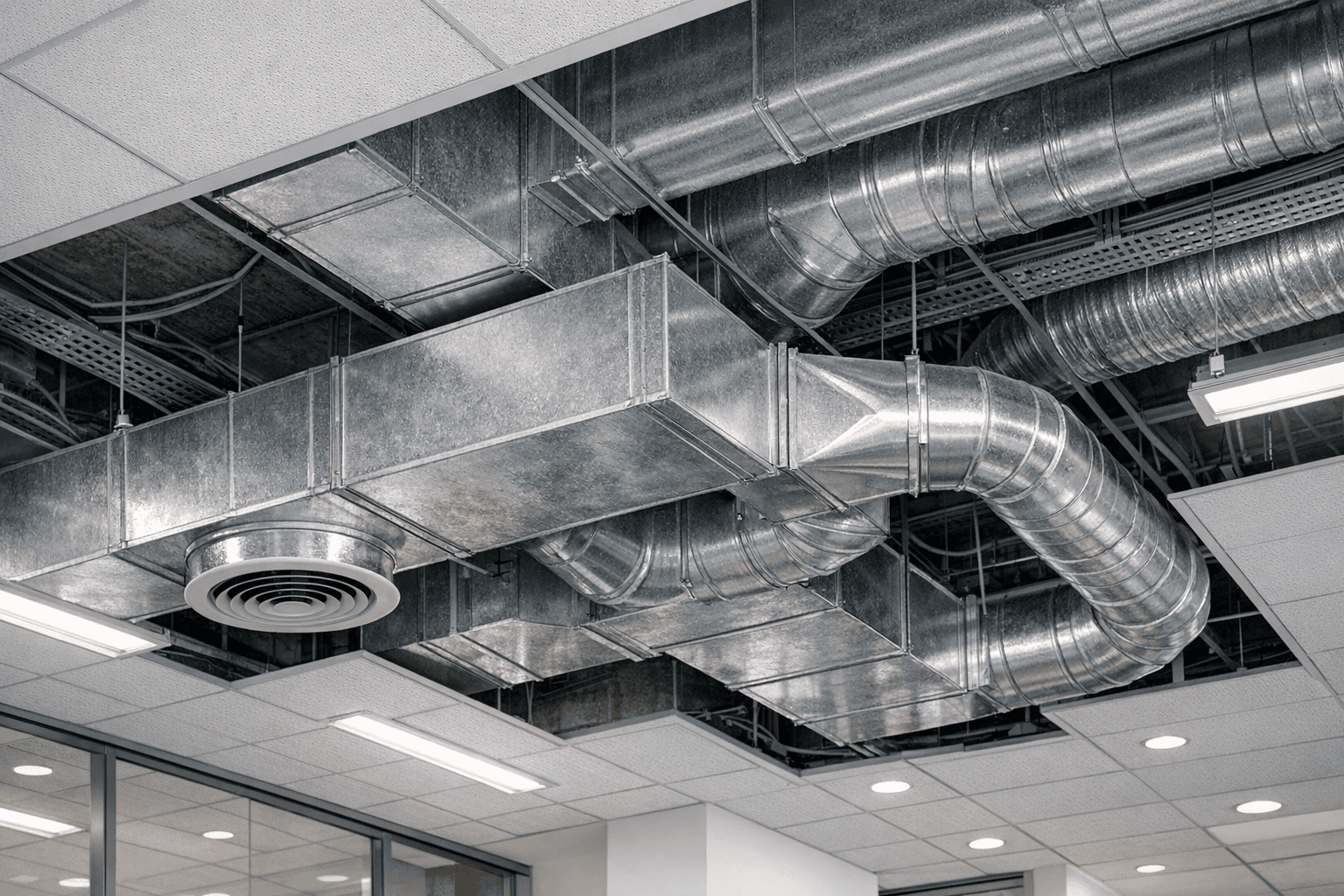
Professional cleaning is system-wide remediation. It uses specialized equipment to create negative pressure, pull debris from deep within your entire duct network, and address contamination you cannot see or reach.
According to the EPA, routine air duct cleaning is not generally recommended unless there is a specific reason-such as visible mold, pest infestation, or heavy debris accumulation. The key question is not "DIY or professional?" but rather "Does my system actually need cleaning, and if so, what level?"
DIY vs Professional Air Duct Cleaning: Cost Comparison
Understanding the true costs helps you make a practical decision.
DIY Duct Cleaning Costs
| Item | Cost Range |
|---|---|
| Shop vacuum with HEPA filter | $80-$200 |
| Brush kit attachments | $20-$40 |
| N95/P100 respirator | $15-$30 |
| Flashlight or borescope | $20-$100 |
| Microfiber cloths and cleaner | $10-$20 |
| Total initial investment | $145-$390 |
After the initial purchase, ongoing costs are minimal-replacement filters and masks.
Professional Duct Cleaning Costs in Florida
| Service Level | Cost Range |
|---|---|
| Per-vent pricing | $35-$50/vent |
| Small home (under 1,500 sq ft) | $250-$400 |
| Average home (1,500-2,500 sq ft) | $300-$500 |
| Large home (2,500+ sq ft) | $450-$700 |
| Additional services (sanitizing, sealing) | $100-$300 extra |
Tampa area average (2025-2026): $248-$684, with typical jobs around $450.
The Hidden Cost Factor
DIY may seem cheaper, but if you damage flex duct, dislodge debris deeper into the system, or miss an actual contamination issue, the remediation cost can exceed what professional cleaning would have cost initially.
What DIY Duct Cleaning Can Actually Accomplish
Be realistic about what you can achieve without professional equipment.
Safe and Useful DIY Tasks
- Clean register covers and grilles. Remove them, wash with mild soap, dry completely before reinstalling.
- Vacuum visible debris at vent openings (first 1-2 feet) using a shop vac with HEPA filtration.
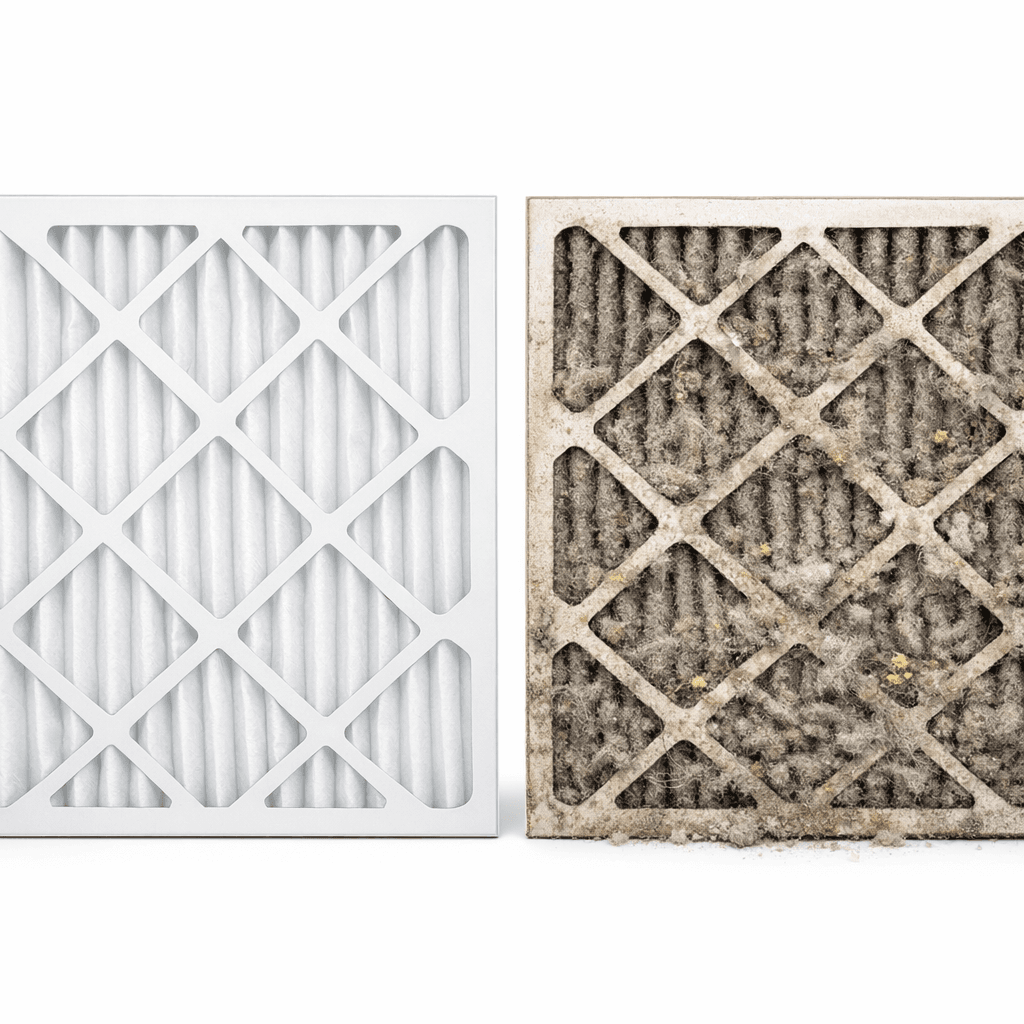
- Replace HVAC filters regularly-this often has more impact on air quality than duct cleaning.
- Clean around the air handler and keep the area dust-free.
- Seal obvious gaps around return vents with weatherstripping.
- Clear the condensate drain line to prevent moisture buildup.
What DIY Cannot Do
- Create negative pressure to capture debris throughout the system
- Reach deep into supply and return trunk lines
- Safely agitate and remove buildup without spreading it
- Address contamination in areas you cannot see
- Clean the blower compartment and evaporator coil surroundings
If your goal is removing dust from areas you can see and touch, DIY works. If you need to address the entire air distribution system, you need professional equipment.
Risks of DIY Air Duct Cleaning
DIY duct cleaning carries real risks that homeowners often underestimate.
1. Spreading Contamination
Without negative-pressure containment, brushing or vacuuming inside ducts can push debris deeper into the system or release particles into your living space. You may make indoor air quality worse, not better.
2. Damaging Ductwork
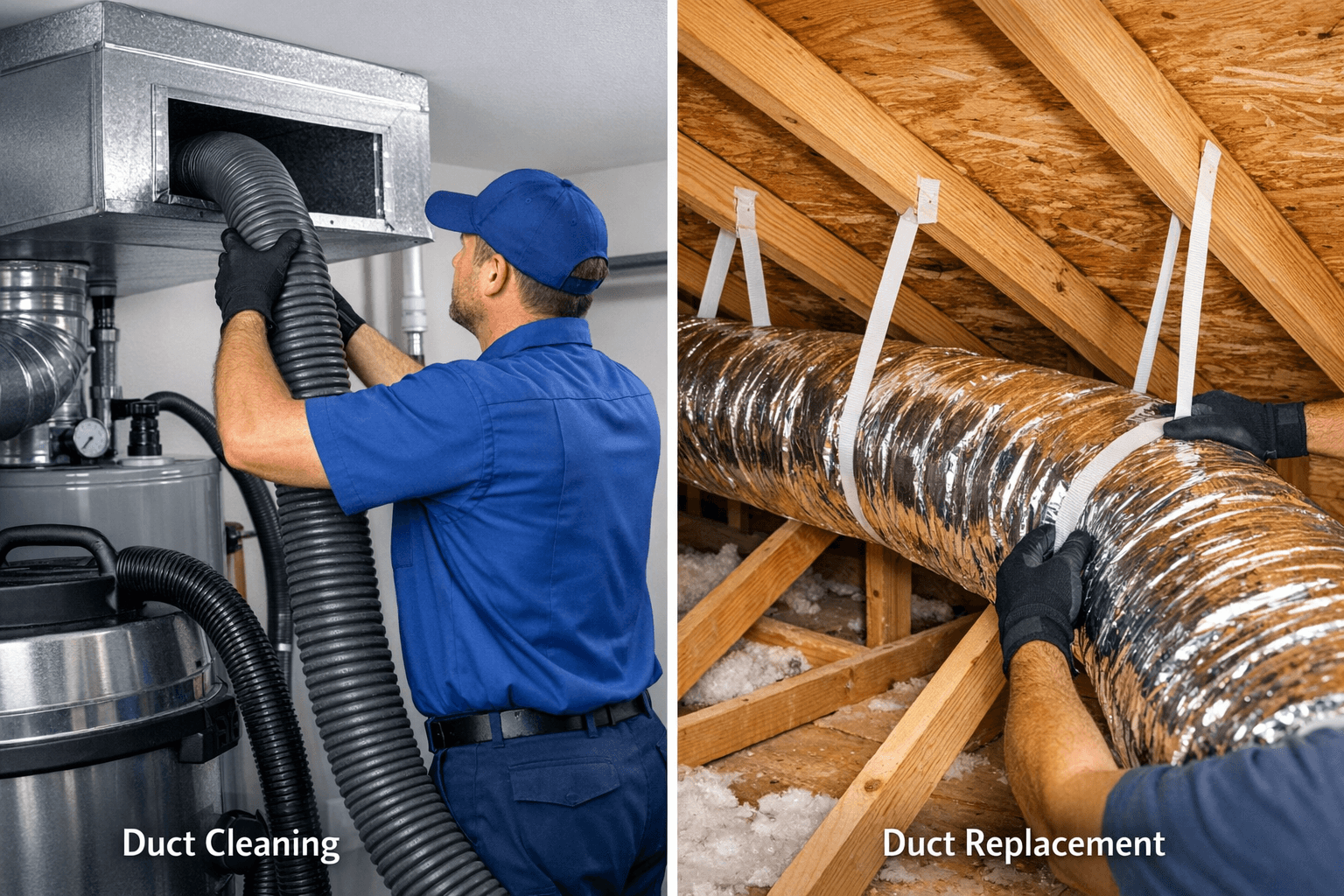
Flex duct (common in Florida attics) tears easily. Metal duct joints can be disconnected. Duct liner insulation can be damaged. Repairs often cost more than the cleaning would have.
3. Incomplete Cleaning
A 2,000 square foot home can have 100+ feet of ductwork. Without proper tools, you might clean 10% of the system while believing you cleaned it all.
4. Aerosolizing Harmful Substances
If mold, rodent droppings, or other biological contaminants are present, improper cleaning can release spores and particles into the air. The EPA specifically warns against casual biocide application and recommends professional evaluation for mold.
5. Personal Safety
Attic work in Florida heat is dangerous. Confined spaces, insulation exposure, and respiratory hazards require proper PPE and precautions.
What Professional Air Duct Cleaning Actually Includes
A legitimate professional service uses methods and equipment you cannot replicate at home.
Professional Equipment
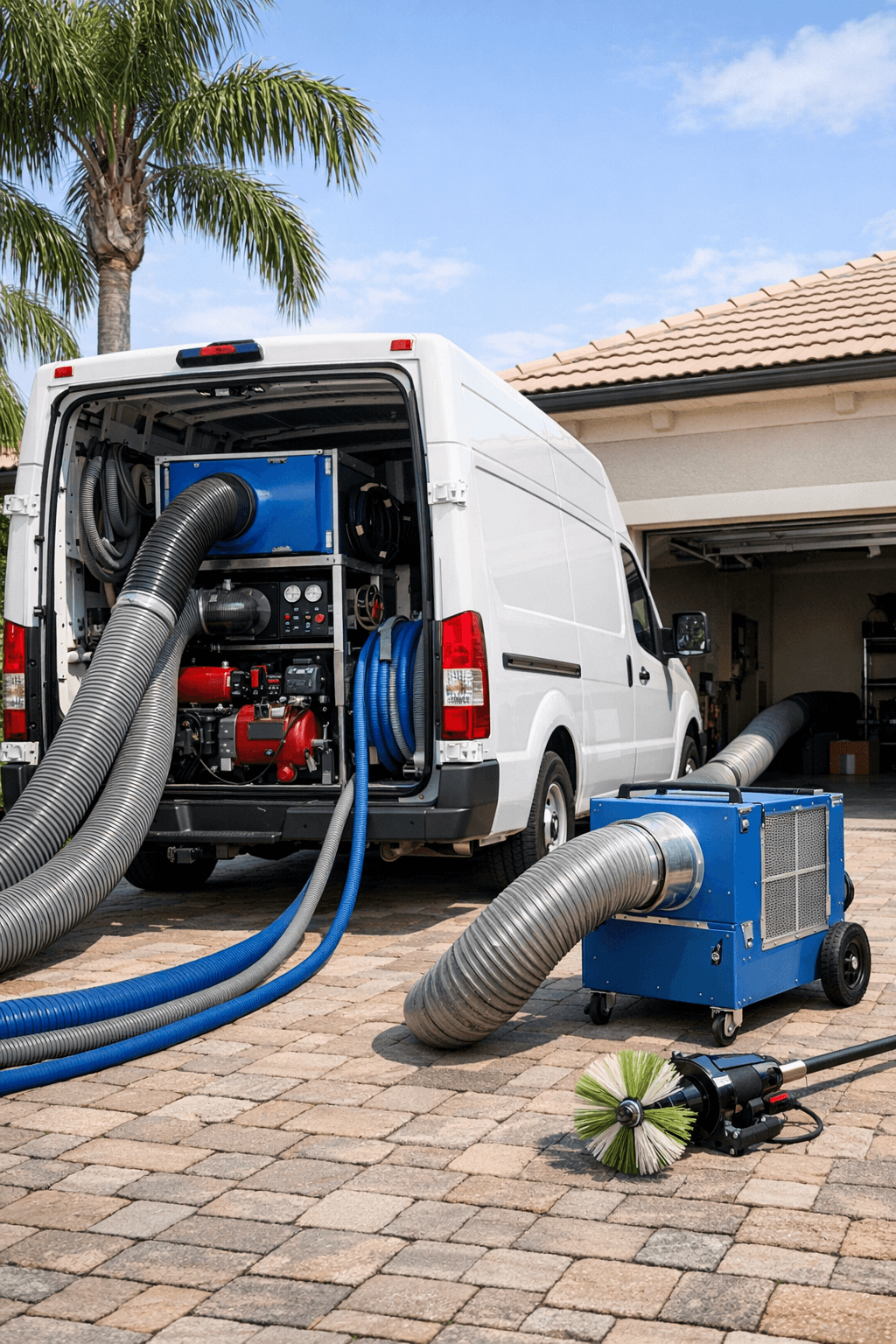
- Truck-mounted or portable negative air machines with HEPA filtration
- Rotary brush systems and air whips designed for different duct types
- Compressed air tools for dislodging debris
- Inspection cameras or photo tools for documenting accessible areas when needed
- Containment materials to seal registers during cleaning
Standard Professional Process
- System inspection to assess duct condition, access points, and contamination level
- Protection of floors and work areas at all access points
- Register removal and sealing to maintain negative pressure
- Negative pressure creation at the air handler to capture all debris
- Agitation of supply and return runs with appropriate tools
- Trunk line and main pathway cleaning
- Air handler cabinet and accessible component cleaning
- Visual verification and documentation of results
- System reassembly and filter installation
What Separates Good Professionals from Bad Ones
A quality provider will:
- Explain the scope before starting
- Show you before/after evidence
- Not pressure you into unnecessary add-ons
- Avoid scare tactics about "toxic mold" without testing
- Provide written documentation of work performed
Equipment Comparison: DIY vs Professional
| Capability | DIY Equipment | Professional Equipment |
|---|---|---|
| Reach | 1-2 feet into ducts | Entire system (100+ feet) |
| Debris capture | Basic vacuum suction | Negative-pressure HEPA collection |
| Contamination containment | None | Full system containment |
| Duct agitation | Manual brush only | Rotary brushes, air whips, compressed air |
| Inspection | Flashlight at openings | Deeper camera inspection or documented access-point review |
| Safe for flex duct | Risk of damage | Tools designed for duct type |
| Mold/biohazard handling | Not equipped | Proper containment and PPE |
| Documentation | Photos at vents | Photo set or written findings for key cleaned areas |
When DIY Duct Cleaning is Acceptable
DIY makes sense for routine maintenance when there is no underlying contamination issue.
Good DIY Scenarios
- Regular register maintenance (washing grilles quarterly)
- Light dust at vent openings that does not indicate a system-wide problem
- Pre-move-in cleaning of visible areas in a home with no contamination signs
- Between professional cleanings to maintain visible surfaces
- Filter changes and air handler area upkeep
DIY Checklist Before Starting
Before attempting any DIY duct work:
- Visually inspect registers for signs of mold or pest activity
- Check for musty odors that could indicate moisture problems
- Verify ductwork is accessible and in good condition
- Have proper PPE (N95 mask, gloves, eye protection)
- Ensure adequate ventilation in work areas
- Never use chemical sprays or foggers inside ducts
If you see anything concerning during inspection, stop and call a professional.
When You Must Hire a Professional
Certain situations require professional intervention. Attempting DIY in these cases can cause harm.
Professional Required: No Exceptions
- Visible mold on duct surfaces or HVAC components
- Rodent or insect infestation evidence in ductwork
- Post-construction debris from major renovation
- Fire or smoke damage affecting the HVAC system
- Water damage to ductwork or surrounding insulation
- Biological contamination (sewage backup, deceased animals)
Professional Strongly Recommended
- Heavy debris accumulation throughout the system
- Persistent dust despite regular filter changes
- Musty odors when HVAC runs
- Allergy symptoms that worsen indoors
- Moving into a home with unknown maintenance history
- More than 5 years since last professional service
The Decision Framework
Ask yourself:
- Can I see the problem? (If not, you cannot fix it)
- Can I reach the problem safely?
- Do I have equipment to capture what I dislodge?
- Is there any chance of mold or biological contamination?
If any answer raises doubt, the professional route is safer and often more cost-effective.
Florida-Specific Considerations
Florida's climate creates unique challenges for air duct maintenance.
Humidity and Moisture
High humidity means:
- Greater condensation risk in ductwork
- Debris sticks to duct surfaces more readily
- Moisture problems are common but cleaning does not fix the moisture source
If you suspect moisture issues, address the HVAC system first. A system inspection can identify coil problems, drain issues, or return leaks that cause moisture.
Heat and Attic Work
Florida attics can exceed 140F in summer. DIY duct work in these conditions is dangerous. Heat exhaustion is a real risk. Professionals work with proper hydration protocols and timing.
Flex Duct Prevalence
Most Florida homes use flex duct, which is more delicate than metal. Aggressive DIY cleaning can tear it. Professionals use tools designed for flex duct.
Storm Season
Post-hurricane or tropical storm events can introduce water, debris, and contamination into duct systems. Always have professional evaluation after significant water events.
How to Avoid Duct Cleaning Scams
The duct cleaning industry has a significant scam problem. NADCA (National Air Duct Cleaners Association) actively warns homeowners about deceptive practices.
Red Flags to Watch For
- "Whole house duct cleaning for $99" - This is a common bait-and-switch setup
- Claims of "EPA-certified" duct cleaning - The EPA does not certify duct cleaners
- Immediate mold claims without testing - Scare tactics to upsell services
- Pressure to decide immediately - Legitimate companies provide written estimates
- No written scope of work - You should know exactly what is included
How to Choose a Legitimate Provider
- Request a written estimate with detailed scope
- Ask what equipment they use (negative pressure is essential)
- Verify NADCA membership if claimed
- Request condition photos or written findings for key access points
- Get references from previous customers
- Avoid the lowest bidder-quality service costs more than $99
For clear scope and estimate-first service, contact Pro Air Chimney at 813-513-7861.
Our Recommendation
For most Florida homeowners:
- Handle routine register cleaning and filter changes yourself
- Skip "duct cleaning" unless you have a specific reason (visible contamination, renovation, pest issues)
- When professional cleaning is needed, hire a reputable company with proper equipment
- Address moisture and duct integrity issues before or alongside cleaning
- Be skeptical of ultra-low prices and "free inspections" that lead to expensive upsells
If you are unsure whether your home needs professional duct cleaning, start with a system inspection to get an honest assessment.
Related Services
Service Areas
Get an Honest Assessment
Not sure if you need professional duct cleaning or if DIY maintenance is enough? Pro Air Chimney provides straightforward evaluations without pressure tactics.
Call 813-513-7861 or schedule online.
FAQs
Q: Is DIY air duct cleaning worth it? A: DIY is worth it for surface maintenance-cleaning registers, vacuuming visible areas near vents, and changing filters. It is not effective for system-wide cleaning and can cause damage if done improperly.
Q: How much does professional air duct cleaning cost in Florida? A: Professional duct cleaning in Florida typically costs $300-$700 for a residential system. Prices vary based on home size, duct condition, and accessibility. Be cautious of prices under $150 for a "whole house" cleaning.
Q: Can I clean air ducts myself to save money? A: You can maintain visible areas yourself, but you cannot replicate professional negative-pressure cleaning. If your system has actual contamination (mold, pests, heavy debris), professional equipment is required for safe and effective removal.
Q: What equipment do I need for DIY duct cleaning? A: For basic maintenance: shop vacuum with HEPA filter ($80-$200), brush attachments ($20-$40), N95 respirator ($15-$30), flashlight, and microfiber cloths. This allows surface cleaning only.
Q: When should I definitely hire a professional for duct cleaning? A: Hire a professional if you have visible mold, pest evidence, post-renovation dust throughout the system, water damage to ducts, or persistent air quality issues despite regular filter changes.
Q: Why is professional duct cleaning so expensive compared to DIY? A: Professional cleaning uses specialized equipment (truck-mounted vacuums, HEPA collection systems, agitation tools) that costs $10,000-$50,000+ and requires trained technicians. The price reflects equipment investment and labor for a thorough job.