Signs Your Air Ducts Need Replacement (Not Just Cleaning)
When your Florida home has hot and cold spots, dusty air, or rising energy bills, cleaning might seem like the obvious fix. But sometimes, the problem goes deeper. Knowing when air ducts need replacement rather than cleaning can save you money, improve comfort, and prevent recurring issues.
This guide covers the warning signs that indicate replacement is necessary, what to expect from different duct materials, and why Florida's climate makes proper ductwork especially important.
Need a professional assessment? Call Pro Air Chimney at 813-513-7861 or schedule an inspection: /contact.
Table of Contents
- How long do air ducts last?
- Visible damage signs that indicate replacement
- Performance issues that point to failing ducts
- When cleaning isn't enough
- Florida flex duct problems
- Replacement cost factors
- How to get an accurate assessment
- Service areas in Florida
- FAQ
- Sources
How Long Do Air Ducts Last?
The typical lifespan for residential ductwork ranges from 15 to 25 years, depending on the material, installation quality, and environmental conditions.
Lifespan by duct type
| Duct Material | Expected Lifespan | Florida Considerations |
|---|---|---|
| Galvanized steel | 25-30 years | Humidity can cause rust at joints |
| Aluminum | 20-25 years | Good corrosion resistance |
| Flex duct | 15-20 years | Heat and UV exposure in attics reduces life |
| Fiberglass duct board | 15-20 years | Moisture damage is common in humid climates |
Age alone doesn't determine replacement need. A 10-year-old flex duct system in a poorly insulated attic can be in worse condition than a 20-year-old metal duct system in a conditioned space. Condition, not calendar age, is what matters.
If your home was built before 2000 and the original ductwork is still in place, a professional inspection can identify whether the system is functioning properly or showing signs of deterioration.
Visible Damage Signs That Indicate Replacement
Some duct damage is obvious when you look in the attic or crawlspace. These visual indicators typically mean cleaning won't solve the underlying problem.
Crushed, kinked, or collapsed duct runs
Flex duct that has been crushed by foot traffic, storage items, or improper installation restricts airflow permanently. Even if you reshape the duct, the inner liner may be damaged. According to ENERGY STAR guidance, crushed or tangled flexible ducts should be repaired or replaced to restore proper airflow.
Disconnected duct sections
Gaps between duct sections, especially at boots, plenums, or branch connections, allow conditioned air to escape into unconditioned spaces. Look for:
- Visible gaps at register boots
- Separated flex duct from metal fittings
- Fallen or dangling duct runs
- Obvious daylight or attic insulation visible through gaps
Disconnected ducts waste energy and can pull in contaminated air from attics or crawlspaces.
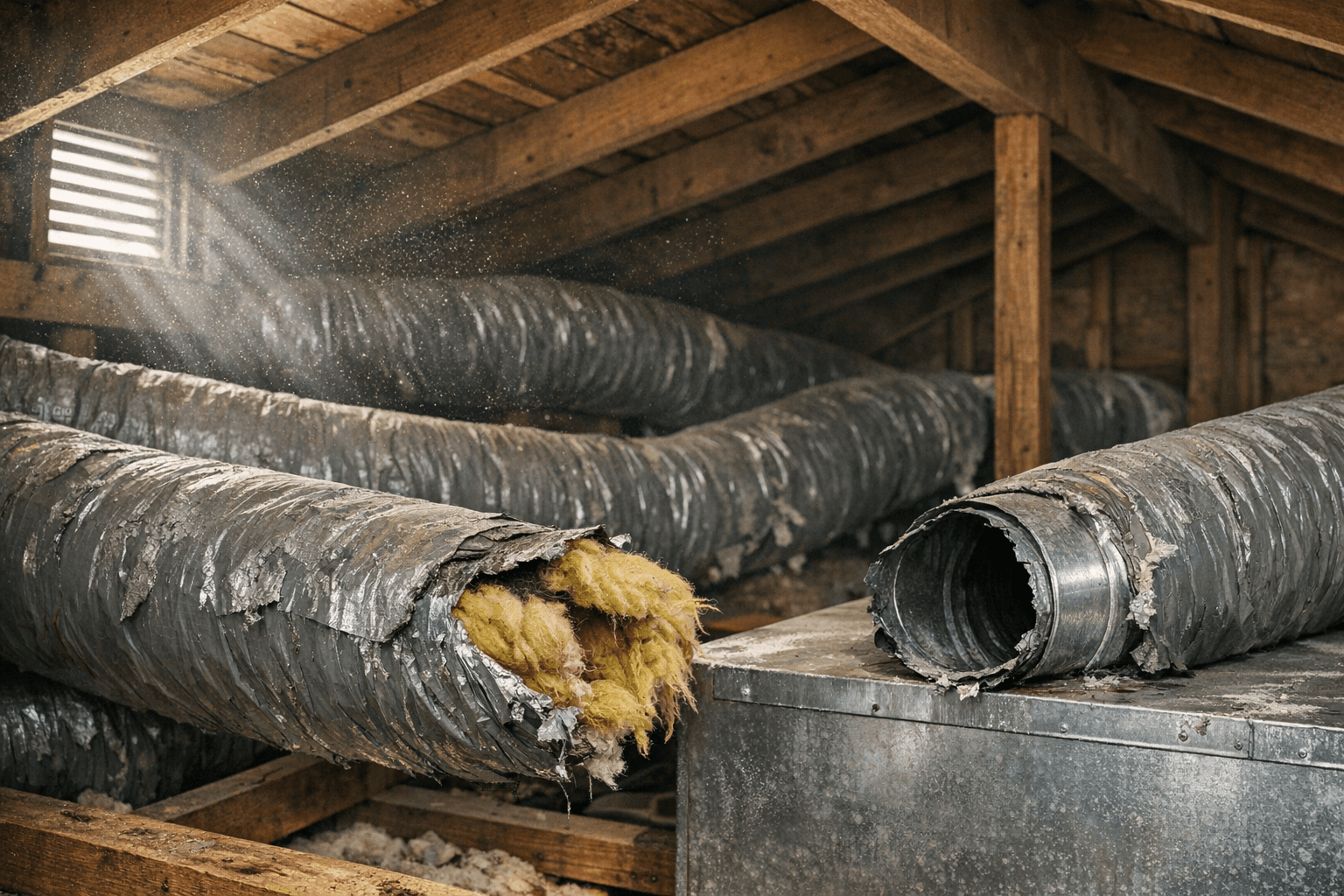
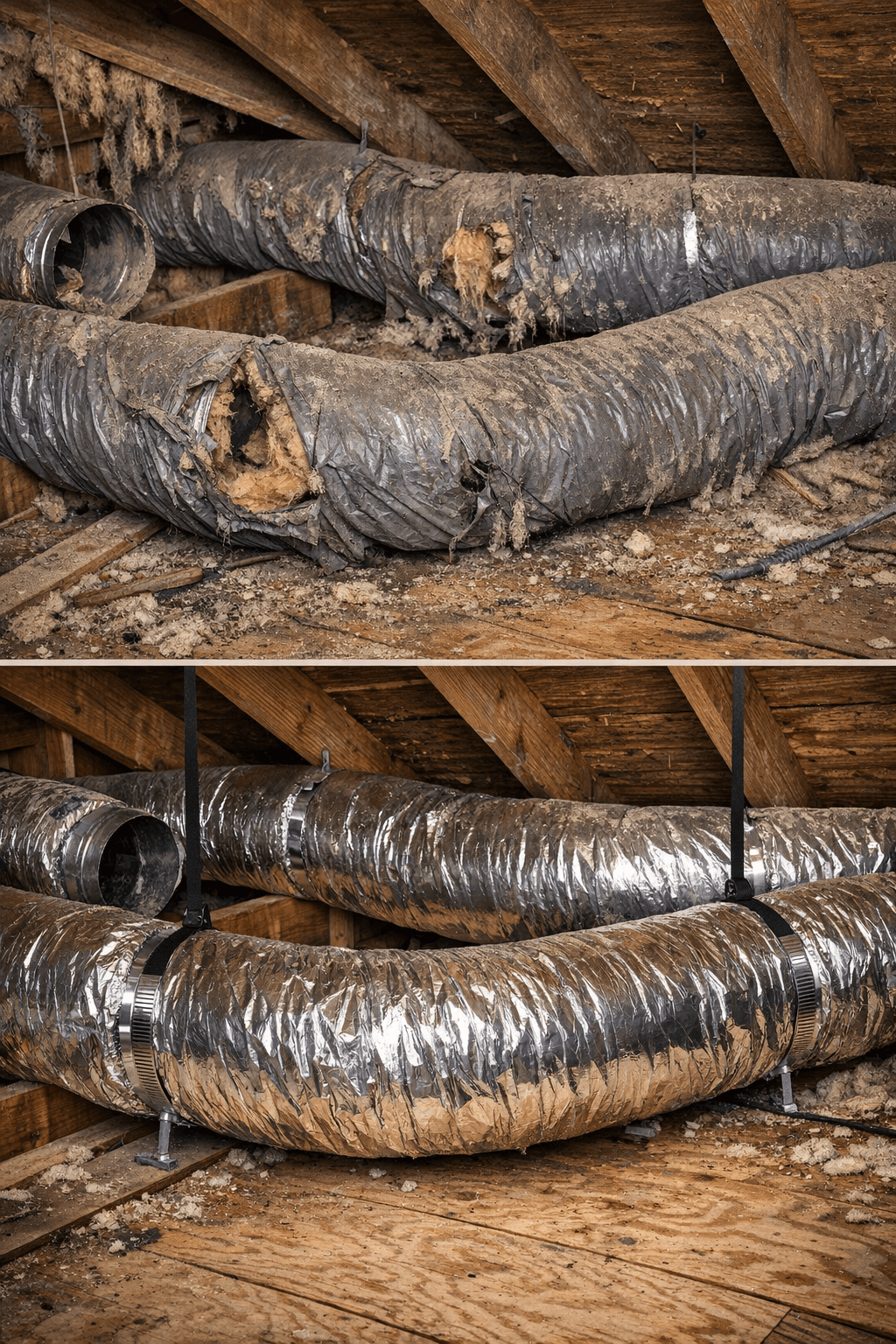
Torn or deteriorating duct material
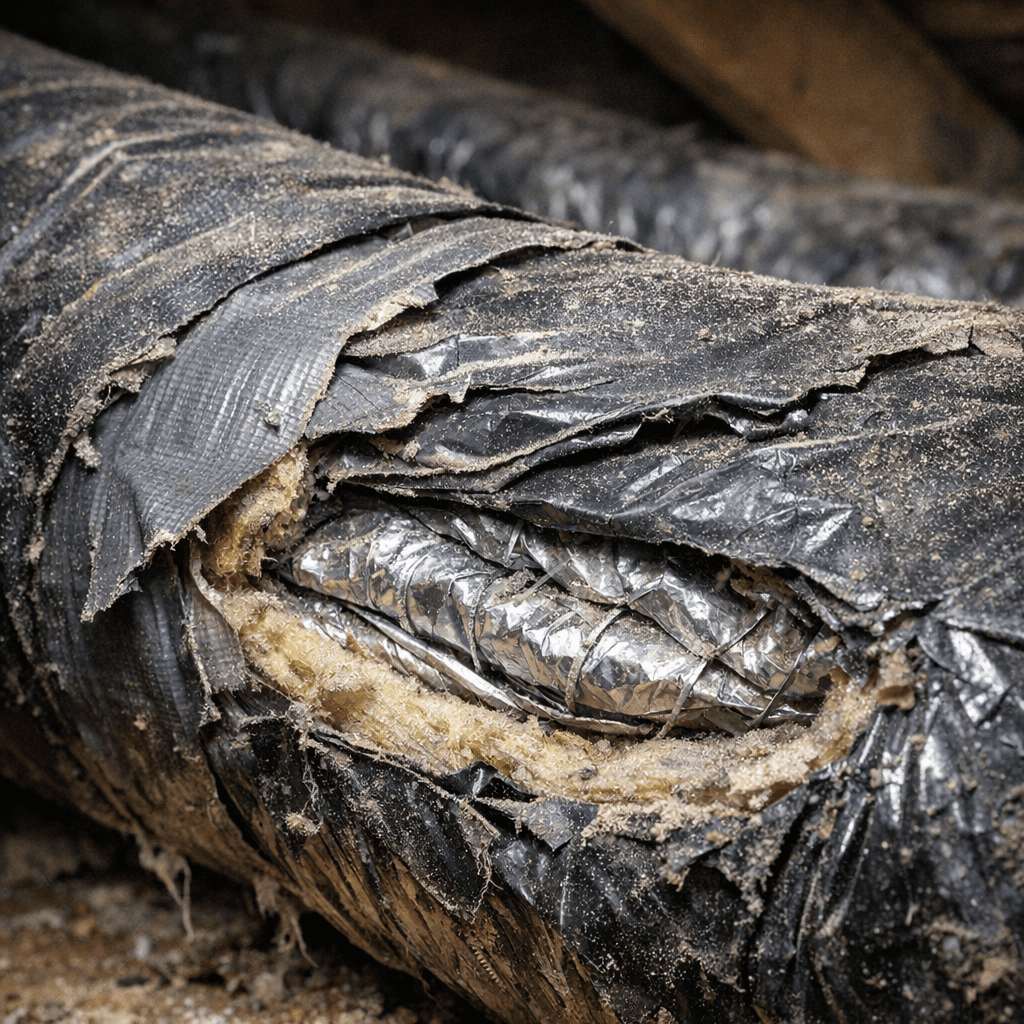
Flex duct has a plastic inner liner that can crack, tear, or separate from the insulation layer over time. Signs of material failure include:
- Visible tears or holes in the duct exterior
- Exposed fiberglass insulation
- Brittle or crumbling duct jacket
- Inner liner separation (sagging core inside the insulation)
Once the material integrity is compromised, patching provides only a temporary fix.
Mold or moisture damage on duct insulation
The EPA specifically notes that wet or moldy duct insulation cannot be effectively cleaned and should be removed and replaced. This applies to:
- Fiberglass-lined metal ducts
- Duct board
- Insulated flex duct
If you see staining, black spots, or smell musty odors near vents, moisture damage may have penetrated the duct insulation.
For duct repair options when damage is limited to specific sections, see: /services/duct-repair
Performance Issues That Point to Failing Ducts
Not all duct problems are visible. These performance symptoms often indicate ductwork that needs replacement rather than cleaning.
Persistent hot and cold spots
When some rooms are consistently too hot or too cold despite adjusting the thermostat, the issue may be:
- Undersized or oversized duct runs serving those rooms
- Crushed or kinked ducts reducing airflow to specific areas
- Major leaks losing conditioned air before it reaches the room
Cleaning removes debris but doesn't fix airflow restrictions caused by physical damage.
Weak airflow from registers
If airflow at supply vents feels weak compared to when the system was new, possible causes include:
- Collapsed or sagging duct runs
- Excessive duct length or restrictive routing
- Disconnections at the plenum or trunk lines
- Return duct problems reducing system capacity
A duct cleaning may temporarily improve flow by removing debris, but if the ductwork itself is damaged, the improvement won't last.
Rising energy bills without explanation
Duct leakage in unconditioned spaces (attics, crawlspaces) wastes 20-30% of conditioned air in many homes. If your cooling bills have increased without a change in usage patterns or equipment issues, duct leakage or damage may be the cause.
ENERGY STAR recommends having ducts inspected and sealed to reduce energy waste. However, if the duct system is too damaged to seal effectively, replacement becomes the practical solution.
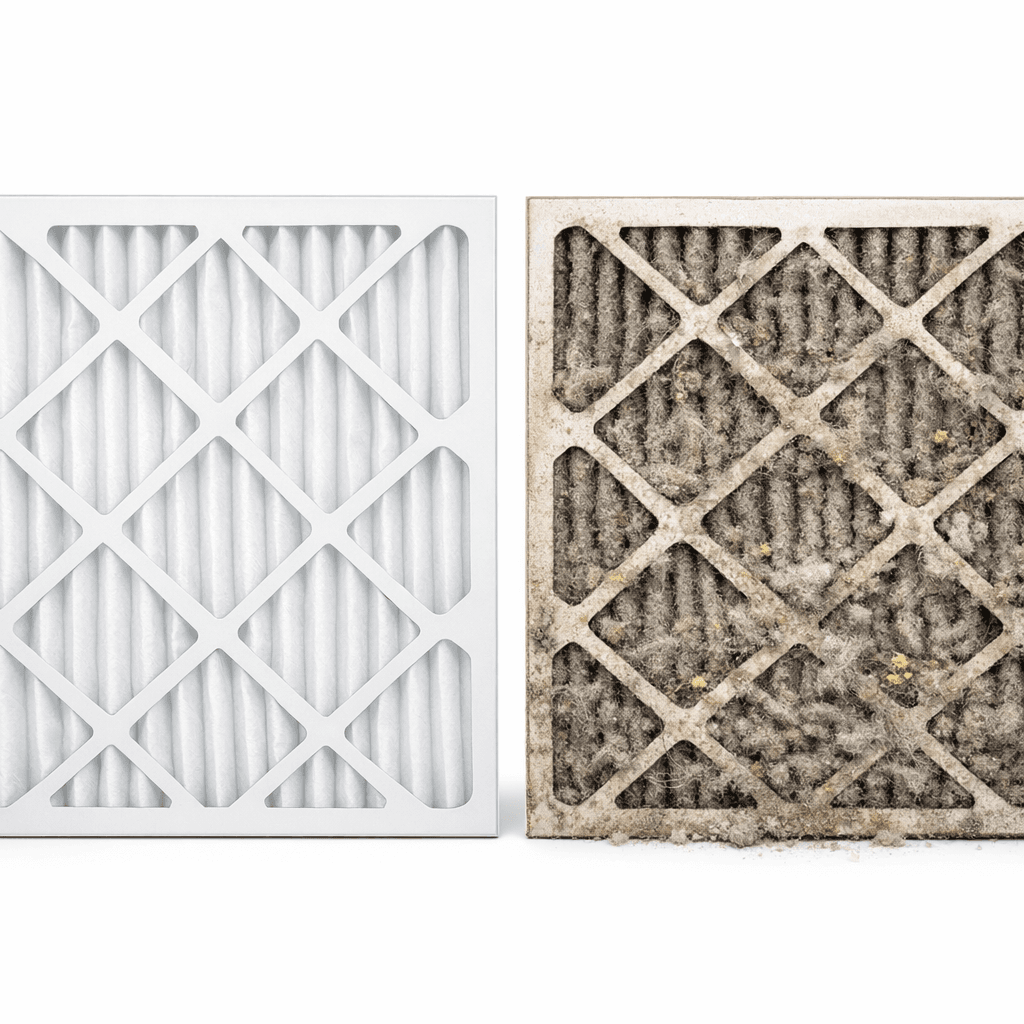
Excessive dust despite regular filter changes
Leaky return ducts can pull in dust, fiberglass particles, and other contaminants from attics or crawlspaces. Signs include:
- Dust buildup returns quickly after cleaning
- Fiberglass particles visible on registers
- Attic or musty smell when the system runs
While cleaning helps temporarily, the contamination will return until the source (leaking or damaged ducts) is addressed.
When Cleaning Isn't Enough
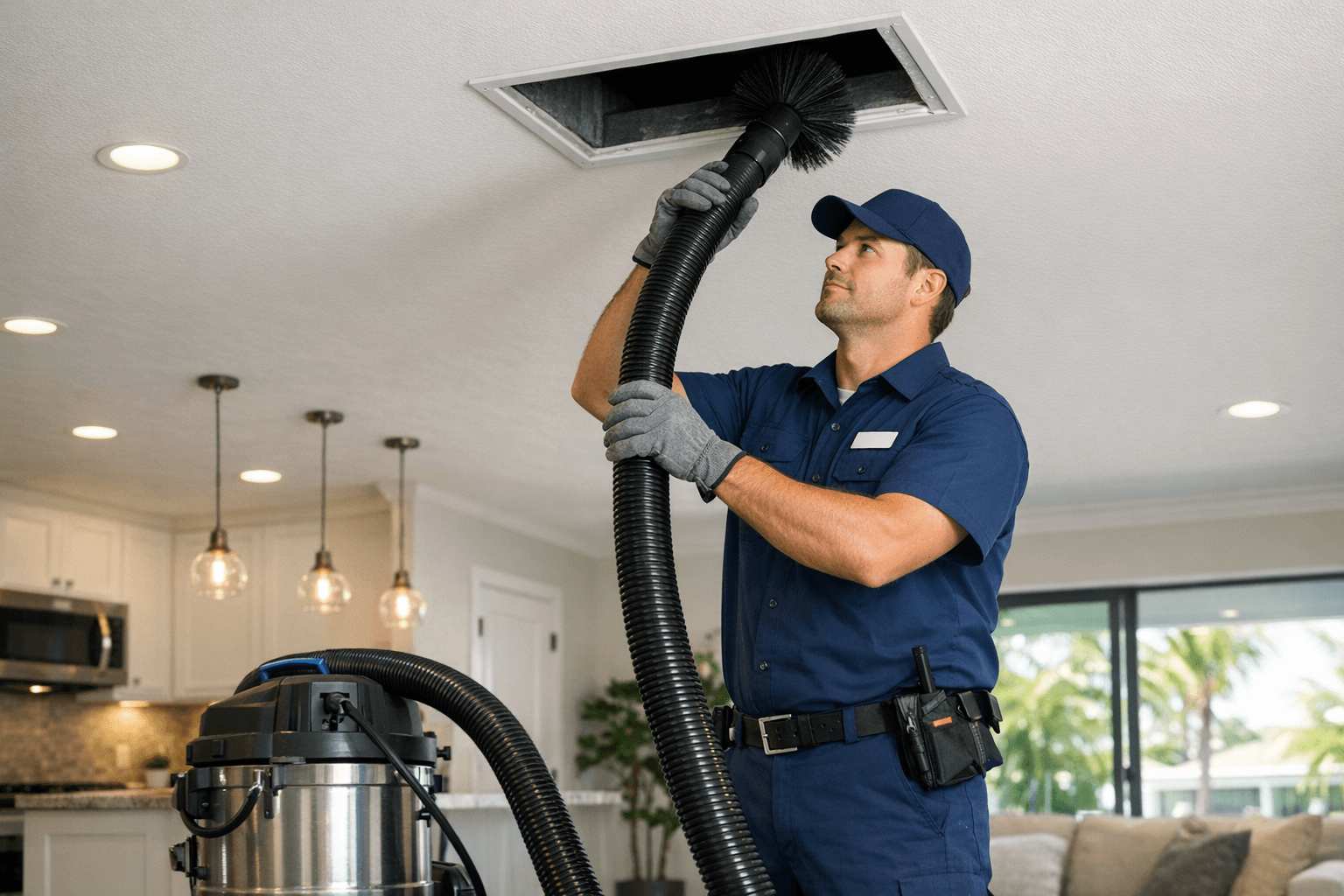
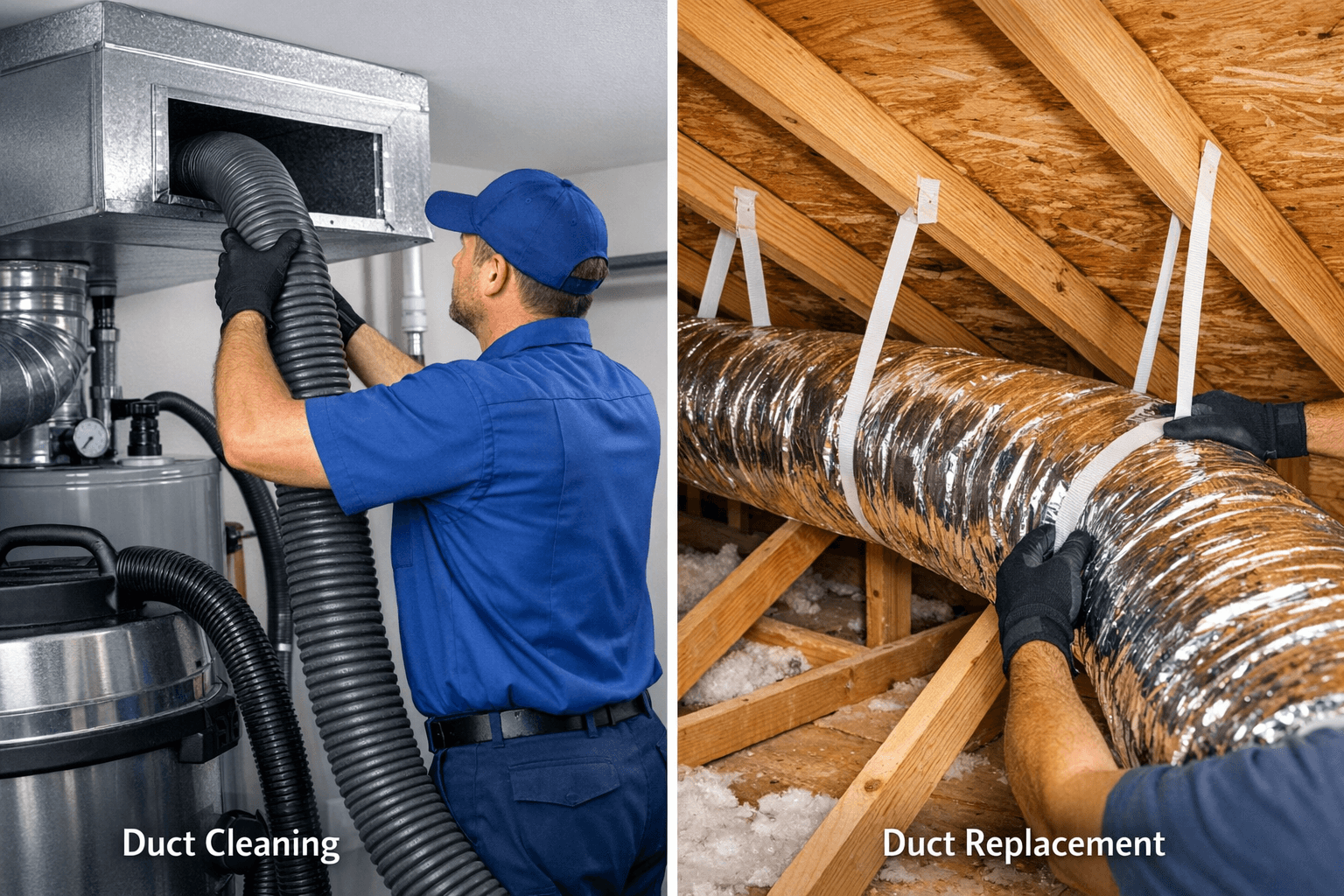
Air duct cleaning is appropriate when the issue is debris accumulation inside otherwise intact ductwork. It's not the right solution when the ductwork itself has physical problems.
Cleaning is appropriate when:
- There's verified dust or debris buildup inside the ducts
- Post-renovation cleanup is needed
- Contamination from a specific event (pest infestation, flood) requires removal
- The duct system is structurally sound
Cleaning won't fix:
- Crushed, collapsed, or disconnected duct runs
- Torn duct liner or exposed insulation
- Mold growth on duct insulation (requires removal)
- Design problems (undersized returns, excessive duct length)
- Persistent moisture problems in duct insulation
If a contractor recommends cleaning but you're experiencing performance issues or visible damage, ask specifically whether the ductwork condition has been evaluated.
For air duct cleaning when appropriate: /services/air-duct-cleaning
Florida Flex Duct Problems
Florida homes commonly use flex duct because it's inexpensive and easy to install. However, the Florida climate creates specific challenges that shorten flex duct lifespan.
Attic heat exposure
Attic temperatures in Florida can exceed 150°F in summer. This extreme heat:
- Degrades the plastic inner liner over time
- Causes the duct jacket to become brittle
- Accelerates tape and mastic failure at joints
- Reduces insulation effectiveness
Flex duct in Florida attics often needs replacement sooner than the manufacturer's rated lifespan suggests.
Humidity and condensation
High humidity combined with air conditioning creates condensation risk. When return air leaks allow humid attic air into the duct system, or when duct insulation is inadequate, condensation forms on cold duct surfaces. Over time, this moisture:
- Damages duct insulation from within
- Creates conditions for mold growth
- Reduces insulation R-value
- Leads to recurring moisture problems
Once insulation is moisture-damaged, replacement is the only reliable fix.
Common Florida flex duct failures
- Sagging runs: Improper support allows gravity to create low spots that collect condensation and restrict airflow
- UV degradation: Ducts exposed to sunlight (near attic vents or access doors) deteriorate faster
- Pest damage: Rodents and insects can tear duct material, requiring section replacement
- Inadequate insulation: Older installations may have R-4 or R-6 insulation where R-8 is now recommended
Replacement Cost Factors
Duct replacement costs vary significantly based on scope, accessibility, and system design.
Typical cost ranges
| Scope | Estimated Cost Range |
|---|---|
| Single duct run replacement | $300-$700 |
| Partial replacement (multiple runs) | $1,000-$3,000 |
| Full system replacement | $3,000-$8,000+ |
Factors that affect cost:
- Accessibility: Attic work is generally easier than crawlspace or wall cavity work
- Duct material: Flex duct costs less than metal; insulated flex costs more than standard
- System complexity: More runs, registers, and returns increase labor time
- Required modifications: Adding returns, resizing trunk lines, or improving layout adds cost
When partial replacement makes sense
Not every duct problem requires full system replacement. Consider partial replacement when:
- Only a few specific runs are damaged
- The rest of the system is intact and properly sealed
- Performance issues are limited to certain rooms
- Budget constraints require prioritizing the worst problems
A thorough inspection can identify which sections need work and which are still functional.
How to Get an Accurate Assessment
Avoid making replacement decisions based on age alone or high-pressure sales tactics. A proper evaluation should include:
What a thorough duct inspection covers
- Visual examination of accessible supply and return runs
- Checking connections at boots, plenums, and air handler
- Identifying disconnections, crushed sections, tears, and sagging
- Assessing insulation condition and vapor barrier integrity
- Documenting findings with photos
- Clear explanation of repair vs. replacement options
Red flags to watch for
- $99 whole-house cleaning offers: Often lead to high-pressure upsells
- Scare tactics about mold without testing: Legitimate mold concerns require documentation
- No inspection before recommendations: Proper diagnosis requires visual assessment
- "Replace everything" without specific findings: Trustworthy contractors explain exactly what needs work
For professional duct system inspections in Florida: /services/system-inspections
Service Areas in Florida
Pro Air Chimney provides duct inspection and replacement services throughout Florida:
- /air-duct/orlando
- /air-duct/miami
- /air-duct/tampa
- /air-duct/jacksonville
- /air-duct/gainesville
- /air-duct/sarasota
See all coverage areas: /service-areas
Ready for an assessment? Call 813-513-7861 or contact us: /contact
FAQ
How do I know if my air ducts need to be replaced?
Look for visible damage (crushed, torn, or disconnected ducts), performance issues (weak airflow, hot/cold spots, rising energy bills), and signs of moisture damage or mold. If duct insulation is wet or moldy, the EPA recommends replacement rather than cleaning.
What is the average lifespan of air ducts?
Residential air ducts typically last 15-25 years depending on material and conditions. Flex duct in hot Florida attics may need replacement sooner, while metal ducts in conditioned spaces can last longer.
Can damaged air ducts be repaired instead of replaced?
Minor damage at accessible joints can often be sealed or repaired. However, crushed runs, torn inner liners, moisture-damaged insulation, or widespread deterioration usually require replacement of affected sections.
How much does it cost to replace ductwork in Florida?
Single run replacement typically costs $300-$700. Partial replacement of multiple runs ranges from $1,000-$3,000. Full system replacement can cost $3,000-$8,000 or more depending on home size and complexity.
Should I replace ductwork when replacing my AC system?
Not automatically. If the ductwork is in good condition, properly sized, and well-sealed, it can continue serving a new AC system. However, if ducts are damaged, undersized, or leaking significantly, replacement during AC installation is more efficient than doing it later.
Why does my house get dusty so quickly after cleaning?
Leaky return ducts can pull dust and debris from attics or crawlspaces into the system. Cleaning removes existing debris but doesn't stop the infiltration. Sealing or replacing leaky duct sections addresses the source of contamination.
How do I find duct leaks in my home?
Common leak locations include duct joints, boot connections, plenum seams, and areas where flex duct connects to metal fittings. Visual inspection in accessible areas can identify obvious gaps. Professional duct testing can quantify total system leakage.
What causes flex duct to deteriorate in Florida?
Extreme attic heat (150°F+) degrades plastic and adhesives. High humidity creates condensation on cold duct surfaces. UV exposure near vents or access points accelerates breakdown. Pest damage and improper support also contribute to failure.