Pet Owners' Guide to Air Duct Maintenance
Quick answer: Pet owners don't need air duct cleaning on a fixed schedule. The EPA recommends cleaning only as needed-when there's visible debris, airflow problems, or contamination. For homes with dogs and cats, the best strategy is better filtration (MERV 11-13), monthly filter checks, and source control (regular grooming, HEPA vacuuming). Call Pro Air Chimney at 813-513-7861 for a professional assessment.
Table of Contents
- How Pet Hair and Dander Affect Your HVAC
- Do Pet Owners Need More Frequent Duct Cleaning?
- Filter Recommendations for Pet Owners
- Reducing Pet Allergens at the Source
- Multi-Pet Household Strategies
- Warning Signs Your Ducts Need Attention
- Professional Cleaning vs. DIY Maintenance
- Florida-Specific Considerations
- FAQs
How Pet Hair and Dander Affect Your HVAC System
Your HVAC system circulates air throughout your home thousands of times per day. When you have pets, that air carries microscopic particles that can accumulate in your ductwork and HVAC components over time.
What Pets Contribute to Your Air System
- Pet dander (microscopic skin flakes) that's easily airborne and recirculates constantly
- Pet hair and fur that bypasses filters and collects in return ducts
- Saliva proteins that dry on fur and become airborne
- Outdoor contaminants tracked in on paws and fur (pollen, dirt, mold spores)
- Litter dust from cat boxes that becomes airborne
Where Pet-Related Debris Accumulates
The most common collection points in pet-owner homes:
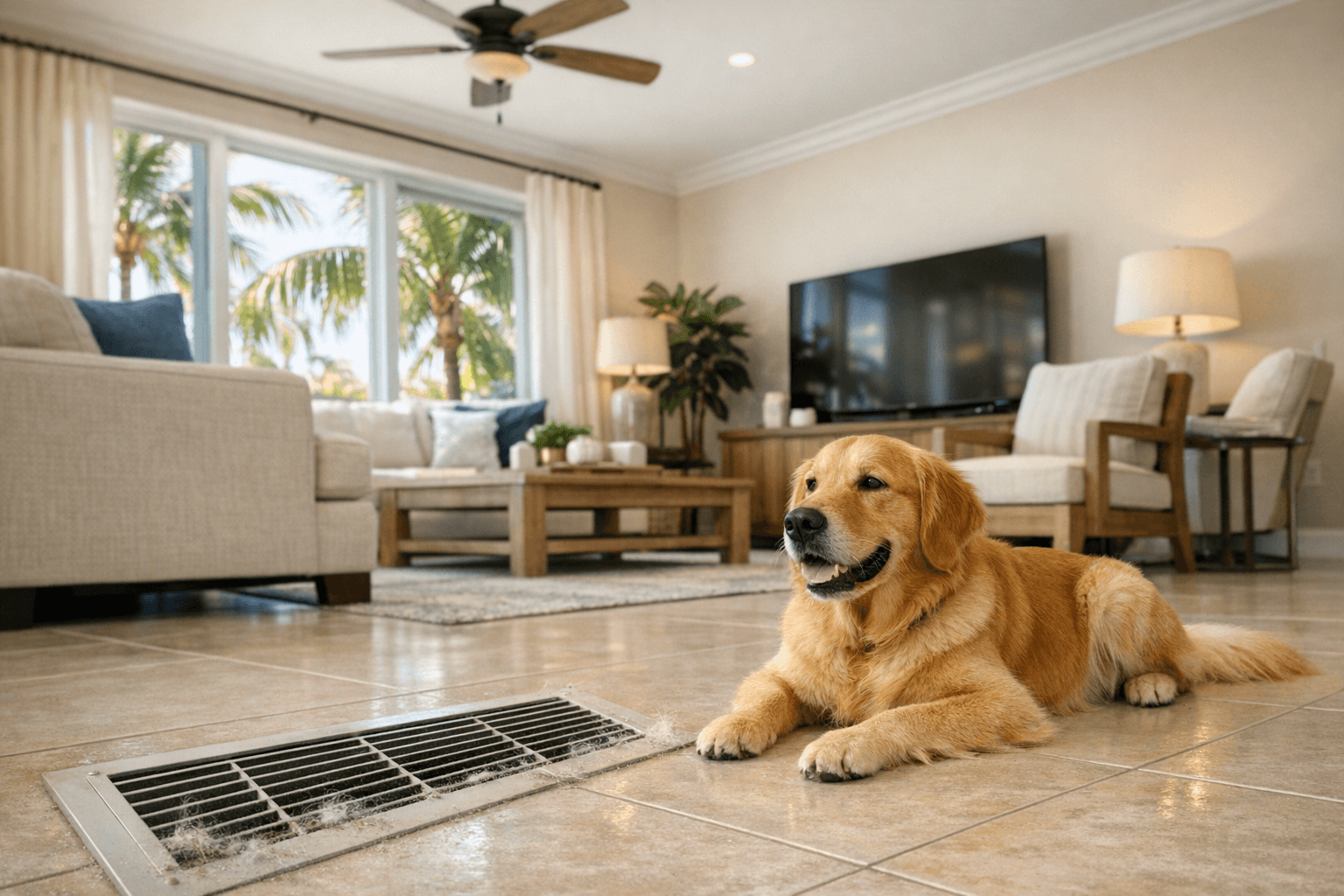
- Return air registers (floor-level returns are especially vulnerable)
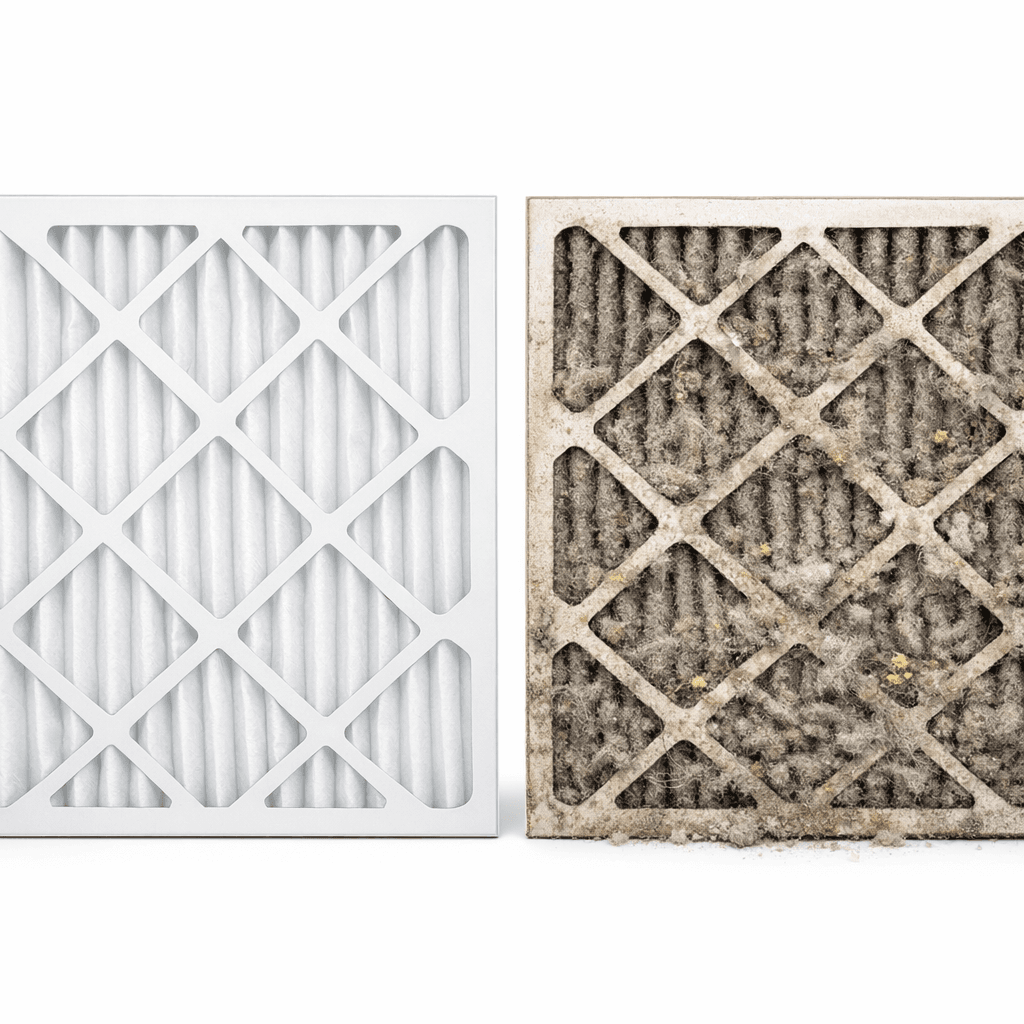
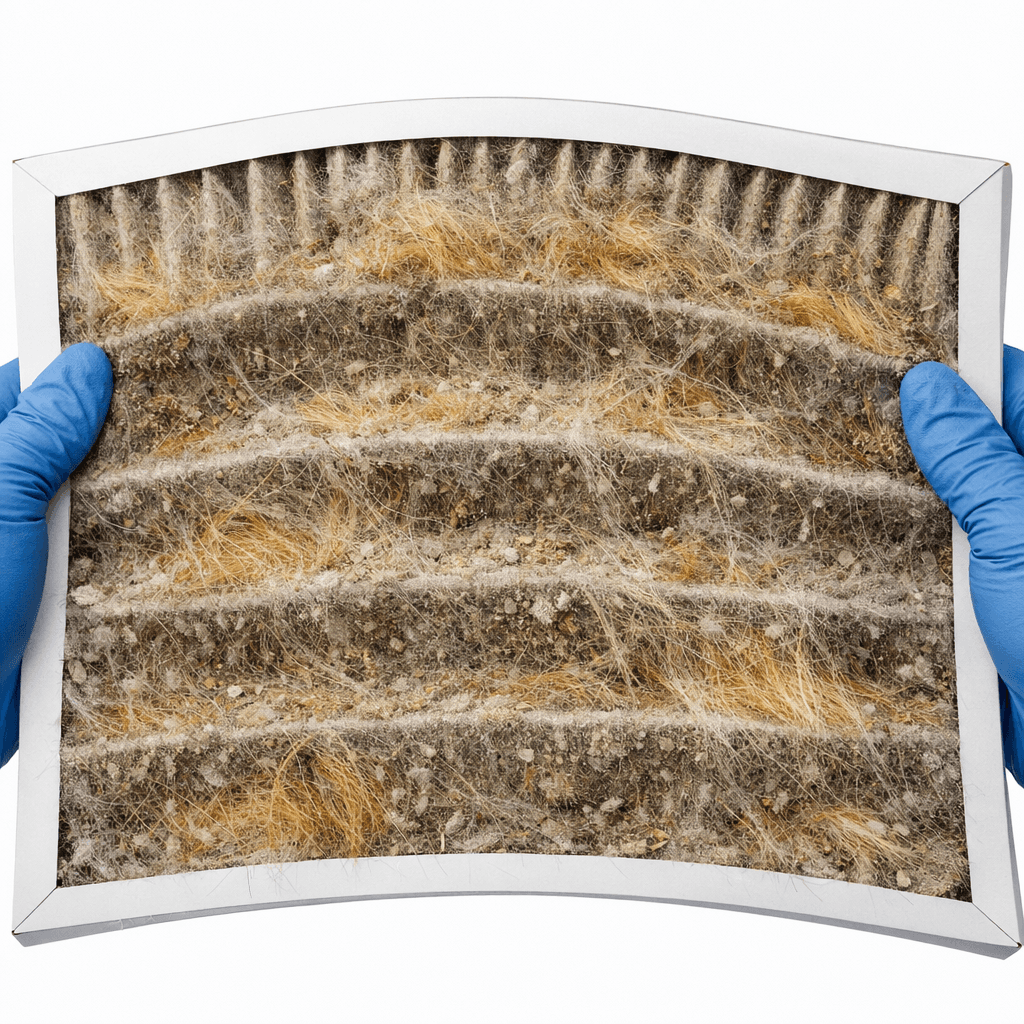
- Filter media (clogs faster with pet hair)
- Return plenum and trunk lines
- Blower compartment (when debris bypasses the filter)
- Evaporator coil (can reduce efficiency when coated)
The Real Impact on Air Quality
Pet dander particles are extremely small (2.5 to 10 microns) and can remain airborne for hours. Unlike visible pet hair, dander often bypasses standard filters and recirculates through your living spaces. This is why filtration quality matters more than duct cleaning frequency for pet owners.
Do Pet Owners Need More Frequent Duct Cleaning?
Short answer: Not necessarily. Even with multiple pets, the EPA does not recommend routine duct cleaning on a fixed schedule. The decision should be based on inspection and symptoms, not the calendar.
When Pet Owners Should Consider Duct Cleaning
Consider professional cleaning when you observe:
- Visible clumps of pet hair a few feet into return or supply ducts (not just light dust)
- Airflow problems tied to debris buildup
- Dust puffs from vents when the system cycles on
- Persistent pet odors that don't improve with surface cleaning
- Allergy symptoms that worsen when the HVAC runs
- Post-adoption cleaning after bringing home a new shedding pet to a previously pet-free home
When Duct Cleaning Won't Help
Duct cleaning is unlikely to solve:
- Ongoing shedding (that's a source control issue)
- High humidity or musty smells (moisture problem first)
- Pet odors from carpet, furniture, or pet beds
- Symptoms that worsen outdoors (likely pollen, not duct-related)
A Better Approach Than Scheduled Cleaning
For most pet owners, this maintenance strategy outperforms fixed cleaning schedules:
- Inspect ducts annually (visual check or professional assessment)
- Change filters more frequently (every 30-60 days with shedding pets)
- Clean supply and return registers monthly
- Schedule coil cleaning as part of annual HVAC maintenance
If you want a professional assessment of your duct condition, start here: Air Duct Cleaning.
Filter Recommendations for Pet Owners
Your filter is the first line of defense against pet hair and dander circulating through your home. Choosing the right filter-and changing it consistently-matters more than any other maintenance task.
MERV Ratings Explained for Pet Owners
MERV (Minimum Efficiency Reporting Value) measures a filter's ability to capture particles. Higher MERV = better filtration, but also more airflow restriction.
| MERV Rating | Captures | Best For |
|---|---|---|
| MERV 8 | Large dust, pollen, pet hair | Light shedders, no allergies |
| MERV 11 | Pet dander, dust mites, mold spores | Most pet owners |
| MERV 13 | Fine particles, bacteria, smoke | Allergy sufferers, multiple pets |
| MERV 16+ | Hospital-grade filtration | Usually too restrictive for residential |
Best Filter Choice for Pet Owners
Recommended: MERV 11-13 pleated filters
Per EPA and ASHRAE guidance, most residential HVAC systems can handle up to MERV 13 without airflow problems. However, verify your system can accommodate it-some older systems or those with undersized returns may experience:
- Reduced airflow
- Frozen evaporator coils (in cooling mode)
- Higher energy bills
- Premature equipment wear
Pro tip: If you're unsure, start with MERV 11 and monitor your system. If airflow seems normal and the filter isn't collapsing, you can try MERV 13 on the next change.
Filter Change Schedule for Pet Homes
Standard recommendations don't account for pet hair loads. Here's what actually works:
| Situation | Check Frequency | Typical Replacement |
|---|---|---|
| 1 small, low-shedding pet | Monthly | Every 60-90 days |
| 1-2 medium shedding pets | Monthly | Every 30-60 days |
| Multiple pets or heavy shedders | Every 2-3 weeks | Every 30-45 days |
| Allergy sufferers with pets | Every 2 weeks | Every 30 days |
Key principle: Check monthly, replace when visibly dirty. Don't wait for the manufacturer's recommended interval if the filter looks clogged.
Preventing Filter Bypass
A filter only works if air passes through it. Common bypass problems:
- Wrong size filter leaving gaps around the frame
- Missing filter (surprisingly common)
- Damaged filter frame allowing air around edges
- Warped/collapsing filter from clogging
Make sure your filter fits snugly with no visible gaps. If your filter rack is oversized, use foam weatherstripping to seal edges.
Reducing Pet Allergens at the Source
Duct cleaning and filtration address allergens after they're airborne. Source control prevents them from entering your HVAC system in the first place-and it's usually more effective.
Pet Grooming and Bathing
Brushing: Regular brushing (outdoors when possible) removes loose hair before it becomes airborne. For heavy shedders, daily brushing during seasonal coat changes makes a significant difference.
Bathing: Bathing your pet every 1-2 weeks can reduce dander by up to 85% temporarily. Use pet-specific shampoo to avoid drying their skin (which increases dander).
Cleaning Strategies That Actually Work
HEPA vacuuming captures pet dander and hair that standard vacuums blow back into the air. Focus on:
- Areas near return registers (where debris gets pulled into the system)
- Pet beds and favorite resting spots
- Upholstered furniture
- Carpets and rugs (especially near pet areas)
Vacuum frequency for pet homes: 2-3 times per week minimum in high-traffic areas.
Washing pet bedding and soft goods weekly in hot water (130°F+) kills dust mites and removes accumulated dander.
Return Register Maintenance
Floor-level return registers in pet homes collect hair rapidly. Check and clean these monthly:
- Remove the register cover
- Vacuum visible debris from the duct opening
- Wash the register cover (they're often overlooked)
- Check for hair accumulation a few inches into the duct
Air Purifiers for Pet Allergies
Portable HEPA air purifiers can supplement your HVAC filtration, especially in:
- Bedrooms (where you spend 8 hours breathing)
- Living rooms with pet access
- Home offices
Look for units sized for your room's square footage with true HEPA filtration (not "HEPA-type" or "HEPA-like").
Multi-Pet Household Strategies
Homes with multiple dogs or cats face compounded challenges. Here's how to scale your maintenance strategy.
Adjusting Filter Strategy
With 3+ pets, consider:
- 4-inch deep-pleated filters (if your system accepts them) hold more debris and last longer than 1-inch filters
- MERV 13 minimum for allergy protection
- Weekly filter checks during heavy shedding seasons
- Keeping spare filters on hand so you never delay a change
Zone-Based Cleaning
Focus intensive cleaning efforts on:
- Pet zones where animals spend the most time
- Return register areas in pet zones
- Transition areas between pet and non-pet spaces
HVAC Component Maintenance
Multi-pet homes benefit from annual professional HVAC maintenance that includes:
- Evaporator coil cleaning (pet dander accumulation reduces efficiency)
- Blower compartment inspection and cleaning
- Drain pan and line cleaning (pet hair can contribute to clogs)
Schedule this alongside your annual HVAC tune-up for efficiency.
Considering a Whole-House Air Cleaner
For households with 3+ pets or severe allergies, a whole-house air cleaner installed in the return duct provides:
- Higher filtration (MERV 16+ without airflow problems)
- Lower maintenance frequency
- Better dander capture than standard filters
This is a significant investment ($1,000-$2,500 installed) but can transform air quality in heavy-shedding households.
Warning Signs Your Ducts Need Professional Attention
While routine duct cleaning isn't necessary, these symptoms indicate it's time for professional inspection or service:
Signs Pointing to Duct Cleaning
- Dust puffs from vents when the system starts (debris being blown out)
- Visible debris in ducts when you remove registers and look inside
- Registers clog frequently with pet hair despite regular cleaning
- Pet odors from vents that persist after surface cleaning
- Increased allergy symptoms when HVAC runs
Signs Pointing to Other Problems
- Musty smell from vents (likely moisture/coil issue, not debris)
- Weak airflow (could be duct leaks, not buildup)
- Dust returns quickly after cleaning surfaces (may indicate duct leaks pulling in attic/crawlspace air)
- Inconsistent temperatures between rooms (airflow balance issue)
If you're unsure what's causing your issue, a system inspection can identify the root cause before you pay for cleaning that might not help. See System Inspections.
Professional Cleaning vs. DIY Maintenance
What You Can Do Yourself
Regular maintenance tasks that pet owners should handle:
- Changing filters (monthly checks, replace when dirty)
- Cleaning supply and return registers (monthly)
- Vacuuming around return register openings
- Wiping down vent covers
- Basic visual inspection of accessible duct openings
What Requires Professional Service
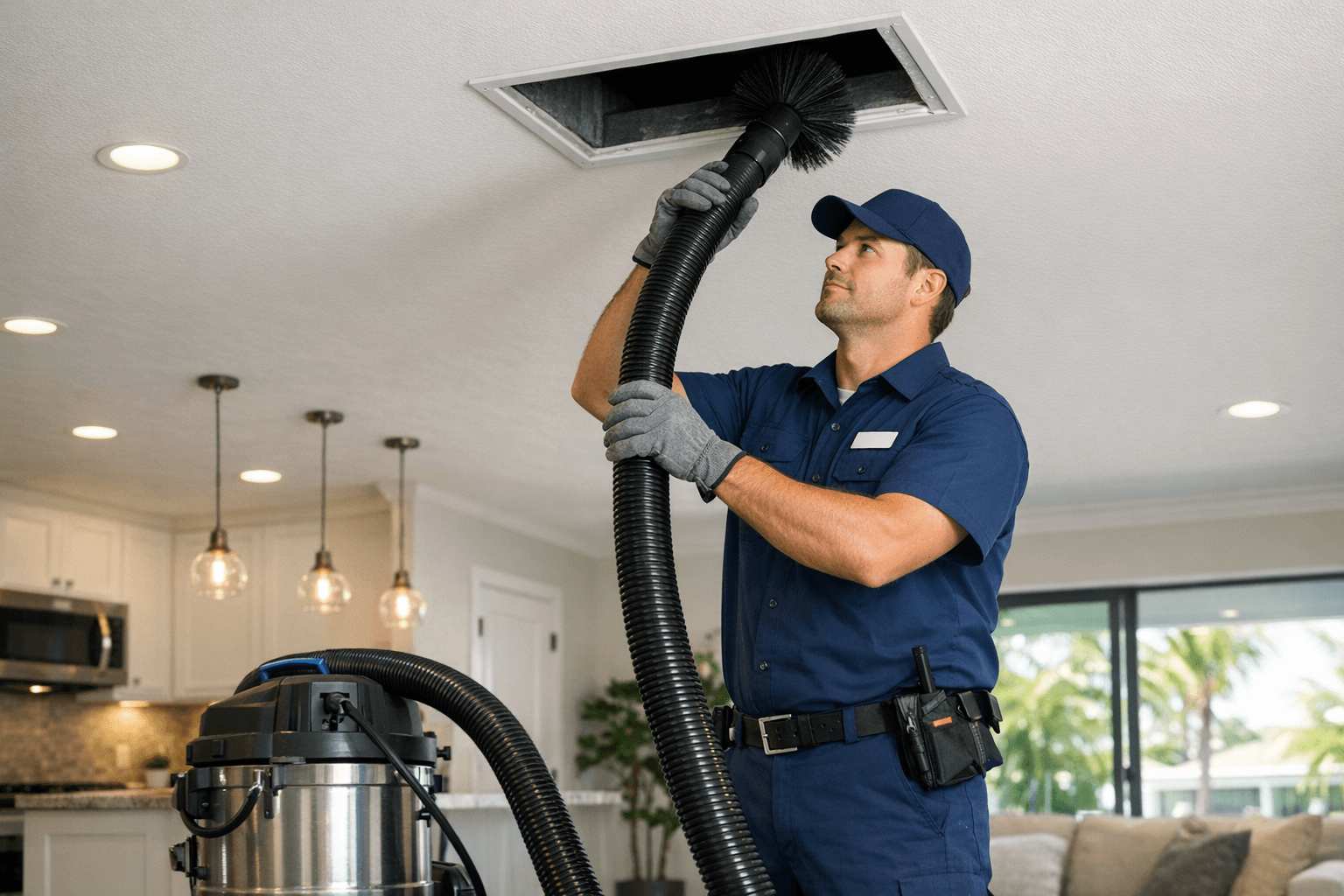
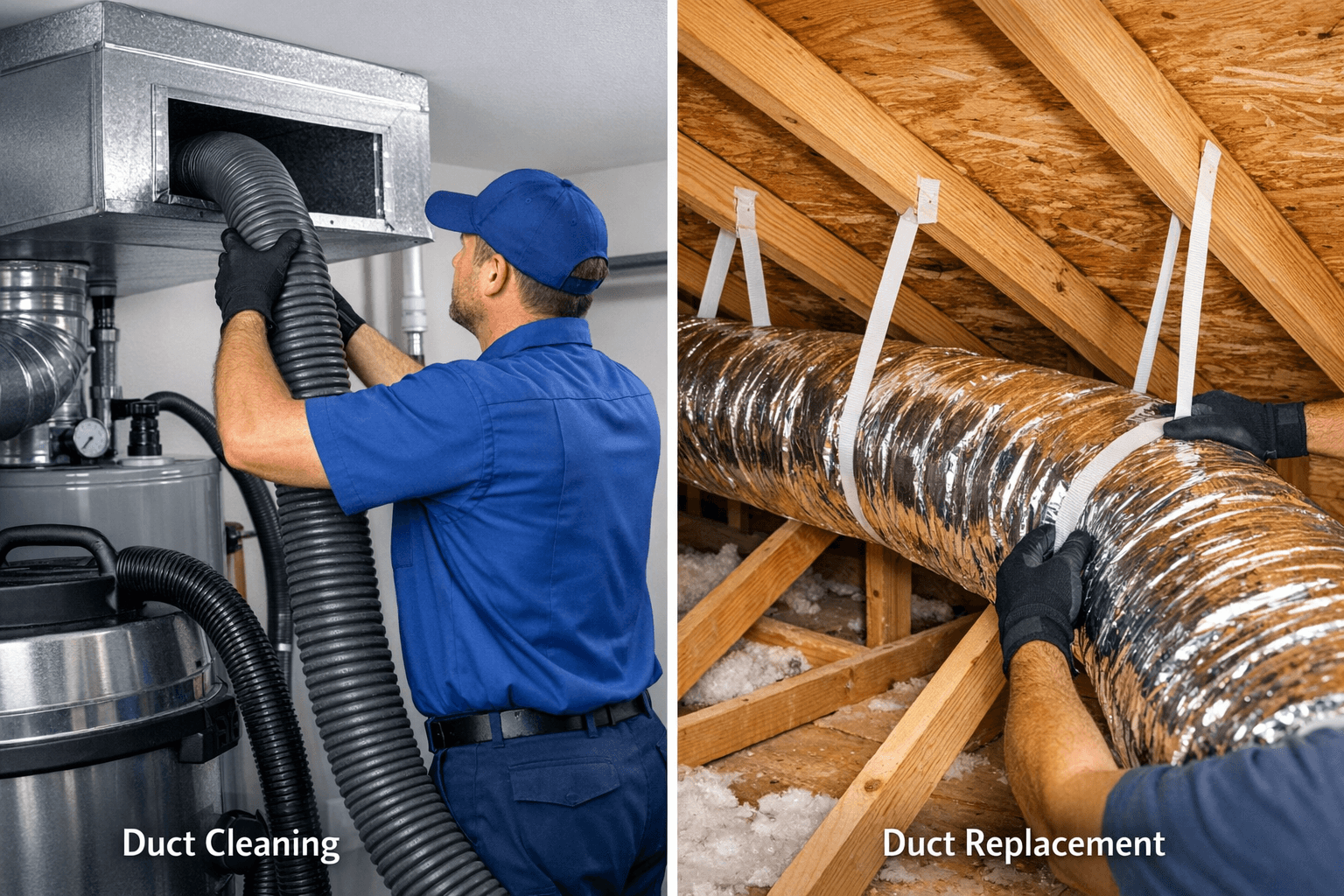
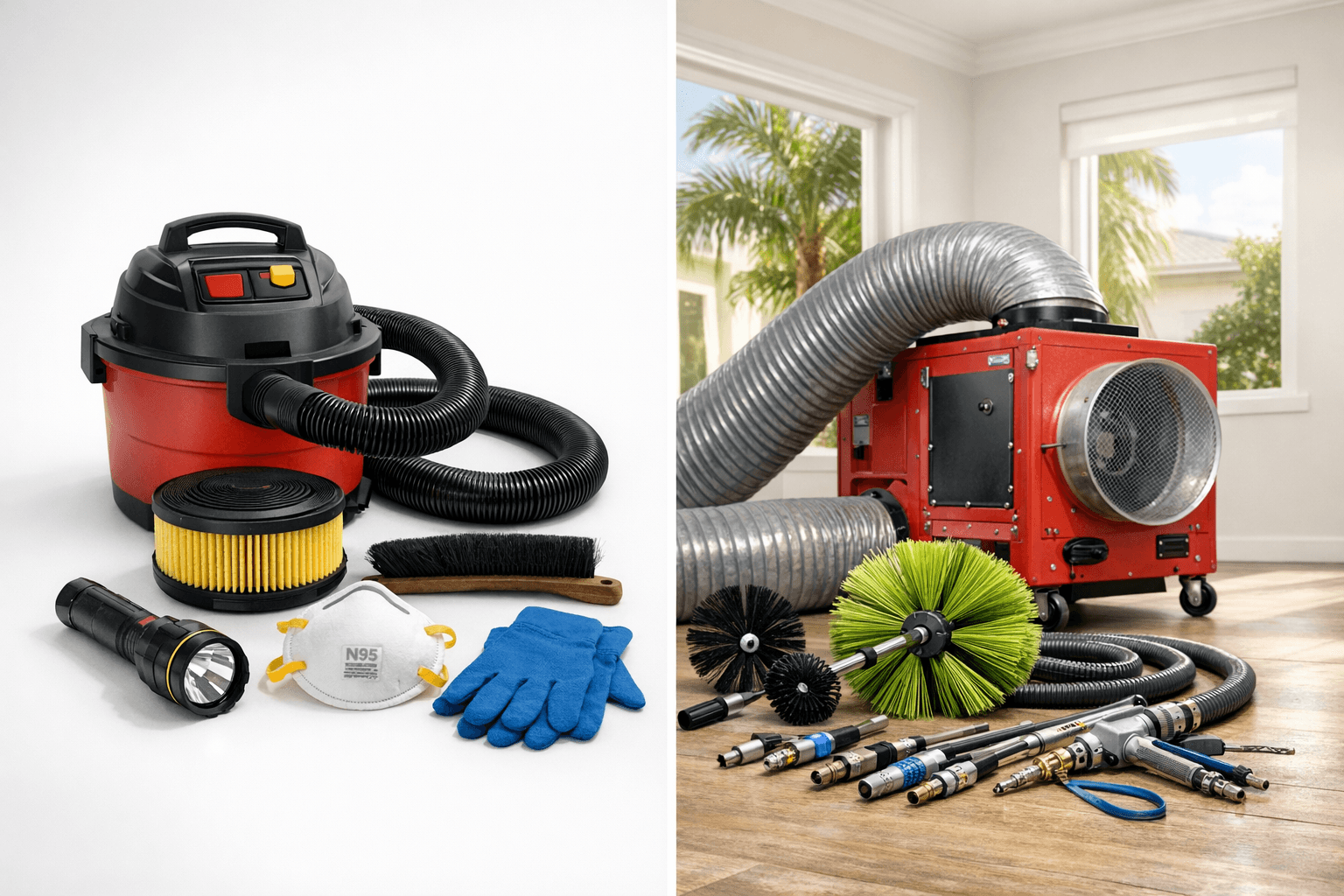
- Full duct system cleaning with negative-pressure equipment
- Coil cleaning (requires system access and proper chemicals)
- Duct repair or sealing for leaks
- Blower compartment cleaning (often requires partial disassembly)
- Mold remediation (if moisture issues have caused growth)
Choosing a Duct Cleaning Service
For pet-related duct cleaning, verify the company:
- Uses source removal with negative pressure (not just a shop vac at registers)
- Can explain findings with photos from accessible areas or written condition notes
- Doesn't push unnecessary chemical treatments
- Gives a firm price upfront (avoid $99 bait-and-switch offers)
- Is willing to say "you don't need cleaning" if inspection shows clean ducts
For professional duct cleaning service, visit Air Duct Cleaning or call 813-513-7861.
Florida-Specific Considerations for Pet Owners
Florida's climate creates unique challenges for pet owners managing HVAC air quality.
Year-Round AC Operation
Unlike seasonal climates, Florida homes run cooling 8-10 months per year. This means:
- More air circulation through ducts (and more opportunities for debris accumulation)
- Constant filtration load from recirculating pet dander
- Higher filter change frequency needed compared to seasonal-use homes
Humidity and Pet Odors
Florida's humidity can amplify pet odors in ductwork. Managing this requires:
- Proper humidity control (45-55% indoor RH)
- Addressing drain line issues that can mix moisture with pet odors
- Coil cleaning when odors persist (damp coils can trap organic matter)
Pollen Seasons and Pet Transfer
Florida's extended pollen season (February-October for various species) means pets track in pollen year-round. Consider:
- Wiping paws after outdoor time
- Keeping windows closed during high-pollen periods
- More frequent pet bathing during peak pollen season
Hurricane Season Preparation
During hurricane prep, if evacuating with pets:
- Close interior doors to limit debris spread if windows break
- Cover return registers to prevent debris intrusion
- Plan for post-storm duct inspection if your home sustains damage
Related Services
Service Areas
Get Your Air Ducts Evaluated Today
Living with pets doesn't mean living with poor air quality. Whether you need a professional assessment, duct cleaning, or help optimizing your filtration setup, we can help.
Call Pro Air Chimney at 813-513-7861 or schedule online.
FAQs
Q: How often should pet owners clean their air ducts? A: There's no fixed schedule. The EPA recommends cleaning only when there's visible debris, contamination, or airflow problems. Focus on monthly filter changes and annual inspections instead.
Q: What MERV filter is best for homes with dogs and cats? A: MERV 11-13 is ideal for most pet owners. This range captures pet dander effectively without restricting airflow in most residential systems. Verify your system can handle the rating before upgrading.
Q: Can pet hair damage my HVAC system? A: Pet hair itself rarely damages HVAC components, but excessive buildup can reduce airflow, cause the evaporator coil to freeze, and force your system to work harder. Regular filter changes prevent these issues.
Q: Should I get my ducts cleaned after adopting a new pet? A: Not necessarily. If you're bringing a shedding pet into a previously pet-free home, start with fresh filters and monitor. Cleaning is only needed if you notice airflow problems or debris buildup after a few months.
Q: How do I reduce pet dander in my home's air? A: The most effective strategies are: regular pet grooming/bathing, HEPA vacuuming 2-3x weekly, washing pet bedding weekly, using MERV 11-13 filters changed every 30-60 days, and adding portable HEPA air purifiers in bedrooms.
Q: Are air purifiers or better filters more important for pet allergies? A: Upgrading your HVAC filter helps the entire home, while air purifiers are effective in specific rooms. For best results, use both: a MERV 11-13 furnace filter plus HEPA purifiers in bedrooms and living areas.
Q: Do cats or dogs create more air quality problems? A: Both produce dander, but cats tend to produce more allergenic proteins (Fel d 1). Dogs vary greatly by breed. Multiple pets of any type compound the issue. Maintenance strategies are similar for both.
Q: What's the best way to handle multiple pets and air quality? A: Use MERV 13 filters, check weekly and change every 30-45 days, focus cleaning efforts on pet zones and return registers, consider 4-inch deep filters or a whole-house air cleaner, and schedule annual HVAC maintenance including coil cleaning.