How Often Should You Clean Air Ducts? Annual vs Bi-Annual vs Every 3-5 Years
Quick answer: Neither EPA nor NADCA recommends a fixed cleaning schedule. The real answer depends on your home's specific conditions. Most homes fall somewhere in the 3-5 year range (or longer), while homes with pets, allergies, smoking, or recent renovations may benefit from more frequent inspections and condition-based cleaning. Call Pro Air Chimney at 813-513-7861 for a professional assessment of your situation.
Table of Contents
- What EPA and NADCA Actually Recommend
- Cleaning Frequency Table by Situation
- Annual Cleaning: When It Makes Sense
- Bi-Annual Cleaning: Rare Cases
- Every 3-5 Years: The Common Baseline
- Factors That Increase Cleaning Frequency
- Factors That Allow Less Frequent Cleaning
- Signs Your Ducts Need Cleaning Now
- Florida-Specific Considerations
- Cost of Over-Cleaning vs Under-Cleaning
- The Better Approach: Inspect First
- FAQs
What EPA and NADCA Actually Recommend
Before diving into schedules, here's what the authoritative sources actually say:
EPA Position (2024-2025)
The EPA does not recommend routine air duct cleaning on any fixed schedule. Their guidance is clear: clean only when needed. Specifically, EPA recommends cleaning when there's:
- Visible mold growth on hard duct surfaces or HVAC components
- Pest infestation (rodents, insects) with droppings or nesting material
- Excessive dust or debris that's restricting airflow or releasing into living spaces
The EPA explicitly warns that improper or unnecessary duct cleaning can actually worsen indoor air quality by releasing contaminants that were previously settled.
NADCA Position
The National Air Duct Cleaners Association (NADCA) also avoids recommending a universal cleaning frequency. Instead, they emphasize:
- Regular inspection of your duct system
- Cleaning when conditions warrant based on inspection findings
- Paying attention to risk factors that may require more frequent attention
NADCA identifies these conditions as reasons for more frequent cleaning: pets, occupants with allergies or asthma, cigarette or cigar smoke exposure, water contamination or damage, and recent renovation or remodeling.
Bottom line: Anyone telling you that you "must" clean ducts every year, or that there's a universal schedule, is not aligned with EPA or NADCA guidance.
Air Duct Cleaning Frequency Recommendation Table
Use this table to identify where your household falls:
| Situation | Recommended Approach | Typical Cleaning Interval |
|---|---|---|
| Standard home (no special factors) | Annual inspection; clean only if needed | Every 5-7+ years or as needed |
| 1-2 pets (dogs or cats) | Annual inspection; monitor dust accumulation | Every 3-5 years |
| 3+ pets or heavy shedders | Inspect every 6-12 months | Every 2-3 years |
| Allergy/asthma sufferers | Annual inspection; prioritize filtration | Every 3-5 years + enhanced filtration |
| Smoker in household | Annual inspection | Every 2-4 years |
| Recent renovation/remodel | Inspect immediately after | Clean after construction dust settles |
| Post-water damage | Inspect immediately | Clean after moisture source is fixed |
| Visible mold confirmed | Professional remediation | Clean after mold source is eliminated |
| Pest infestation | Professional pest control first | Clean after infestation is resolved |
| Florida high-humidity home | Annual inspection for moisture issues | Every 3-5 years; prioritize moisture control |
Important: These are guidelines, not rules. An inspection reveals what your specific system actually needs.
Annual Cleaning: When It Actually Makes Sense
Annual duct cleaning is rarely necessary for most homes. However, there are specific situations where yearly cleaning may be appropriate:
Legitimate Annual Cleaning Scenarios
- Commercial or medical facilities with strict air quality requirements
- Homes with severe contamination sources that can't be eliminated (e.g., industrial area proximity)
- Properties with documented recurring moisture problems that keep producing contamination
- Households with immunocompromised individuals where doctors specifically recommend it
When Annual Cleaning Is Overkill
If a company recommends annual cleaning for a typical residential home without evidence of contamination, be skeptical. Signs you're being oversold:
- No inspection or documentation of actual contamination
- "It's just good maintenance" without specific reasoning
- Pressure tactics or fear-based language
- Ultra-low pricing designed to get in the door
For most Florida homes, annual inspections make sense. Annual cleaning usually doesn't.
Bi-Annual Cleaning: Very Rare Cases
Twice-yearly duct cleaning is almost never necessary for residential properties. The only legitimate scenarios might include:
- Severe ongoing contamination that cannot be controlled at the source
- Specific medical requirements documented by a physician
- Homes undergoing extended multi-phase renovations with repeated dust intrusion
If someone recommends bi-annual cleaning for a normal home, this is a major red flag for a scam operation.
Every 3-5 Years: The Common Industry Baseline
You'll often hear "every 3-5 years" quoted as a reasonable cleaning interval. Here's the context:
Where This Number Comes From
The 3-5 year range isn't an EPA or NADCA mandate. It's a general industry rule of thumb based on:
- Typical dust accumulation rates in average homes
- Filter replacement and maintenance patterns
- Common household factors (pets, occupancy, HVAC usage)
When 3-5 Years Is Reasonable
This interval often makes sense for homes with:
- One or two pets
- Average filter maintenance (changed every 1-3 months)
- Year-round HVAC usage (common in Florida)
- No specific contamination events
When You Can Go Longer
Many homes can safely go 5-7 years or longer between cleanings when:
- No pets
- Good filtration habits (quality filters, regular changes)
- No smokers
- No significant renovation or construction
- No moisture or pest issues
- Duct system is well-sealed with minimal leaks
Factors That Increase Cleaning Frequency
These conditions may justify more frequent inspection and cleaning:
Pets
Pet hair and dander accumulate in ductwork over time. The more pets and the heavier they shed, the faster buildup occurs.
- 1-2 average pets: Consider inspection every 12 months; cleaning every 3-5 years
- Multiple pets or heavy shedders: Inspection every 6-12 months; cleaning every 2-3 years
Allergies and Asthma
For households with allergy or asthma sufferers, cleaner air matters more. However, duct cleaning isn't always the most effective intervention. Often, better filtration and humidity control provide more benefit than frequent cleaning.
Smoking
Cigarette and cigar smoke creates tar and residue that coats duct surfaces. Active smoker households should expect:
- More frequent inspections
- Cleaning intervals of 2-4 years depending on smoking frequency
- Consideration of air purification systems
Renovations and Construction
Any work involving drywall, sanding, flooring removal, or demolition introduces fine particles into your HVAC system. Post-renovation cleaning is almost always warranted.
Water Damage and Flooding
Water intrusion creates conditions for mold and bacterial growth. After any water event affecting your HVAC or duct system:
- Fix the water source first
- Allow proper drying
- Inspect for contamination
- Clean if contamination is confirmed
Factors That Allow Less Frequent Cleaning
These conditions support extended intervals between cleanings:
Quality Filtration
Homes using MERV 11-13 filters (or equivalent) and changing them regularly capture more particles before they reach ductwork. This can significantly extend the time between needed cleanings.
Newer Duct Systems
Modern, well-sealed duct systems with proper insulation and minimal leakage accumulate contamination more slowly than older, leaky systems.
No Pets
Pet-free homes typically have much slower dust and debris accumulation in ductwork.
Non-Smokers
Without smoke residue, duct surfaces stay cleaner longer.
Good Housekeeping
Regular vacuuming (especially around returns), dusting, and general cleanliness reduces the particle load entering your HVAC system.
Minimal Humidity Issues
Dry, well-controlled environments don't support mold or bacterial growth in ductwork.
Signs Your Ducts Need Cleaning Now (Regardless of Schedule)
Forget the calendar if you're experiencing any of these:
Immediate Cleaning Indicators
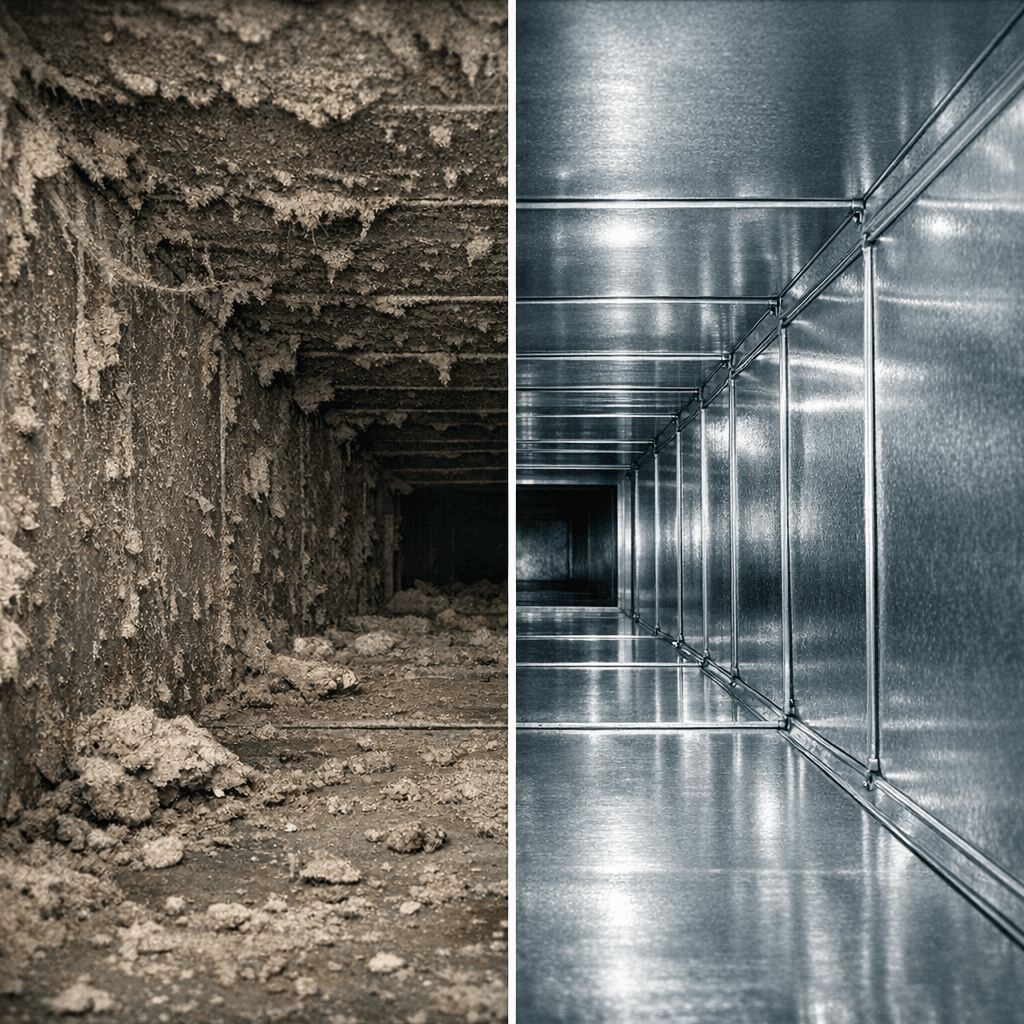
- Visible dust clouds puffing from supply vents when HVAC starts
- Debris visible inside ducts when you remove vent covers
- Musty or stale odors that appear when the system runs
- Rapid dust accumulation on surfaces after cleaning (within days, not weeks)
- Pest evidence: droppings, nesting materials, or dead insects in or near vents
- Recent construction or renovation with dust throughout the home
- Water damage to ductwork or HVAC system
- Confirmed mold growth on duct surfaces
Warning Signs That Need Investigation First
These symptoms suggest an inspection before committing to cleaning:
- Allergy symptoms worsening indoors
- Uneven cooling or airflow issues
- Higher than expected energy bills
- Whistling or unusual sounds from vents
These could indicate duct leaks, damaged ductwork, or HVAC issues where cleaning alone won't solve the problem. A system inspection can identify the real cause.
Florida-Specific Considerations
Florida homes face unique challenges that affect duct cleaning needs:
Year-Round AC Operation
Unlike seasonal climates, Florida HVAC systems run nearly year-round. This means:
- More air cycles through the duct system annually
- More opportunities for filter bypass and debris accumulation
- Higher importance of consistent filter maintenance
Humidity and Moisture Risk
Florida's humidity is the biggest wildcard. Moisture in ductwork can lead to:
- Mold and mildew growth
- Musty odors
- Bacterial contamination
Critical: If you have moisture problems in your ducts, cleaning without fixing the moisture source is pointless. The contamination will return. Prioritize:
- Identifying the moisture source (condensation, leaks, poor insulation)
- Correcting the cause
- Then cleaning if contamination is confirmed
Hurricane and Storm Debris
After major storms, Florida homes may experience:
- Water intrusion through compromised building envelopes
- Fine debris from repairs and reconstruction
- Extended periods with open doors/windows during repairs
Post-hurricane inspection is smart; cleaning is warranted when contamination is confirmed.
Flex Duct Prevalence
Many Florida homes use flexible ductwork, which:
- Can trap debris in ridges more easily than smooth metal
- Is more susceptible to damage and improper installation
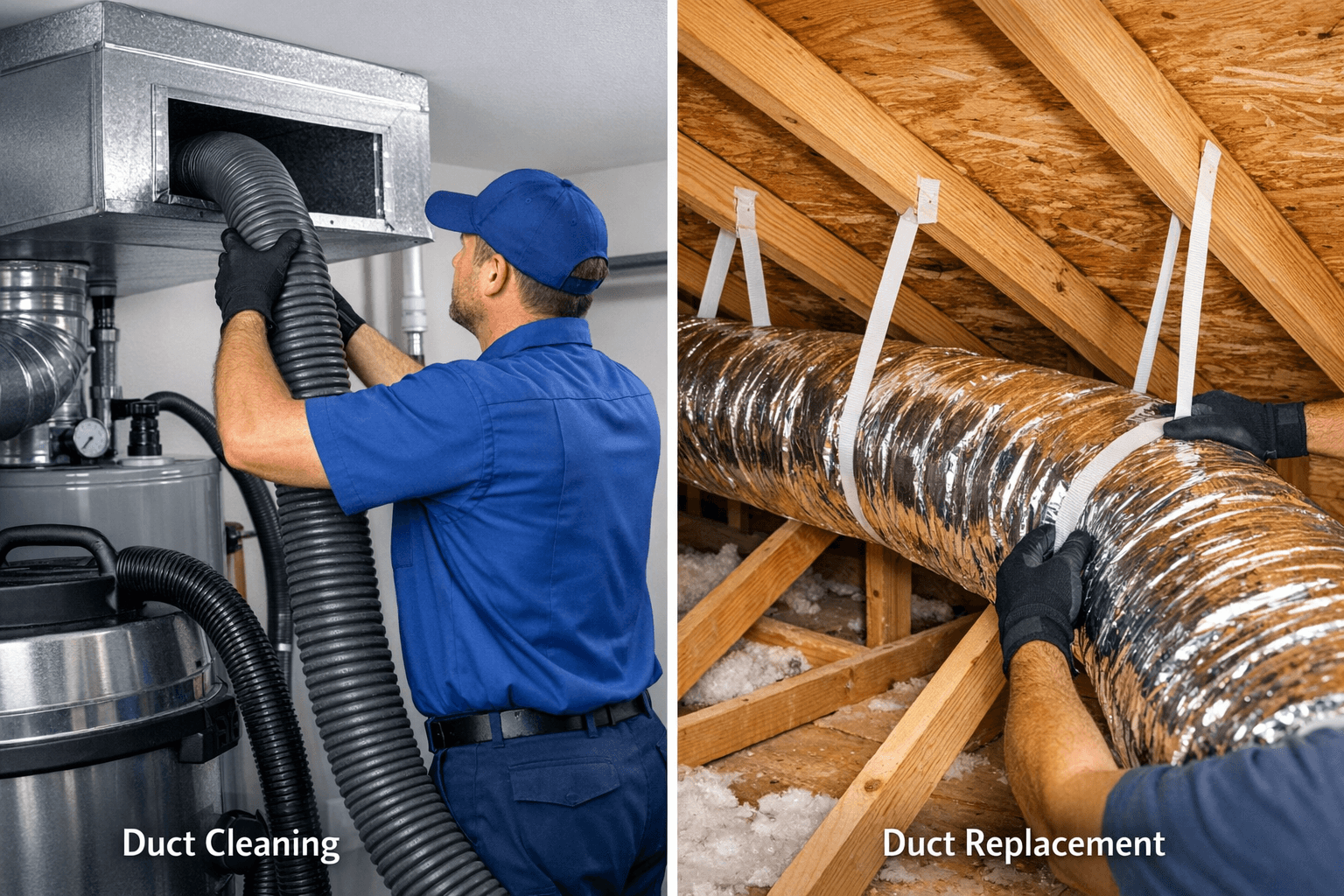
- May need repair or replacement rather than just cleaning
If flex ducts are damaged, crushed, or disconnected, cleaning alone won't solve airflow issues. Consider duct repair or replacement.
Cost of Over-Cleaning vs Under-Cleaning
The Cost of Cleaning Too Often
- Financial: Legitimate cleaning runs $300-$700 per service. Annual cleaning when unnecessary wastes $300-$700 each time.
- Risk of damage: Repeated cleaning, especially with aggressive methods, can damage duct insulation and connections.
- Potential air quality harm: EPA warns that improper cleaning can release contaminants. More cleanings = more opportunities for problems.
The Cost of Cleaning Too Rarely
- Reduced efficiency: Heavy debris buildup can restrict airflow and make your system work harder.
- Health impacts: Significant contamination (mold, pests, excessive debris) can affect indoor air quality.
- System strain: Clogged returns and restricted airflow put stress on HVAC components.
The Sweet Spot
Inspect annually; clean based on evidence. This approach:
- Catches problems before they become severe
- Avoids unnecessary expense
- Protects your system from both neglect and over-servicing
The Better Approach: Inspect First, Clean When Needed
Rather than picking an arbitrary cleaning schedule, adopt this evidence-based approach:
Step 1: Annual DIY Check (5 Minutes)
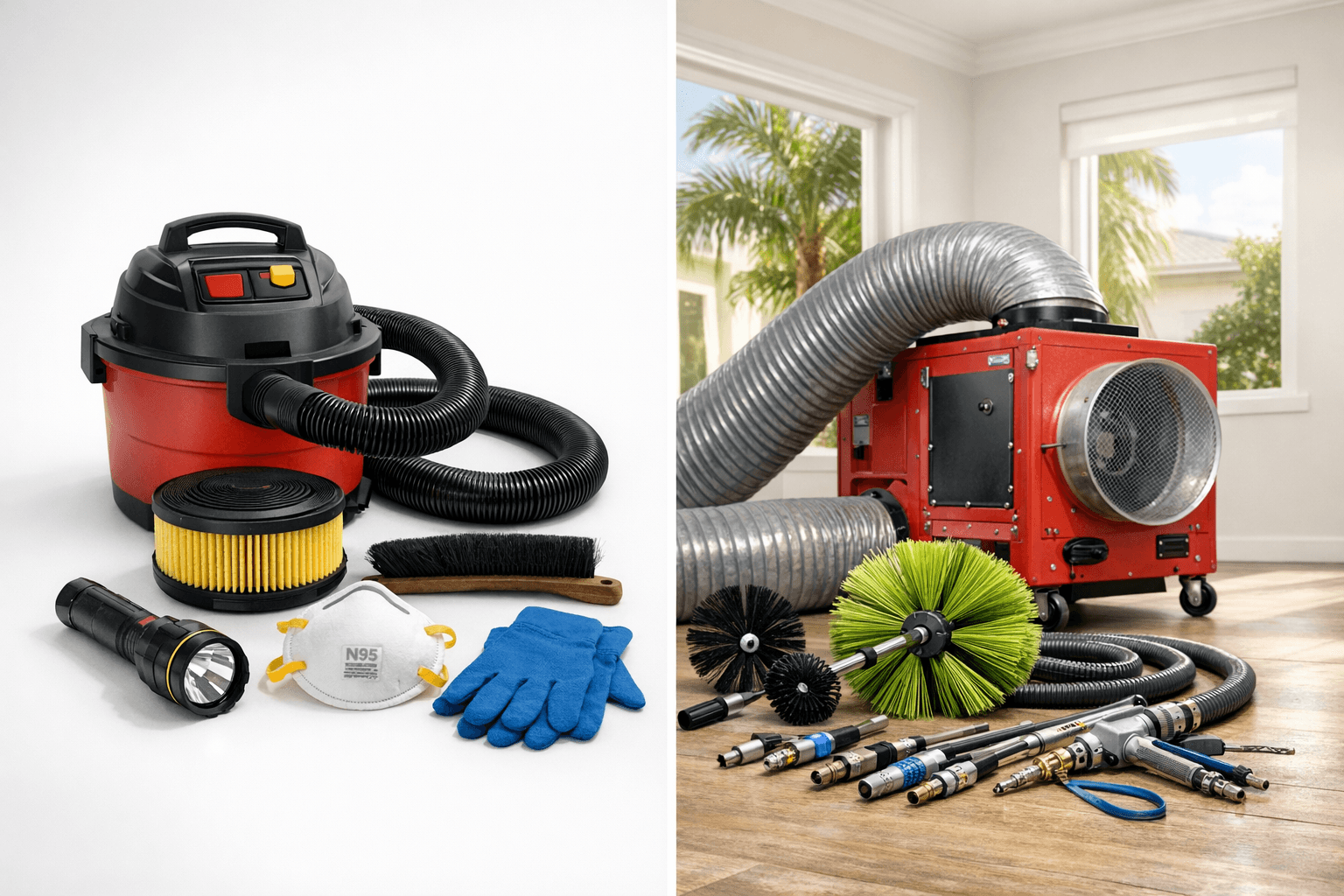
- Remove 2-3 supply and return vent covers
- Use a flashlight and phone camera to look inside
- Check for: matted debris, visible contamination, water staining, musty odor, pest evidence
Step 2: Professional Inspection When Warranted
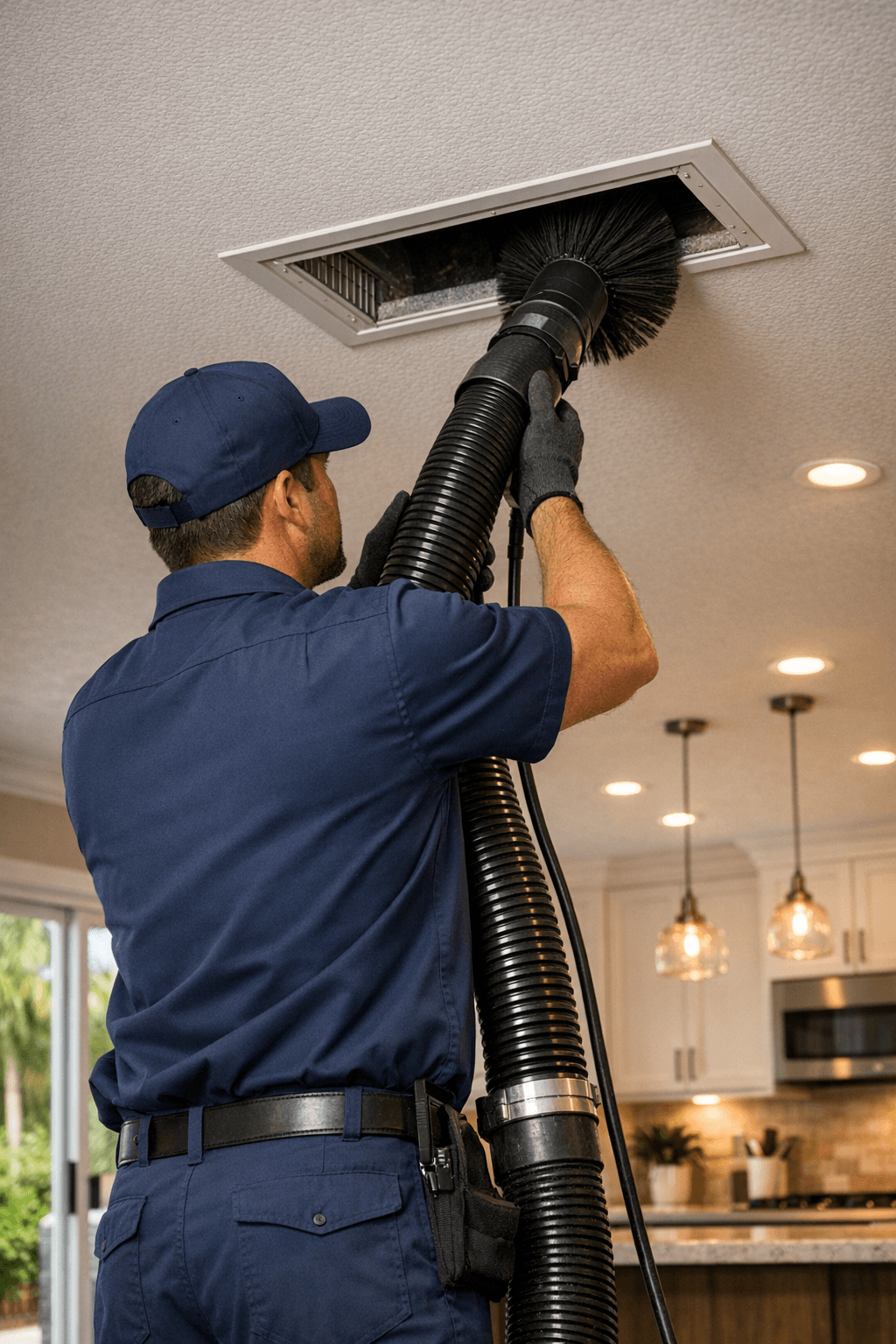
If your DIY check reveals concerns, or if you have risk factors (pets, allergies, recent renovation), schedule a professional inspection. A qualified technician can:
- Assess the full duct system including inaccessible areas
- Check the blower compartment and return plenum
- Identify duct leaks and damage
- Provide honest recommendations (clean, repair, or leave alone)
For a thorough assessment, schedule a system inspection.
Step 3: Clean Based on Findings
Only proceed with cleaning when inspection confirms:
- Meaningful contamination (not just light dust)
- Debris affecting airflow or air quality
- Specific contamination events requiring remediation
This approach typically costs less over time and maintains better indoor air quality than arbitrary cleaning schedules.
FAQs
Q: Is there an official recommended frequency for air duct cleaning? A: No. Neither EPA nor NADCA recommends a fixed cleaning schedule. Both organizations advise cleaning based on conditions and evidence of contamination, not calendar intervals.
Q: What about the "every 3-5 years" advice I keep hearing? A: This is a general industry guideline, not an official recommendation. It's reasonable for homes with average conditions and moderate risk factors, but many homes can safely go longer.
Q: Should I clean my ducts every year if I have pets? A: Usually not. Annual inspections make sense with pets, but annual cleaning is typically excessive. Most pet-owning households fall in the 3-5 year cleaning range unless there's heavy contamination.
Q: Is annual duct cleaning ever necessary? A: For typical residential homes, rarely. Annual cleaning might be appropriate for commercial facilities, medical settings, or homes with severe ongoing contamination that cannot be controlled at the source.
Q: Can duct cleaning hurt indoor air quality? A: Yes, potentially. EPA warns that improper cleaning can release settled contaminants into your living space. This is why hiring qualified professionals using proper containment methods matters.
Q: What's more important: duct cleaning or better filters? A: For most homes, consistent use of quality filters (MERV 11-13) provides more ongoing benefit than periodic duct cleaning. Good filtration prevents buildup; cleaning addresses buildup after it occurs.
Q: How much does duct cleaning cost in Florida? A: Legitimate professional duct cleaning typically ranges from $300-$700 depending on system size, accessibility, and contamination level. Be wary of $99 "whole house" offers, which are often bait-and-switch scams.
Q: Should I clean ducts after buying a new home? A: Not automatically. Inspect first. If the previous owners maintained the system well, cleaning may not be needed. If there's evidence of neglect, contamination, or you simply don't know the history, cleaning provides peace of mind.
Related Services
Service Areas
Get a Professional Assessment
Stop guessing about duct cleaning schedules. Get a professional inspection to understand what your specific system actually needs.
Call Pro Air Chimney at 813-513-7861 or schedule online.