
HVAC Efficiency: How Clean Ducts Save Money on Energy Bills
Quick answer: Clean air ducts are one part of a comprehensive HVAC efficiency strategy. While duct cleaning alone may not dramatically cut your energy bill, combining it with duct sealing, filter maintenance, and full-system cleaning can reduce energy consumption by 5-20% or more. For Florida homeowners paying $150-$300/month in summer cooling costs, that translates to real savings. Call Pro Air Chimney at 813-513-7861 for an efficiency assessment.
Table of Contents
- Why This Matters in Florida
- How Dirty Ducts Reduce Efficiency
- The Real Numbers: Energy Savings Data
- ROI of Duct Cleaning and Maintenance
- What Has the Biggest Impact
- Florida-Specific Costs
- Signs Your System is Wasting Energy
- Full-System Approach for Maximum Savings
- FAQs
Why HVAC Efficiency Matters More in Florida
Florida homeowners run their air conditioning 8-10 months per year. This extended runtime means:
- Higher baseline electricity costs ($150-$300+ monthly during summer)
- More wear on HVAC components that can degrade efficiency over time
- Greater cumulative impact from small inefficiencies
With Florida residential electricity rates averaging $0.14-$0.15 per kWh in 2025, even modest efficiency improvements add up. A typical 3-5 ton AC unit draws 3-5 kW while running. At 8 hours daily runtime, that's $110-$180 per month just for the compressor-before factoring in the air handler, fan, and other household loads.
The bottom line: In Florida's climate, any system inefficiency costs you more than it would elsewhere.
How Dirty Ducts and HVAC Systems Reduce Efficiency
Understanding where energy loss actually happens helps you prioritize fixes:
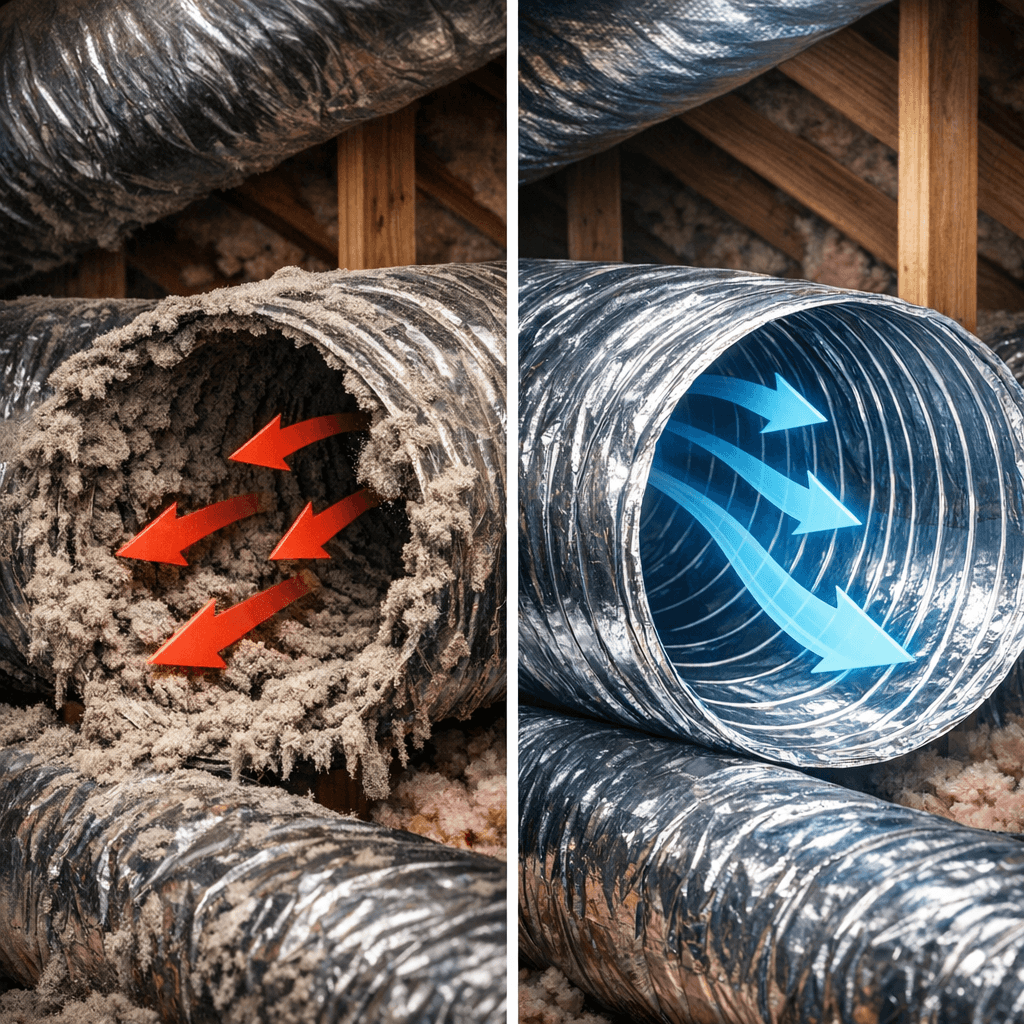
Restricted Airflow
When debris, dust, or buildup restricts airflow through your duct system:
- The blower motor works harder to push air through the system
- Run times increase because conditioned air doesn't reach rooms efficiently
- Uneven temperatures cause some rooms to overcool while others stay warm
- Static pressure increases, which can stress system components
Common Airflow Restrictions
- Clogged air filters (the #1 culprit in most homes)
- Debris in return trunks pulling double duty with dust and pet hair
- Kinked or crushed flex duct from improper installation or settling
- Buildup on evaporator coils that reduces heat transfer
- Dirty blower wheels that can't move air efficiently
The Hidden Efficiency Killer: Duct Leaks
According to ENERGY STAR, leaky ducts can reduce heating and cooling efficiency by as much as 20%. This happens when:
- Conditioned air escapes into attics, crawlspaces, or wall cavities
- Unconditioned (hot, humid) air gets pulled into return ducts
- Your system runs longer to compensate for lost airflow
Important: Duct sealing often provides more immediate energy savings than duct cleaning alone.
The Real Numbers: Energy Savings From Clean HVAC Systems
Let's look at what the research actually shows:
EPA Position on Duct Cleaning Alone
The U.S. Environmental Protection Agency notes that there's little evidence that cleaning only the ducts improves system efficiency. However, the EPA also acknowledges that cleaning coils, fans, and heat exchangers may improve efficiency and reduce operating costs.
What this means: Duct cleaning as an isolated service has limited efficiency benefits, but it's a valuable component of comprehensive HVAC maintenance.
2025 Research: Full-System Cleaning Results
A 2025 peer-reviewed study published in Energy and Buildings measured real buildings before and after HVAC system cleaning (ducts + coils + blowers) and found:
- 41-60% reduction in fan/blower energy consumption
- 10-46% increase in supply airflow versus uncleaned systems
These results came from commercial buildings with prescriptive cleaning of multiple HVAC components. The study emphasizes that comprehensive cleaning-not just vacuuming duct surfaces-drives measurable results.
ENERGY STAR on Duct Sealing
ENERGY STAR reports that properly sealing and insulating ducts can:
- Improve efficiency by up to 20%
- Reduce heating and cooling costs significantly
- Improve comfort by delivering conditioned air where it's needed
Filter Maintenance Impact
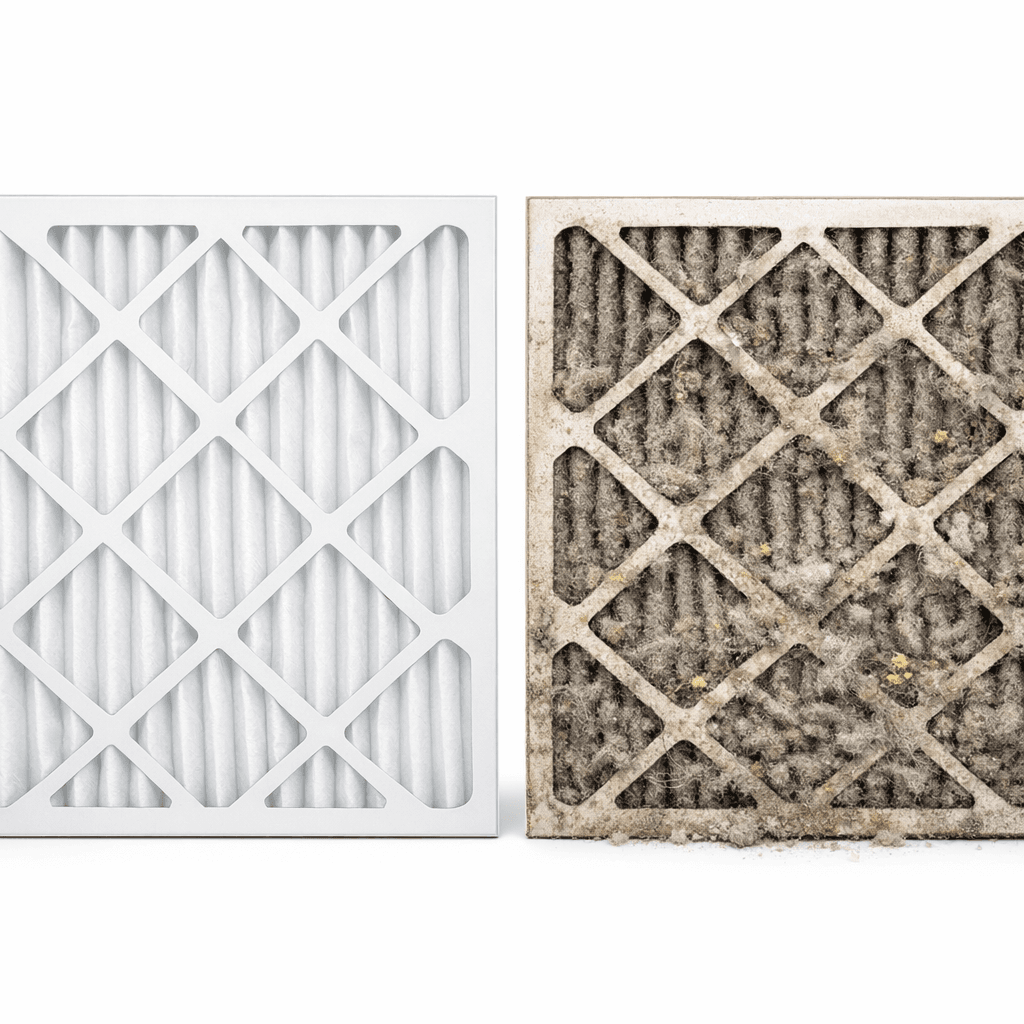
ENERGY STAR explicitly states that dirty filters slow airflow, make the system work harder, and waste energy. While specific percentages vary by system, regularly changing filters (every 1-3 months) is consistently cited as one of the highest-ROI maintenance tasks.
ROI of Duct Cleaning and HVAC Maintenance in Florida
Calculating Your Potential Savings
Let's work through a realistic Florida scenario:
Baseline assumptions:
- Annual cooling electricity cost: $1,500-$2,400 (common in Florida)
- Duct cleaning cost: $300-$700 (depending on system size)
- Annual tune-up cost: $150-$350
Conservative scenario (5% efficiency improvement):
- Annual savings: $75-$120
- Payback on duct cleaning: 3-9 years
Moderate scenario (10% improvement from sealing + cleaning + maintenance):
- Annual savings: $150-$240
- Payback on combined services: 2-4 years
Best-case scenario (15-20% improvement from comprehensive work):
- Annual savings: $225-$480
- Payback: 1-2 years
When ROI is Highest
Duct cleaning and maintenance provide the best return when:
- Your system has never been cleaned and shows visible debris
- Filters have been neglected or undersized (bypass occurring)
- You have measurable airflow problems (weak airflow at registers)
- Duct leaks are confirmed and can be sealed during the process
- The blower wheel and evaporator coil are visibly dirty
What Actually Has the Biggest Impact on Energy Bills
Based on research and industry data, here's how to prioritize your efficiency investments:
Highest Impact (Do These First)
- Fix air filter issues - Replace monthly in summer, ensure proper fit, consider upgrading to MERV 8-11
- Seal duct leaks - Especially at connections, plenums, and where ducts meet registers
- Clean evaporator coil and blower - These directly affect heat transfer and airflow
- Schedule annual maintenance - Keeps refrigerant charge, controls, and components optimized
Moderate Impact (Do With Above)
- Clean supply and return ducts - Especially if there's visible debris or post-renovation dust
- Insulate ducts in unconditioned spaces - Attic runs lose efficiency to heat gain
- Check and adjust airflow balance - Ensure all registers deliver adequate airflow
Lower Impact (But Still Valuable)
- Clean registers and grilles - Improves appearance and removes surface dust
- Consider UV lights - Can help keep coils cleaner long-term
- Upgrade to programmable/smart thermostat - Reduces unnecessary runtime
Key insight: The items that clean or seal the "air pathway"-filter, coil, blower, and duct connections-have the most direct impact on efficiency.
Florida-Specific Energy Costs and Context
Current Electricity Rates (2024-2025)
- Florida average residential rate: $0.14-$0.15 per kWh
- FPL (Florida Power & Light): Rates vary by tier and time of use
- Duke Energy Florida: Similar range with seasonal adjustments
- TECO Energy: Competitive with statewide averages
What Florida Homeowners Actually Pay
Based on typical usage patterns:
| Home Size | Summer Monthly Bill | AC Portion (Est.) |
|---|---|---|
| 1,500 sq ft | $180-$250 | $120-$180 |
| 2,000 sq ft | $220-$320 | $150-$230 |
| 2,500 sq ft | $280-$400 | $190-$290 |
| 3,000+ sq ft | $350-$500+ | $240-$360+ |
Why Small Percentages Matter Here
A 10% efficiency improvement on a $250 monthly summer bill saves $25/month or $150-$200 over the cooling season. Over a decade, that's $1,500-$2,000 in savings from a one-time service plus annual maintenance.
Signs Your System is Wasting Energy
Watch for these indicators that your HVAC system isn't running efficiently:
Airflow Problems
- Weak airflow from some or all registers
- System runs constantly but house doesn't reach setpoint
- Noticeable temperature differences between rooms
- Dust puffs when system kicks on
Filter and Duct Issues
- Filters clog faster than expected
- Visible dust or debris in return vents
- Musty smell when AC starts
- Higher-than-expected utility bills with no change in usage
System Behavior
- AC short-cycles (turns on/off frequently)
- Ice forming on refrigerant lines
- Unusual sounds from air handler or registers
- System struggles more in peak heat
If you're noticing multiple signs, call 813-513-7861 for an efficiency assessment. Our technicians can identify what's actually causing the problem-and what fix will have the biggest impact.
The Full-System Approach for Maximum Savings
Based on the research and real-world results, here's the recommended approach for Florida homeowners:
Step 1: Assessment
Before spending money on any service, get a professional evaluation of:
- Duct condition and contamination level
- Duct leakage (blower door test or visual inspection)
- Filter fit and filtration performance
- Coil and blower cleanliness
- System airflow and static pressure
Step 2: Prioritize Fixes
Based on assessment findings:
- Address any duct leaks or disconnections
- Clean coils and blower if needed
- Upgrade filtration if appropriate for your system
- Clean ductwork if debris levels warrant it
Step 3: Maintain the Improvement
- Change filters monthly during heavy-use season
- Schedule annual professional maintenance
- Monitor utility bills for efficiency trends
- Re-evaluate every 3-5 years
Ready to improve your system's efficiency? Start with our Air Duct Cleaning service or request a System Inspection to identify the highest-impact fixes for your home.
Frequently Asked Questions
How much can clean ducts save on energy bills?
Duct cleaning alone typically provides modest direct savings (1-5%). However, combined with duct sealing, coil cleaning, and proper filtration, total efficiency improvements of 10-20% are achievable-translating to $150-$400+ annual savings for typical Florida homes.
Is duct cleaning worth it for energy savings alone?
If energy savings is your only goal, duct sealing and filter maintenance typically provide better ROI. However, duct cleaning becomes valuable when combined with other maintenance and when there's actual debris restricting airflow.
How often should I clean ducts for efficiency?
Most homes benefit from duct cleaning every 3-7 years, or after specific events (renovations, pest issues, water damage). For efficiency specifically, annual maintenance of coils, filters, and duct connections is more impactful than frequent duct cleaning.
What's the biggest energy waster in an HVAC system?
Duct leaks are typically the biggest energy waster, potentially reducing efficiency by up to 20%. Dirty filters and restricted airflow are also major contributors that are easy to address.
Does dirty ductwork make my AC work harder?
Yes, if debris significantly restricts airflow in main trunks or returns. Light dust on duct surfaces has minimal impact, but heavy buildup in return paths or at the blower can increase energy consumption by forcing longer run times.
What's the ROI on duct cleaning in Florida?
When duct cleaning is part of comprehensive HVAC maintenance and addresses real contamination, typical payback is 2-5 years. ROI is highest when combined with duct sealing and coil cleaning, and when the system has visible efficiency problems.
Should I seal ducts or clean them first?
If you have confirmed duct leaks, sealing typically provides faster energy savings. Many professionals recommend cleaning before sealing to remove debris and ensure good adhesion for sealing materials. The best approach depends on your specific system condition.
How much does Florida AC cost per month?
Florida homeowners typically pay $120-$300+ monthly for AC during summer, depending on home size, system efficiency, and thermostat settings. At current rates of approximately $0.15/kWh, a typical system running 8 hours daily costs $110-$180/month for the compressor alone.
Ready to Improve Your HVAC Efficiency?
Call Pro Air Chimney at 813-513-7861 for a professional assessment. We'll identify the specific issues affecting your system and recommend the most cost-effective fixes.