Lint Trap vs Dryer Vent: What's the Difference & Why Both Matter
Many homeowners confuse the lint trap with the dryer vent, or assume cleaning one eliminates the need to worry about the other. They are two separate parts of your dryer system with different functions, different cleaning requirements, and different failure consequences.
Understanding the difference between a lint trap and a dryer vent is the first step toward preventing dryer fires and keeping your appliance running efficiently. National fire data shows that failure to clean is cited in 33% of dryer fires, with approximately 15,600 dryer-related structure fires per year causing deaths, injuries, and property damage according to UL and CPSC data.
If you need professional dryer vent cleaning in Florida, call Pro Air Chimney at 813-513-7861 or schedule at https://proairchimney.com/contact.
Table of contents
- What is a lint trap
- What is a dryer vent
- Lint trap vs dryer vent comparison
- Why cleaning both matters for fire prevention
- DIY lint trap cleaning guide
- Professional dryer vent cleaning
- Maintenance schedule for Florida homes
- Warning signs your dryer needs attention
- Call for an inspection or estimate
- FAQ
- Sources
What is a lint trap
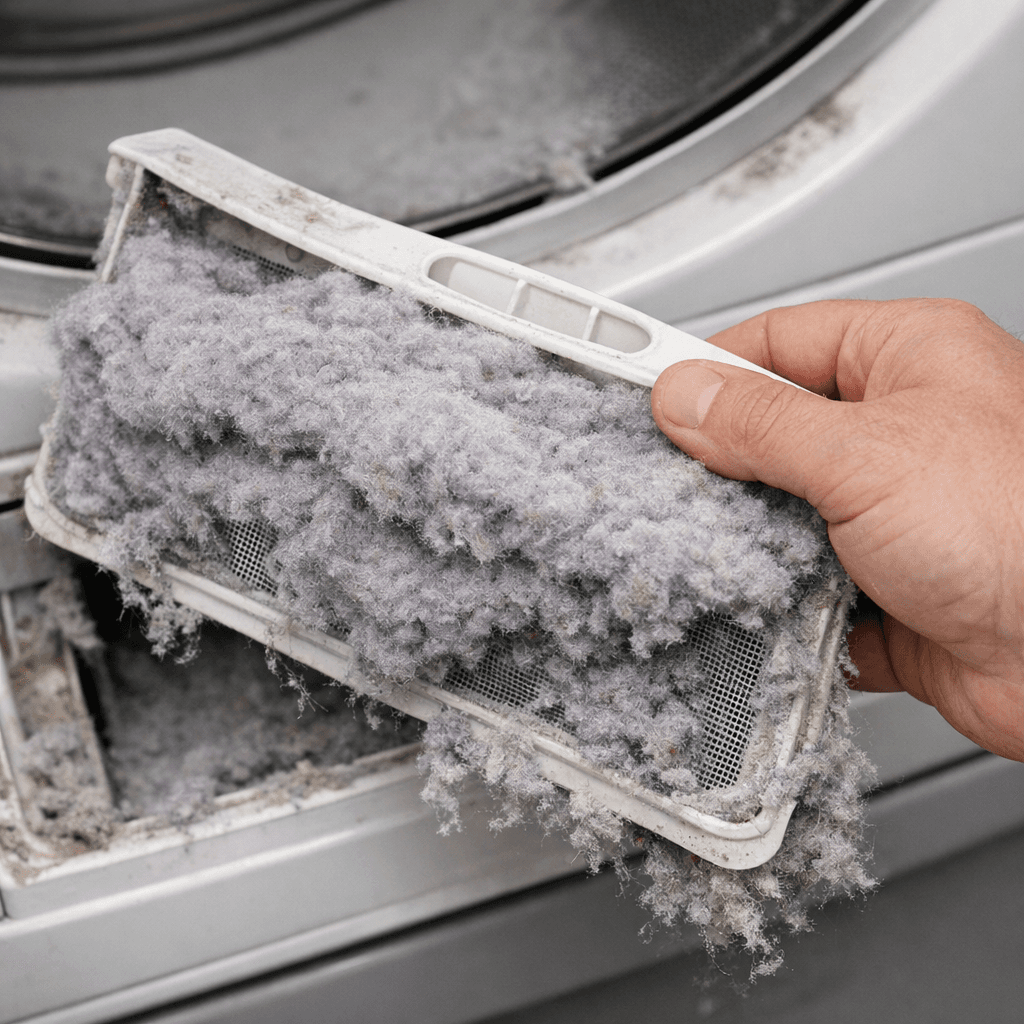
The lint trap, also called the lint filter or lint screen, is the removable mesh component inside your dryer that catches lint before air leaves the drum. You find it either in the door opening or on top of the dryer, depending on the model.
How the lint trap works
During each drying cycle, hot air passes through tumbling clothes and picks up loose fibers. The lint trap intercepts these fibers as air moves toward the exhaust. It acts as the first line of defense against lint entering your dryer's internal components and vent system.
Lint trap limitations
The lint trap never catches 100% of the lint. Some fibers are too fine, some bypass the edges of the filter, and some pass through when the filter has even a thin layer of buildup. This remaining lint accumulates inside the dryer cabinet, in the blower housing, and throughout the vent duct over time.
UL specifically notes that removing lint from the filter after each use is part of proper fire-risk-reducing maintenance, but this alone does not address lint that bypasses the trap.
What is a dryer vent
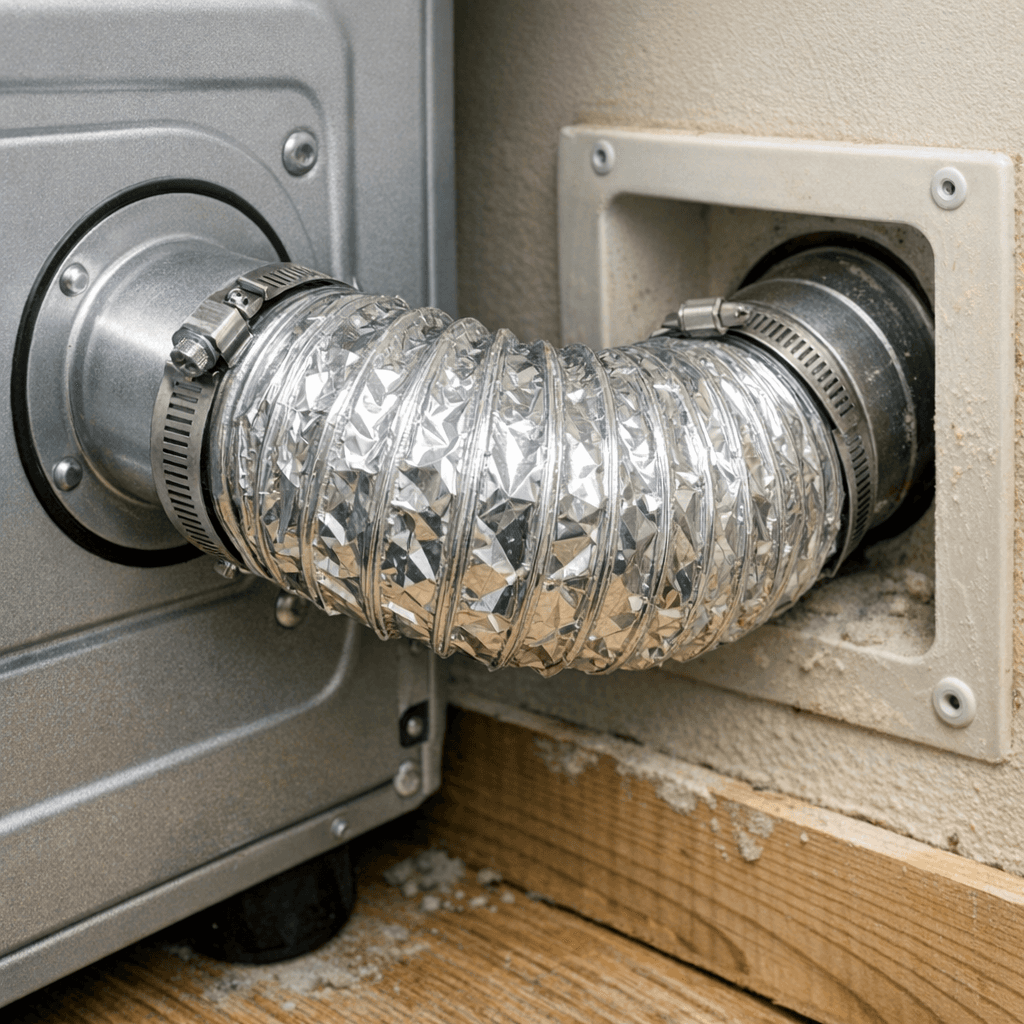
The dryer vent is the exhaust system that carries hot, moist air from the dryer to the outside of your home. It includes the transition duct (the flexible section connecting the dryer to the wall), the rigid ductwork running through walls or ceilings, and the exterior termination hood where air exits.
How the dryer vent works
After air passes through the lint trap and dryer drum, it moves through the blower and into the vent system. The vent must maintain strong airflow to push moisture and remaining lint particles outside. When airflow is restricted, heat builds up inside the dryer and duct, creating conditions for fire.
Common dryer vent problems
Lint buildup is the primary issue, but other problems contribute to restricted airflow:
- Crushed or kinked transition duct behind the dryer
- Long vent runs with multiple bends that collect lint at each turn
- Improper duct materials like plastic or thin foil that trap lint
- Blocked exterior hood from debris, stuck dampers, or pest intrusion
- Disconnected ductwork inside walls or ceilings
Florida homes face additional challenges. Wind-driven rain, landscaping debris, and pests frequently interfere with exterior vent hoods, blocking exhaust and forcing the dryer to work harder.
Lint trap vs dryer vent comparison
Understanding what each component does helps you maintain both correctly.
| Feature | Lint Trap | Dryer Vent |
|---|---|---|
| Location | Inside dryer (door or top) | From dryer back to exterior wall |
| Function | Catches lint before air exits drum | Carries exhaust air outside |
| Visible lint | Yes, easily seen on screen | No, hidden inside ductwork |
| Cleaning method | Remove and wipe after each load | Professional brush/vacuum through full path |
| Cleaning frequency | Every load | Annually or when warning signs appear |
| DIY accessible | Yes, fully accessible | Partially, full path often requires tools |
| Fire risk if neglected | Moderate (heat buildup in dryer) | High (restricted airflow, lint ignition) |
| Cost to clean | Free (DIY) | $100-$175 professional service |
Both components require attention. A clean lint trap does not compensate for a clogged vent, and professional vent cleaning does not eliminate the need for daily lint trap maintenance.
Why cleaning both matters for fire prevention
Dryer fires happen when heat, fuel (lint), and restricted airflow combine. The lint trap and dryer vent each play a role in preventing this combination.
Fire statistics
National fire data provides context for why maintenance matters:
- 15,600 dryer-related structure fires per year according to UL research
- Approximately 15 deaths and 400 injuries annually from dryer fires
- Over $84 million in property damage per year per CPSC estimates
- Failure to clean cited in 33% of dryer fires per NFPA statistics
How neglect leads to fire
When the lint trap is not cleaned, it restricts airflow and allows more lint to bypass into the vent system. When the vent is clogged, heat cannot escape and temperatures rise inside the duct. Lint is highly flammable and ignites at relatively low temperatures when it accumulates near heat sources.
A clogged vent with bypassed lint creates conditions where normal dryer operation becomes a fire hazard. Cleaning both the lint trap and the vent system breaks this chain.
DIY lint trap cleaning guide
Lint trap cleaning is simple and should become automatic.
After every load
- Remove the lint screen from the dryer
- Peel or wipe lint off the entire mesh surface
- Check the edges and corners where lint can collect
- Reinsert the screen before starting the next load
Monthly deep cleaning
The lint trap slot itself collects lint that falls off the screen:
- Remove the lint screen
- Use a narrow vacuum attachment to clean inside the slot
- Use a lint brush to reach deeper into the housing
- Wipe the screen with water if residue from dryer sheets has built up (let dry before using)
Dryer sheet residue
Fabric softener sheets can leave an invisible film on the lint screen that restricts airflow even when the screen looks clean. Run water over the screen monthly. If water pools instead of flowing through, scrub gently with dish soap and a soft brush.
Professional dryer vent cleaning
The vent system requires more than what most homeowners can do themselves.
What professional cleaning includes
A proper dryer vent cleaning appointment addresses the full path from dryer to exterior:
- Airflow restriction test to measure baseline conditions
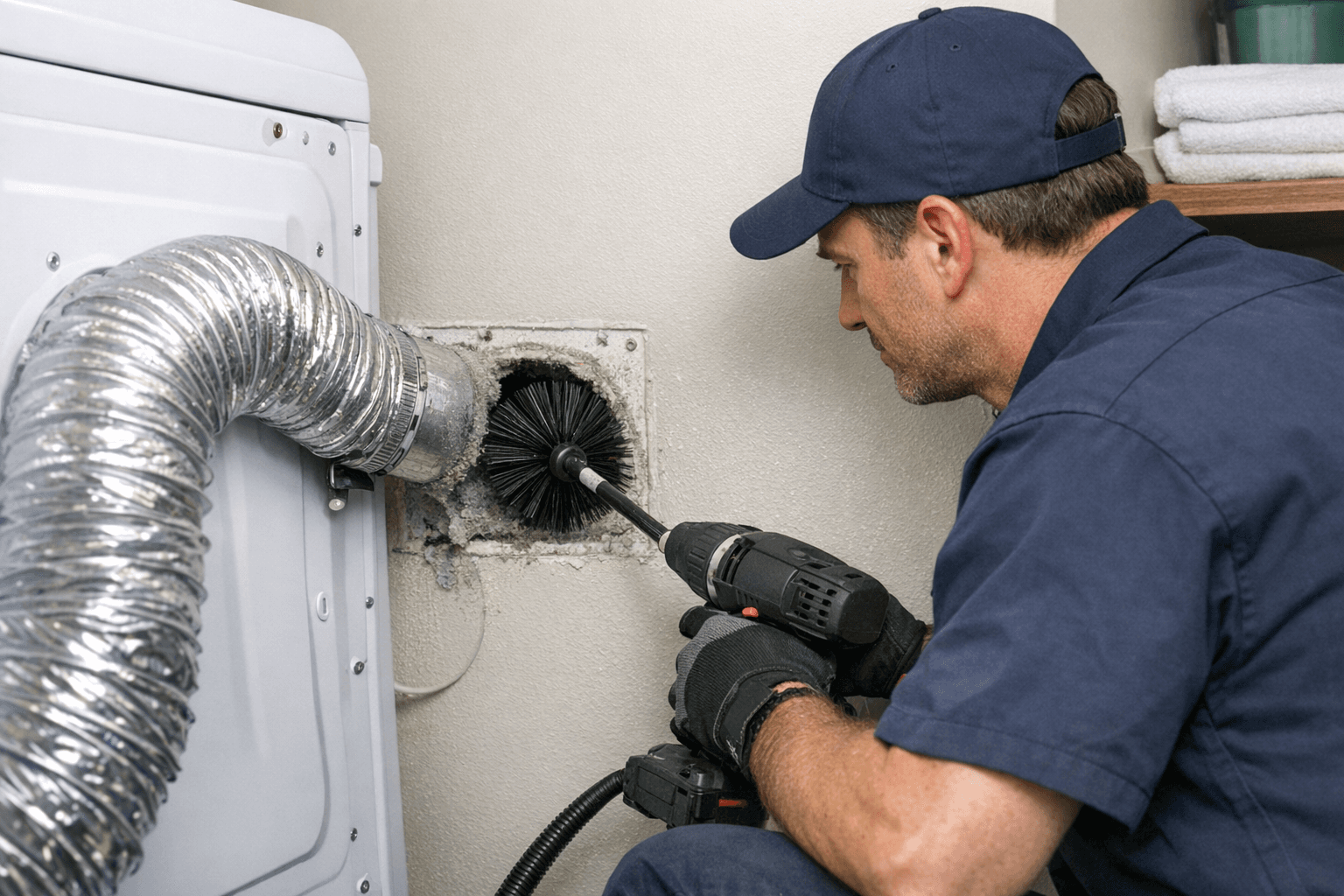
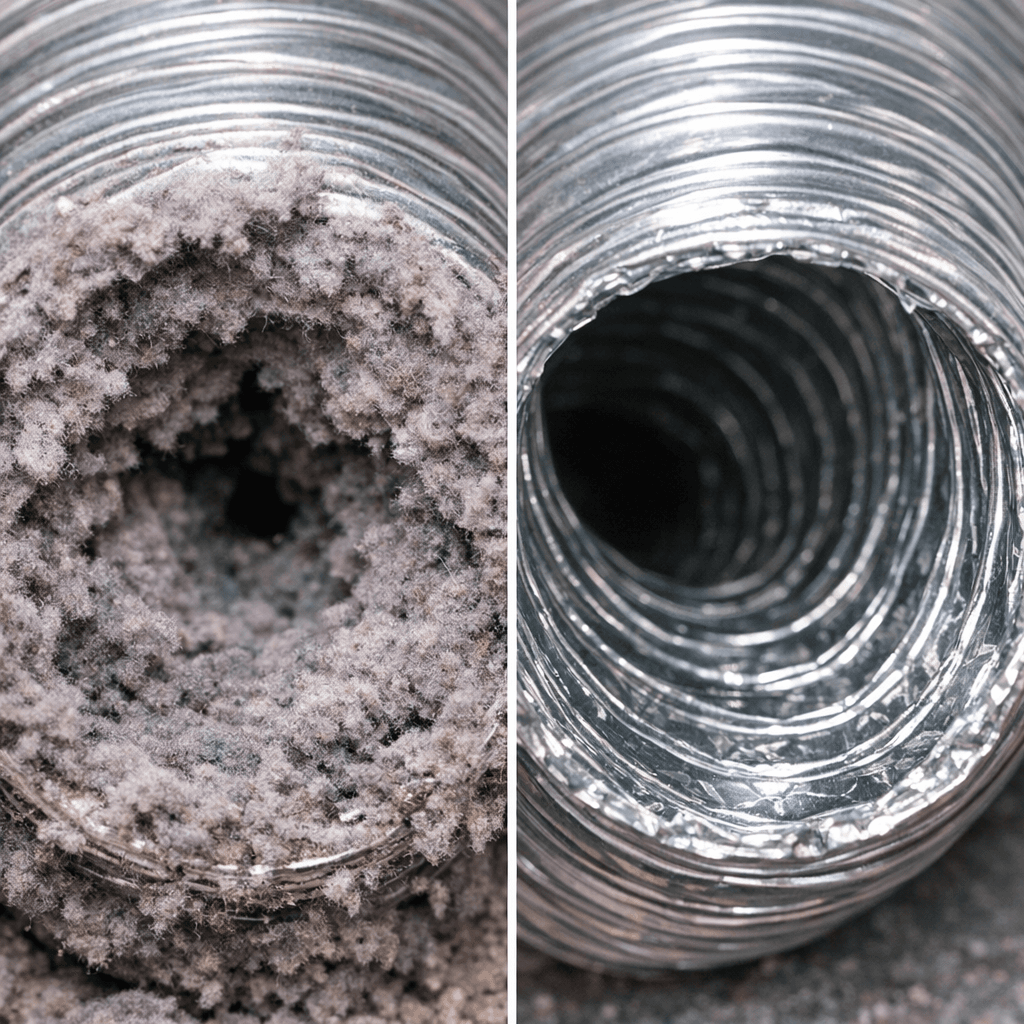
- Lint removal with rotating brush through the entire duct
- Vacuum extraction of loosened debris
- Transition duct inspection for damage or improper materials
- Exterior hood cleaning and damper function check
- Post-cleaning airflow verification
Why DIY often falls short
Homeowners can clean the transition duct and visible sections, but lint accumulates in places that require specialized tools:
- Inside wall cavities
- At elbows and bends in the ductwork
- In vertical vent runs
- Deep in long horizontal runs
- At roof terminations
For professional service in Florida, visit dryer vent cleaning or call 813-513-7861.
Maintenance schedule for Florida homes
Maintenance frequency depends on usage and conditions, not arbitrary timelines.
Every load
- Clean the lint trap completely
Weekly
- Vacuum around and behind the dryer (lint on the floor signals a problem)
- Check the transition duct for visible lint or sagging
Monthly
- Run the dryer and check airflow at the exterior hood
- Deep clean the lint trap slot
- Verify the damper opens fully during operation
Annually or as needed
- Professional dryer vent cleaning when:
- Drying times increase
- Dryer feels unusually hot
- Burning smell occurs
- Weak airflow at exterior hood
- You do frequent large loads or have pets
UL recommends having the exhaust vent inspected annually and cleaned as needed. High-use households, homes with pets, or properties with long vent runs may need more frequent service.
Warning signs your dryer needs attention
These signs indicate a problem with the lint trap, vent, or both:
- Clothes take multiple cycles to dry
- Dryer feels hot to the touch on the top or front
- Laundry room becomes humid or warm during operation
- Burning smell during or after cycles
- Lint appears behind the dryer or around connections
- Exterior hood has weak airflow or damper barely moves
- Dryer shuts off mid-cycle due to overheating
Do not respond to these signs by running longer or hotter cycles. That increases fire risk. Address the underlying restriction first.
Call for an inspection or estimate
If your dryer shows warning signs or you have not had the vent cleaned in over a year, schedule an inspection.
- Call Pro Air Chimney: 813-513-7861
- Schedule online: https://proairchimney.com/contact
- Review service options: dryer vent cleaning and system inspections
FAQ
What is the difference between a lint trap and a dryer vent?
The lint trap is the removable filter inside your dryer that catches lint before air leaves the drum. The dryer vent is the ductwork that carries exhaust air from the dryer to the outside of your home. Both need regular cleaning but serve different functions.
Can I skip vent cleaning if I clean the lint trap every time?
No. The lint trap does not catch all lint. Some fibers bypass the filter and accumulate in the vent system over time. Cleaning the lint trap is essential but does not eliminate the need for periodic vent cleaning.
How often should I clean my dryer vent?
UL recommends annual inspection with cleaning as needed. Clean more frequently if you notice longer drying times, overheating, burning odors, or if you have high laundry volume, pets, or a long vent run.
Why does my dryer take so long to dry even with a clean lint trap?
A clean lint trap does not guarantee good airflow. The restriction is likely in the vent system: lint buildup in the duct, crushed transition hose, blocked exterior hood, or a disconnected section inside the wall.
How much does dryer vent cleaning cost in Florida?
Professional dryer vent cleaning typically costs $100-$175 in Florida, depending on vent length, access difficulty, and the extent of buildup.
Can I clean the dryer vent myself?
You can clean the transition duct and vacuum the accessible sections, but full vent cleaning often requires professional tools to reach through walls, vertical runs, and long horizontal paths.
What causes most dryer fires?
Lint accumulation combined with restricted airflow causes overheating that can ignite lint. NFPA data shows failure to clean is the leading factor in dryer fires, cited in 33% of incidents.
Does a gas dryer need different maintenance than an electric dryer?
Both require lint trap and vent cleaning. Gas dryers have additional combustion air requirements and should be inspected for proper venting to prevent carbon monoxide issues. The lint-related fire risk is similar for both types.