Apartment Dryer Vent Cleaning: Special Considerations for Renters
Quick answer: Dryer vent cleaning in apartments requires understanding who is responsible and what type of venting system you have. Tenants typically handle lint screen cleaning and reporting problems, while landlords or HOAs maintain building infrastructure including shared exhaust systems. If your dryer takes too long, runs hot, or smells musty, document the issue and submit a written maintenance request. For apartments in Florida, call Pro Air Chimney at 813-513-7861 for professional inspection and cleaning.
Table of Contents
- Why Apartment Dryer Vents Are Different
- Types of Apartment Venting Systems
- Landlord vs Tenant Responsibilities
- Condo and HOA Considerations
- Warning Signs of Vent Problems
- How to Request Dryer Vent Cleaning
- Cost Considerations for Renters
- What Tenants Should NOT Do
- Florida-Specific Apartment Concerns
- FAQs
Why Apartment Dryer Vents Are Different
Dryer vent cleaning in apartments and condos presents unique challenges compared to single-family homes. The venting infrastructure often runs through walls, ceilings, or shared building systems that tenants cannot access or modify.
Understanding your building's venting setup is the first step to getting proper maintenance. Many apartment residents assume their dryer vents directly to an exterior wall, but multi-story buildings frequently use more complex routing.
Key differences in apartment settings include:
- Limited tenant access to ductwork inside walls and ceilings
- Shared exhaust systems where multiple units connect to common risers
- Roof or high-wall terminations requiring special equipment to clean
- Building management involvement for scheduling and coordinating service
- Lease restrictions on tenant modifications or DIY repairs
These factors mean that reporting problems promptly and working with property management is often more effective than attempting self-diagnosis or DIY fixes.
Types of Apartment Venting Systems
Before requesting service, determine what kind of dryer venting your unit has. This affects who handles maintenance and how cleaning is performed.
Dedicated Vent (One Unit to Exterior)
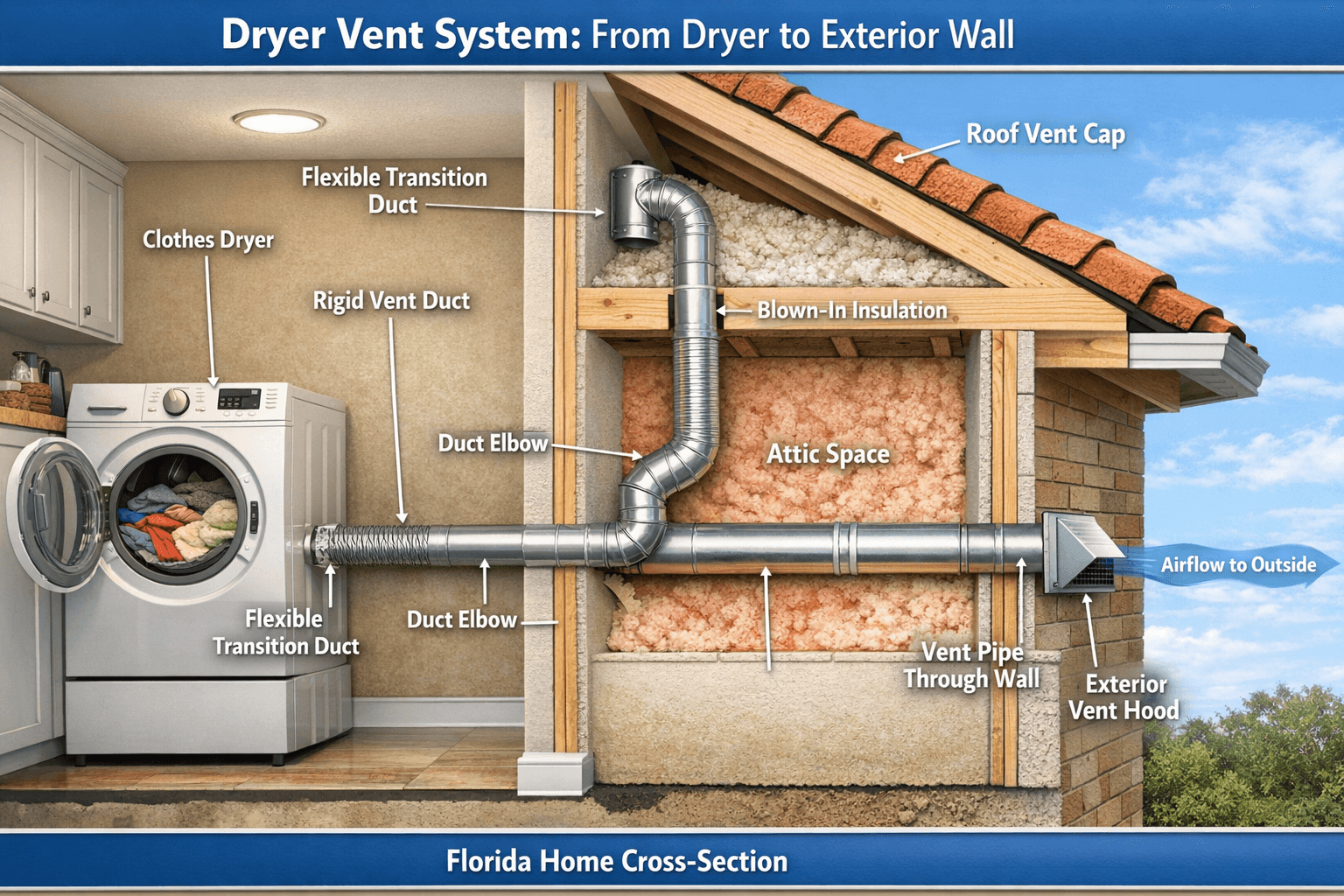
Some apartments, especially ground-floor or end units, have a dedicated vent running directly from the dryer to an exterior wall opening. This setup is similar to single-family homes.
Characteristics:
- Shorter duct runs (often 10-20 feet)
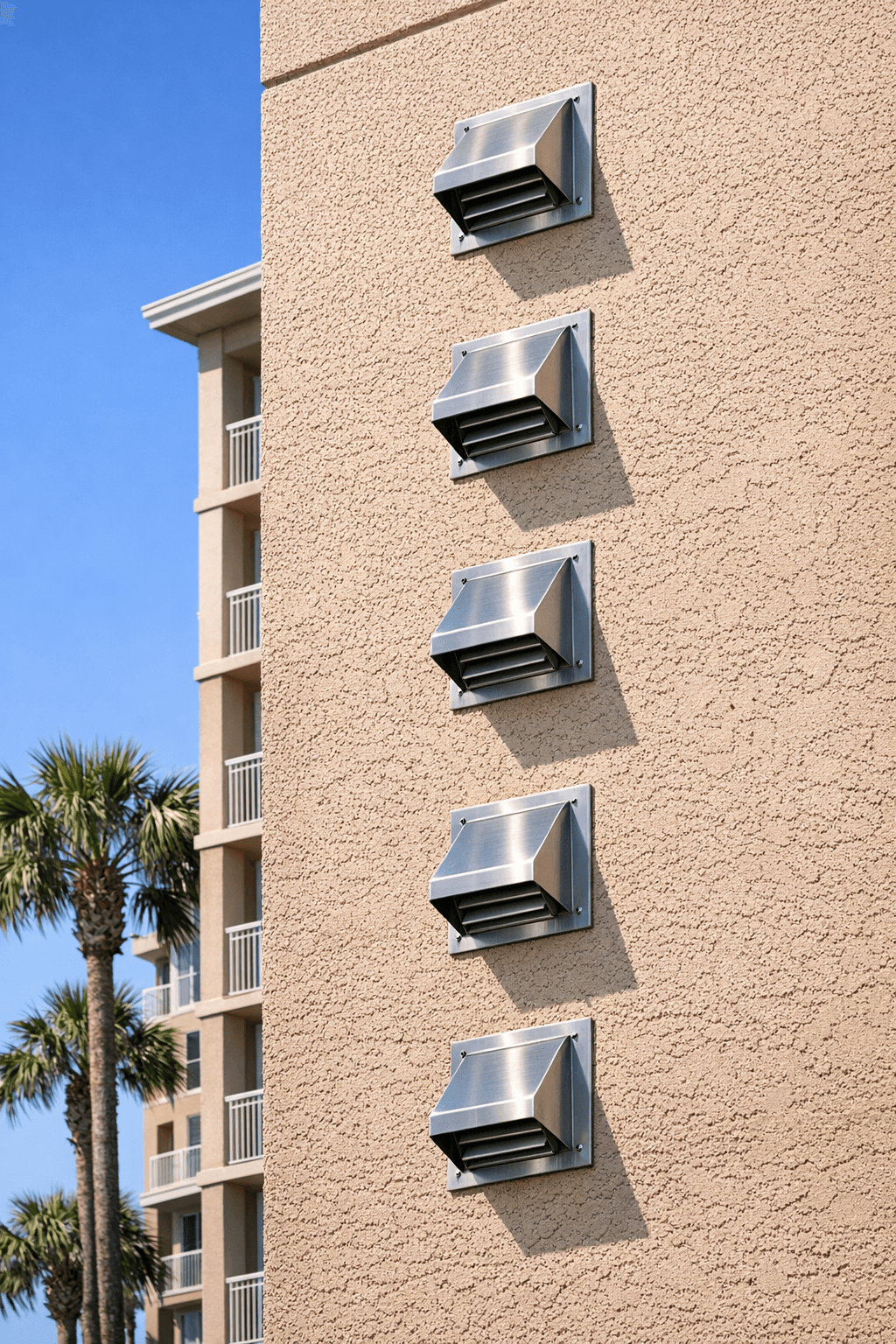
- Vent hood visible on your exterior wall
- Tenant may have partial access behind the dryer
- Cleaning is typically straightforward
Shared Riser or Manifold System
Many mid-rise and high-rise buildings use shared exhaust systems where multiple units tie into a common vertical riser that terminates on the roof.
Characteristics:
- Multiple apartments share one vertical exhaust path
- Individual unit ducts connect to a central manifold
- Roof access required for complete cleaning
- One blocked unit can affect neighboring apartments
- Building-wide scheduling often required
Ask Your Building Management
If you are unsure which system you have, contact building maintenance and ask: "Is my dryer exhaust a dedicated line to an exterior wall, or does it connect to a shared building riser?"
This information determines the appropriate cleaning approach and who coordinates the service.
Landlord vs Tenant Responsibilities
Dryer vent maintenance responsibilities typically split between what tenants can handle inside their unit and what requires building infrastructure access.
Tenant Responsibilities (Routine Maintenance)
Clean the lint screen every load. This is the most important routine task. UL cites that "failure to clean" is referenced in approximately 33% of dryer fires, making regular lint trap cleaning essential for safety.
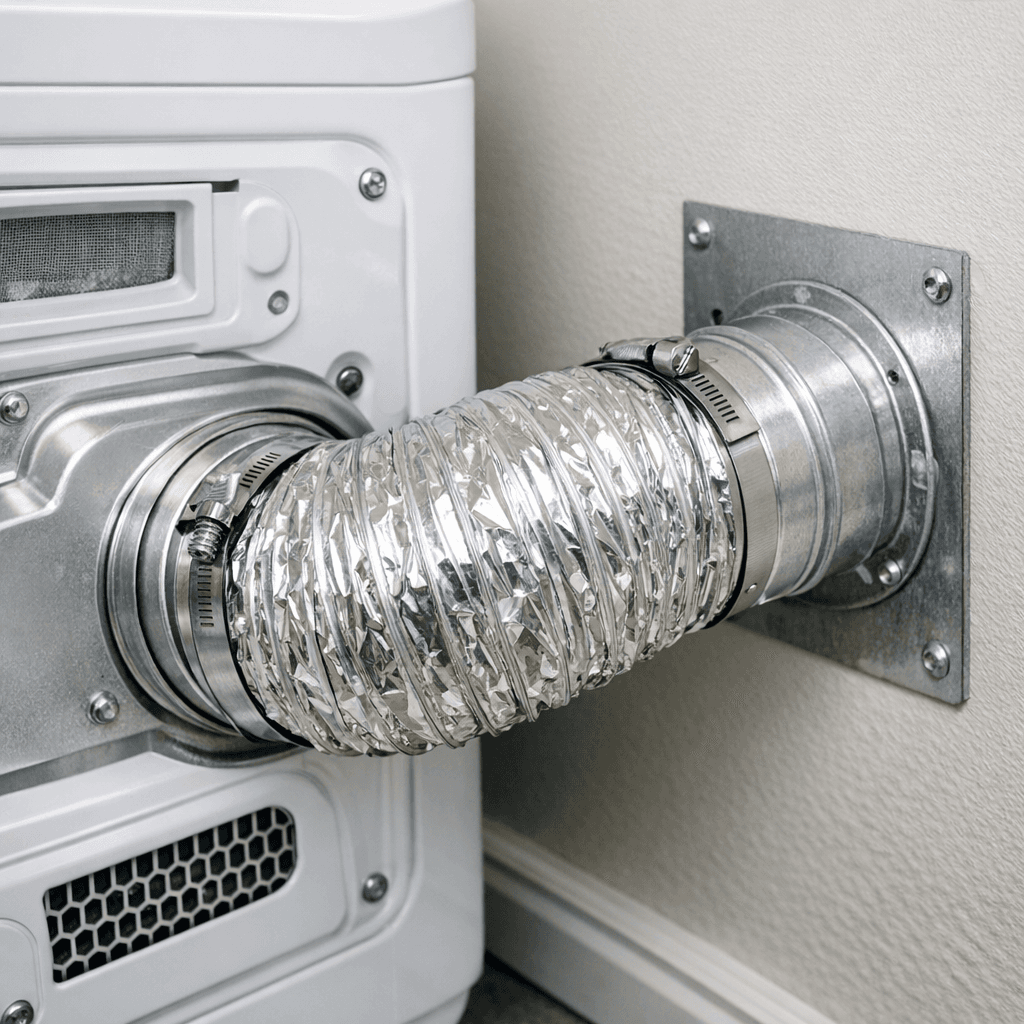
Keep the dryer area clear. Do not crush or kink the flexible transition hose behind the dryer. Avoid storing items that could fall behind or around the appliance.
Report warning signs promptly. If you notice longer drying times, excess heat, burning smells, or humidity in the laundry area, submit a maintenance request immediately rather than waiting.
Do not modify venting without approval. Never reroute, extend, or replace vent materials without landlord permission, especially in buildings with shared systems.
Landlord or Property Manager Responsibilities
Building infrastructure maintenance. This includes ductwork inside walls, ceilings, attic spaces, and any routing the tenant cannot access.
Shared riser and manifold systems. In buildings with common exhaust, the landlord or HOA typically handles the shared portions and coordinates cleaning schedules.
Roof and high-wall terminations. Cleaning exterior vent hoods on roofs or upper floors requires equipment and access that landlords should provide.
Code compliance and safety. Property owners bear responsibility for ensuring the dryer exhaust system meets local building codes and fire safety requirements.
Repairs and replacements. Crushed ducts, disconnected joints, improper materials, or damaged vent hoods fall under landlord responsibility in most rental agreements.
Condo and HOA Considerations
Condo owners face a different situation than renters. Responsibility often depends on your association's declaration, CC&Rs (Covenants, Conditions, and Restrictions), and what counts as a "common element."
Typical Condo Responsibility Split
Unit owner typically handles:
- The dryer appliance itself
- Lint screen maintenance
- The short transition duct connecting the dryer to the wall
HOA or association typically handles:
- Shared exhaust risers and manifolds
- Roof terminations and common element ductwork
- Building-wide maintenance scheduling
Review Your Governing Documents
Check your condo association's documents to understand exactly where unit owner responsibility ends and common element maintenance begins. Some associations handle all dryer vent maintenance as part of common fees, while others require unit owners to arrange individual service.
If your building has had dryer-related issues (fires, moisture problems, complaints about drying performance), request information about the building's vent maintenance schedule and when your riser was last serviced.
Warning Signs of Vent Problems
Do not ignore these symptoms. They can indicate airflow restriction, which increases fire risk and appliance strain.
Performance issues:
- Drying takes significantly longer than normal (2+ cycles for regular loads)
- Clothes feel very hot at the end of a cycle
- Dryer shuts off before the cycle completes
- Laundry room becomes humid or warm during use
Smell and visible indicators:
- Musty or moldy odor from the dryer or laundry area
- Burning smell (stop using immediately and investigate)
- Lint accumulating on the floor or wall behind the dryer
- Visible lint around the exterior vent hood
Airflow checks:
- Weak or no airflow at the exterior termination during a cycle
- Exterior vent flap does not open fully when the dryer runs
- Hot air backing up into the laundry area
If you notice 2+ warning signs: Document them with photos or video and submit a written maintenance request immediately. Call 813-513-7861 if you need professional assessment in the Florida area.
How to Request Dryer Vent Cleaning
Getting dryer vent service in an apartment requires working through proper channels. A documented, written request creates a record and prompts action.
Step 1: Document the Problem
Before contacting management, gather evidence:
- Note specific symptoms (longer dry times, excess heat, smells)
- Take photos of any visible lint buildup
- Record a short video showing weak airflow at the exterior vent
- Note how many cycles loads require to dry
Step 2: Send a Written Request
Email or written requests create documentation. Phone calls can be forgotten or disputed.
Sample maintenance request:
Subject: Dryer Vent Inspection and Cleaning Needed - Unit [Your Unit Number]
My dryer is taking significantly longer to dry loads and the unit gets very hot during operation. These are common signs of restricted dryer exhaust, which can be a fire hazard.
Please confirm whether my unit vents into a shared riser/manifold or a dedicated exterior vent, and schedule an inspection and cleaning of the dryer exhaust duct and termination.
Symptoms observed:
- [List your specific symptoms]
I have attached photos/documentation of the issue.
Step 3: Follow Up
If you do not receive a response within 3-5 business days, follow up in writing. Keep copies of all communications.
Step 4: Escalate If Necessary
If your landlord or HOA does not respond to a legitimate safety concern:
- Put the request in writing again, citing fire safety
- Consider stopping dryer use if you believe there is an imminent hazard
- Contact your local fire marshal or building code enforcement for guidance (process varies by jurisdiction)
Cost Considerations for Renters
Understanding typical costs helps you evaluate what is reasonable and whether your landlord should cover the expense.
Typical Professional Cleaning Costs (2024-2025)
| Scenario | Typical Price Range |
|---|---|
| Short exterior wall vent | $80-$150 |
| Second floor or harder access | $110-$185 |
| Roof termination | $150-$250 |
| National average | $103-$185 (avg ~$144) |
Who Pays?
Landlord typically pays when:
- The vent runs through building infrastructure
- The system is shared with other units
- Cleaning is required due to building conditions (not tenant negligence)
- Your lease includes appliance and infrastructure maintenance
Tenant may pay when:
- The lease explicitly assigns dryer vent cleaning to the tenant
- Excessive lint buildup resulted from tenant misuse (rare, hard to prove)
- You request optional cleaning beyond what the landlord deems necessary
Red Flags in Pricing
Be cautious of:
- Very low advertised prices ($49-$79) that lead to expensive upsells
- Services that do not include the full run to the exterior termination
- No documentation or before/after proof of lint removal
- Pressure to pay for unnecessary repairs or equipment
What Tenants Should NOT Do
Certain DIY approaches can create problems in apartment settings, especially with shared venting systems.
Do not blow air into a shared riser. Using a leaf blower, compressed air, or aggressive brushing in a shared system can push lint into neighboring units or dislodge buildup into the common duct.
Do not use improper duct materials. Replacing the transition hose with thin foil, plastic, or vinyl can create a fire hazard. UL guidelines specify that flexible metal transition ducts should be limited to a maximum of 8 feet in length.
Do not disconnect or modify shared venting. Any changes to ductwork that connects to building systems can affect other units and may violate building codes or your lease.
Do not ignore the problem. Continuing to use a dryer with restricted airflow increases fire risk and can damage the appliance. If you suspect a blockage, stop using the dryer and report it.
Do not assume it is "just an old dryer." Performance problems are often vent-related, not appliance issues. A vent inspection should precede any dryer replacement decision.
Florida-Specific Apartment Concerns
Florida's climate and building conditions create additional considerations for apartment dryer vents.
Humidity and lint clumping. High humidity can cause lint to stick and clump inside vent ducts, creating denser blockages than typically seen in drier climates. This accelerates buildup in long duct runs.
Year-round laundry use. Without a cold season that reduces laundry frequency, Florida apartments generate more lint annually. Buildings with many families or frequent towel use accumulate lint faster.
Hurricane and storm debris. After storms, exterior vent terminations can become blocked by wind-driven debris. Check that exterior vent flaps open freely following severe weather.
Pest activity. Warm weather increases the chance of birds or small animals attempting to nest in or near exterior vent openings, especially if hoods are damaged or screens are missing.
Coastal corrosion. Salt air near Florida's coast can corrode exterior vent hoods and fasteners, causing flaps to stick or not open properly.
Older building stock. Many Florida apartments were built with materials and routing that may not meet current standards. Long duct runs with multiple elbows are common in older construction.
For apartment dryer vent concerns in Florida, call Pro Air Chimney at 813-513-7861 for professional evaluation.
FAQs
Q: Who is responsible for dryer vent cleaning in an apartment? A: Responsibility typically splits between tenant (lint screen, reporting problems) and landlord/HOA (building infrastructure, shared systems, exterior terminations). Check your lease for specific language about appliance and vent maintenance.
Q: How do I know if my apartment has a shared dryer vent system? A: Ask your building management. Signs of a shared system include: no visible vent hood on your exterior wall, a vent that terminates on the roof, or building notices about scheduled vent maintenance.
Q: Can I clean my apartment dryer vent myself? A: You can clean the lint screen and the short transition hose behind the dryer if accessible. However, ductwork inside walls or connected to shared systems requires professional service and building management involvement.
Q: How much does apartment dryer vent cleaning cost? A: Professional cleaning typically costs $100-$185 for standard access, or up to $250 for roof terminations. In most cases, landlords or HOAs should cover this for building infrastructure and shared systems.
Q: What should I do if my landlord ignores my dryer vent cleaning request? A: Document your requests in writing, note the safety concern, and follow up. If ignored, consider stopping dryer use for safety and contact local code enforcement or fire marshal for guidance.
Q: How often should apartment dryer vents be cleaned? A: Frequency depends on usage, vent length, and system type. Watch for warning signs (slow drying, excess heat, lint accumulation) rather than relying on a fixed schedule. Buildings with shared systems should have regular maintenance schedules.
Q: Can a clogged dryer vent affect other apartments? A: Yes. In shared riser systems, significant blockages can cause backdrafting, moisture problems, or reduced airflow for multiple units. This is why building-wide maintenance is important.
Q: Is dryer vent cleaning covered by renters insurance? A: Renters insurance typically does not cover maintenance like vent cleaning. However, if a dryer fire damages your belongings, your policy may cover the loss. Prevention through proper maintenance is far better than filing a claim.
Related Services
Service Areas
Schedule an Inspection
If you are a renter or condo owner in Florida concerned about your dryer vent, professional inspection can identify problems before they become hazards.
Call Pro Air Chimney at 813-513-7861 or schedule online.